
In 2001, I moved to Seattle at the age of five for the same reason as most: tech. My dad was hired by Microsoft at the beginning of the tech boom. He worked on the first Xbox, Zune, Xbox 360, Kinect, and other products that are now obsolete in the year 2025. These products no longer exist in my everyday life, but when I spot them in a thrift store, I get a pang of nostalgia for my childhood.
Early pictures of my family in Seattle after we moved up from warm, sunny California to dreary, wet Seattle feature us at the classic Seattle spots: the Ballard Locks, Pike Place Market, the Seattle Center. In these photos, we pose in front of the fish window at The Locks, smile in front of the Space Needle, climb on the whale statues at the Seattle Center, and hide between the Glass Blades by the MoPOP (Museum of Pop Culture), then called the EMP.
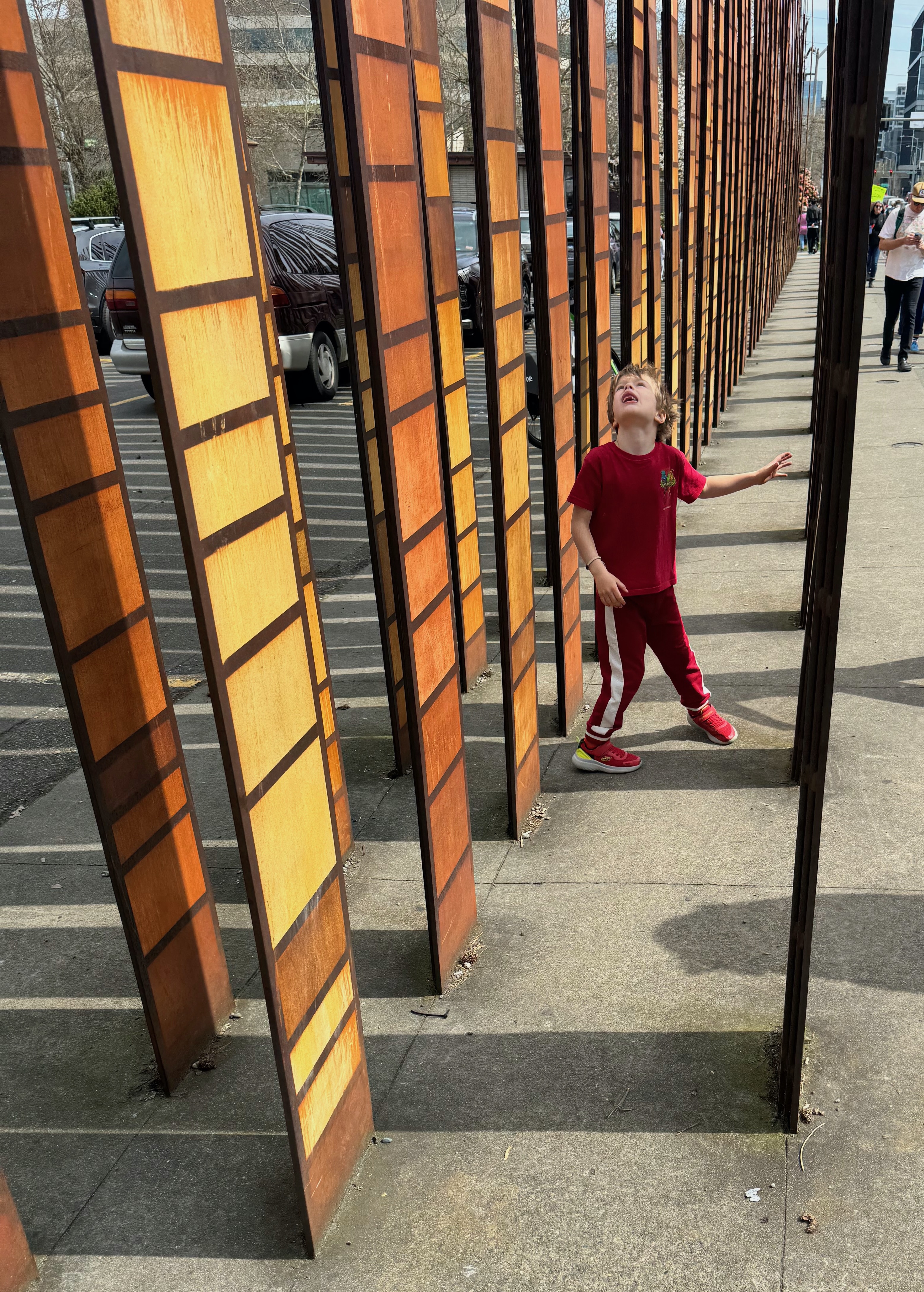
Twenty years later, as an adult living in Seattle, I found myself out in Seattle posing with the same statues and taking photos in the same iconic spots. I wasn’t playing Xbox 360 or listening to music on my Zune, as they quickly became outdated when newer, sleeker, and faster technology came around. However, these pieces of public art are unmoving, still a part of daily lives for Seattleites. Although Seattle has changed dramatically since my childhood, marked by huge developments in tech, these pieces of public art have remained stable, fixed in concrete.
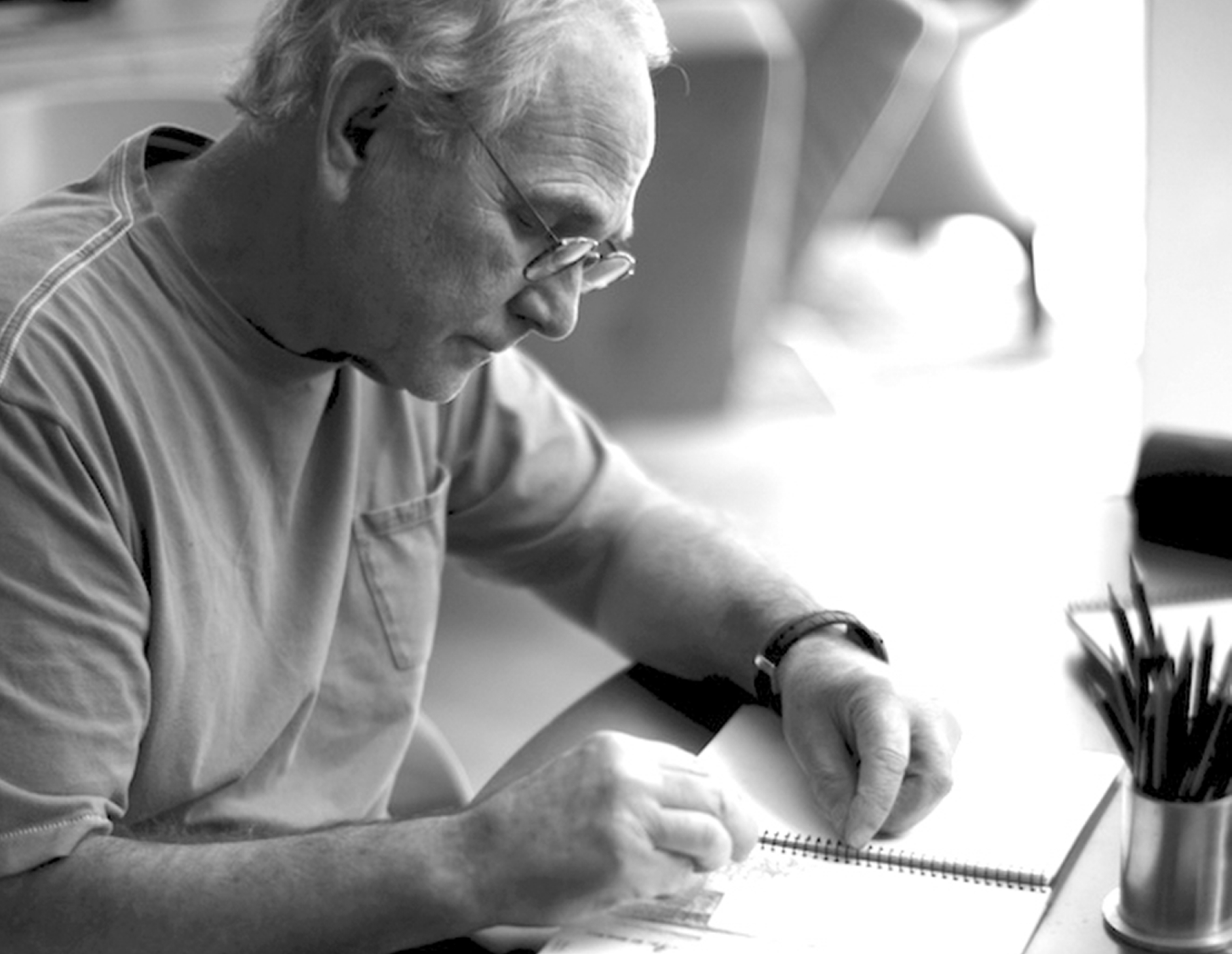
John Fleming is a Seattle-based artist, sculptor, and architect — and creator of those Grass Blade sculptures I remember so fondly. Of all Seattle’s public art, the Grass Blades specifically stick out to me in my early memory. I remember playing hide and seek with my brother, hiding within their tall blades that were stuck firmly in the ground, but that swayed if you touched them.
John Fleming is known for his public art that has undoubtedly touched countless people who have seen and interacted with the pieces over the years. Some of his most prominent local installations include Grass Blades near Seattle Center, Western Tapestry at Pike Place, and Fibonacci’s Arc at the Oregon Institute of Technology. Unlike pieces in a museum or digital work, most public art promises a longevity that other mediums don’t provide. John’s work is painted onto a wall or placed in the ground, allowing the public to interact with it for years to come. This creates a public identity and public nostalgia for the city, as his art becomes a part of everyday life for those around it. Much like a memorable building or intersection, this art is an inherent part of the urban fabric. McMaster University research argues, “Public art can connect the past, the present, and the future by fostering collective memory.”
John’s father worked in the US Forest Service, leading him to grow up in many different small towns in the Southwest. He found an early love for art and ceramics at Northern Arizona University. He recalls, “I was working with clay under important people in the 1970s and 80s: Don Bendel and Jim Romberg.” When he found that a career in ceramics wasn’t sustainable for his family, he decided to find a creative job that could make more money, enrolling in architecture school at the University of New Mexico.
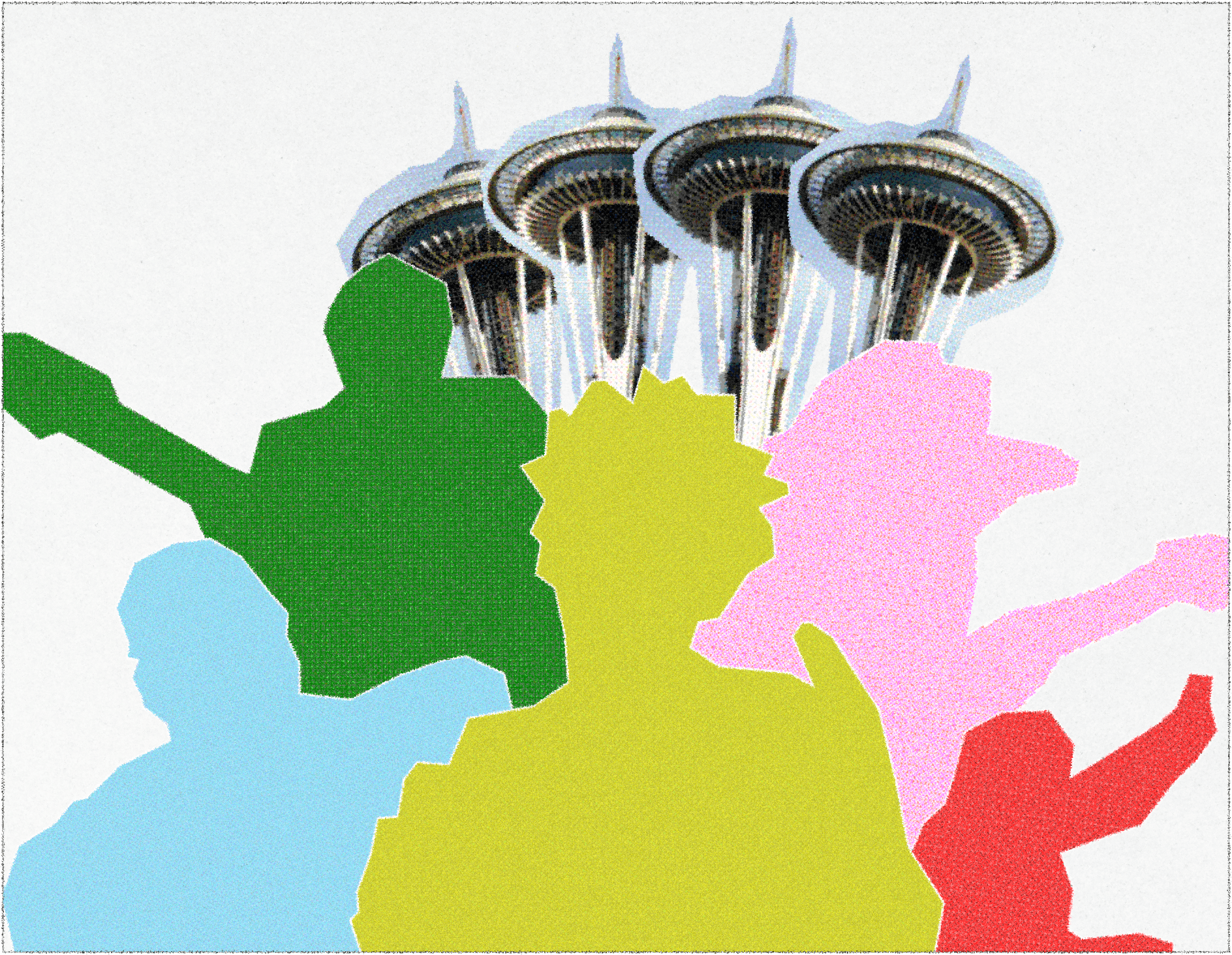
Following his schooling, John moved to Seattle. There, he started a firm with local architects Andrew Borges and Tim Rohleder. As an architectural firm, they entered a competition to design a wall to screen off the parking lot at Seattle Center. “I proposed this giant screen you could walk through or weave in and out of. Our engineer, James Harriott, told me the tips of the steel blades in this screen might move up to seven feet in the wind. That was fantastic. Usually, you design your buildings to stay motionless. This was art/architecture that moves! The Grass Blades.” Unveiled to the public in 2002, it features 110 painted steel blades. John’s website explains, “The artwork counterpoints two other Seattle icons nearby: Frank Gehry’s MoPOP and the Space Needle.”
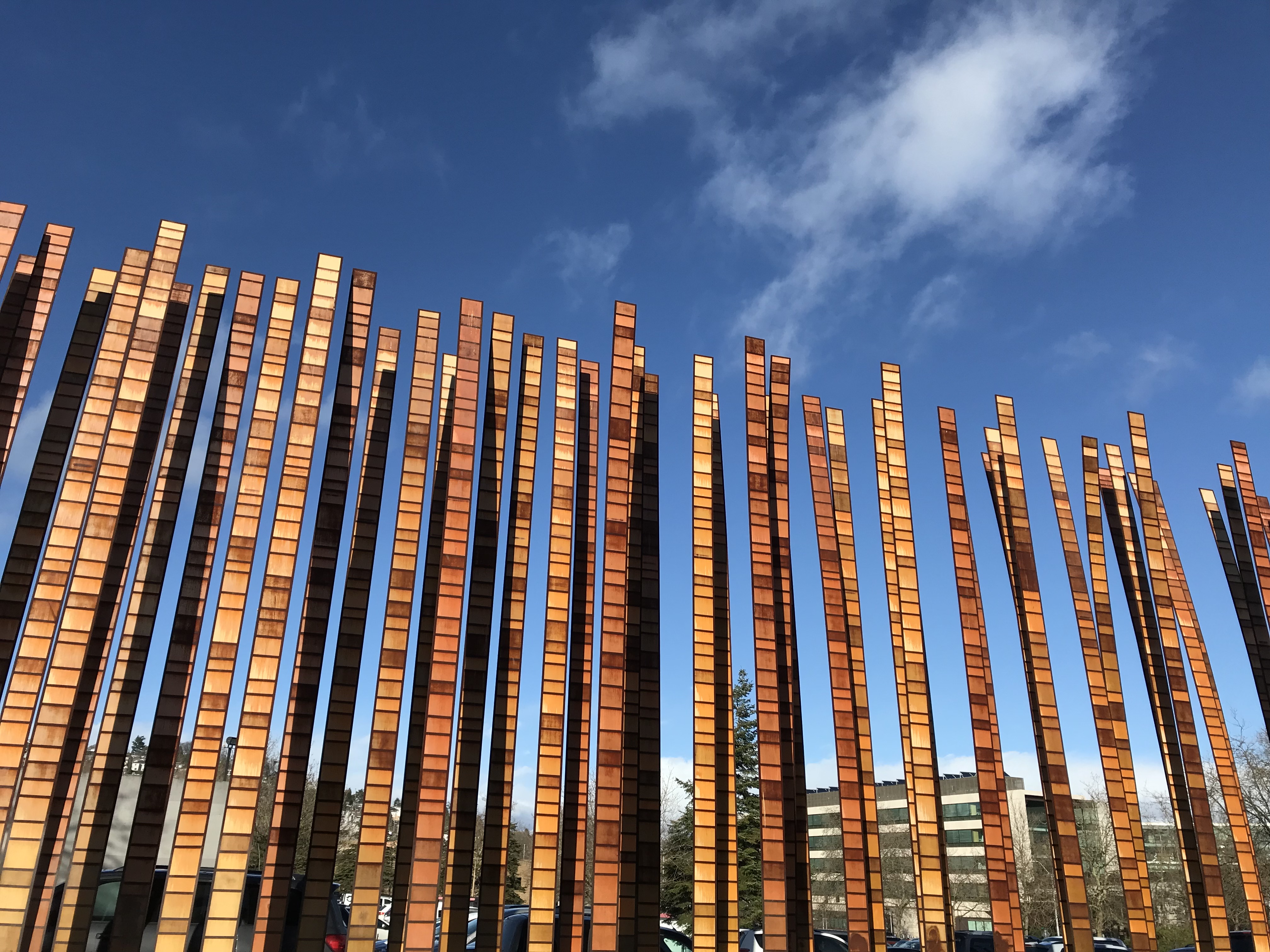
John is pleased with the public reception of this work over the years: “I love the way people react to it, and I love that kind of visibility within the community.” The Grass Blades themselves show the passage of time. Made from steel, John intentionally left the edges raw so that they would rust over and change color and texture with time.
Once worried about the feasibility of an art career, John was able to blend his experience in art and architecture to become a specialist in public art: “The Grass Blades helped me reconnect to my early work as an artist. Eventually, the public art projects kind of took over. The tools I use are the same in art and architecture.”
With the majority of his work rooted in permanence and longevity, John also experiments with more ephemeral work. His 2011 projects include Desert Watering Hole in the San Rafael Reef and Lava Line in Southern Idaho. These pieces consist of reflective tiles made from old street signs arranged in patterns or lines. Unlike his sculptures that have endured countless eyes and weather over the course of many years, these pieces of public art are remote and exist only for a day, just long enough to place the tiles and capture stunning photos.
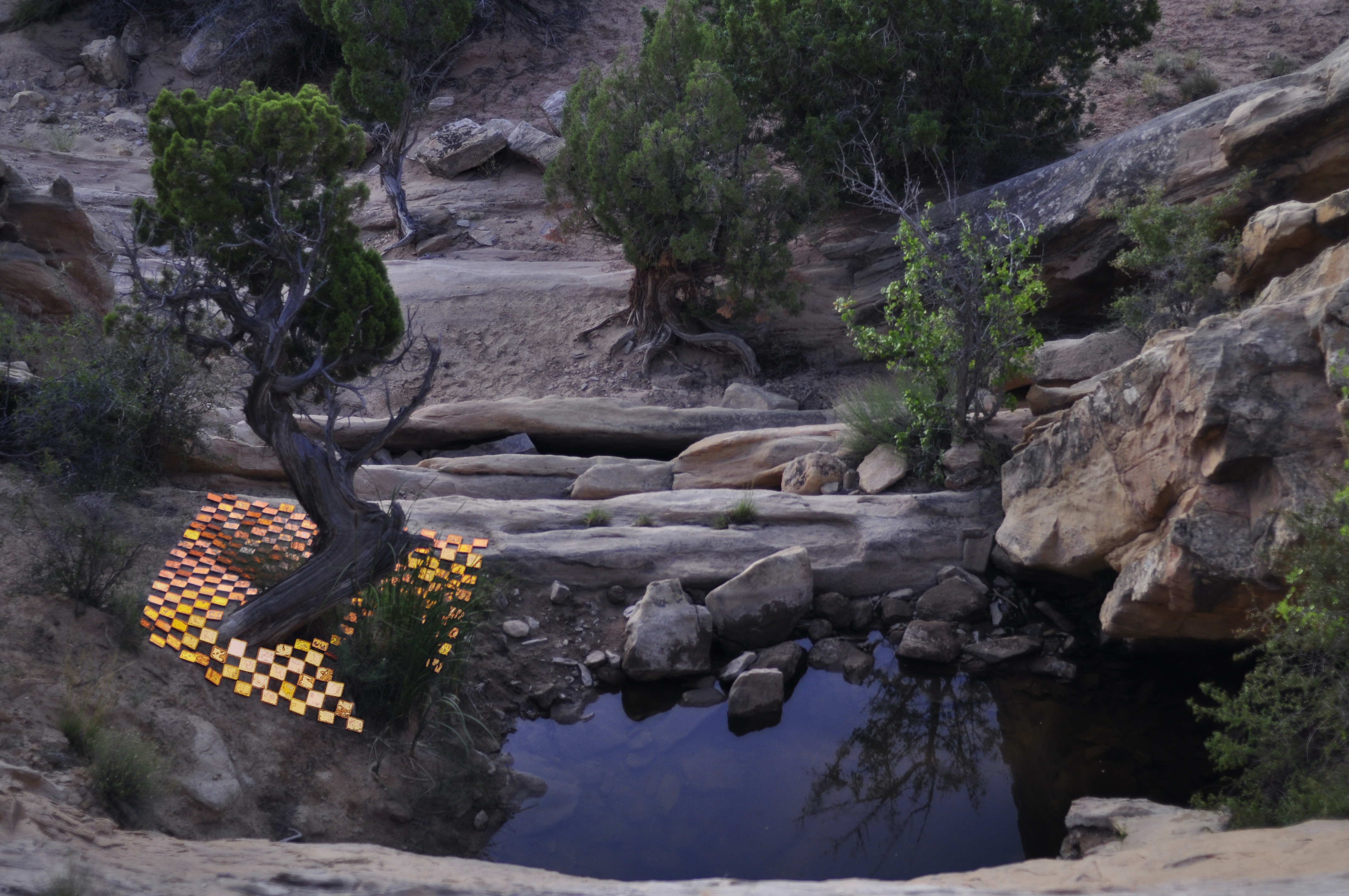
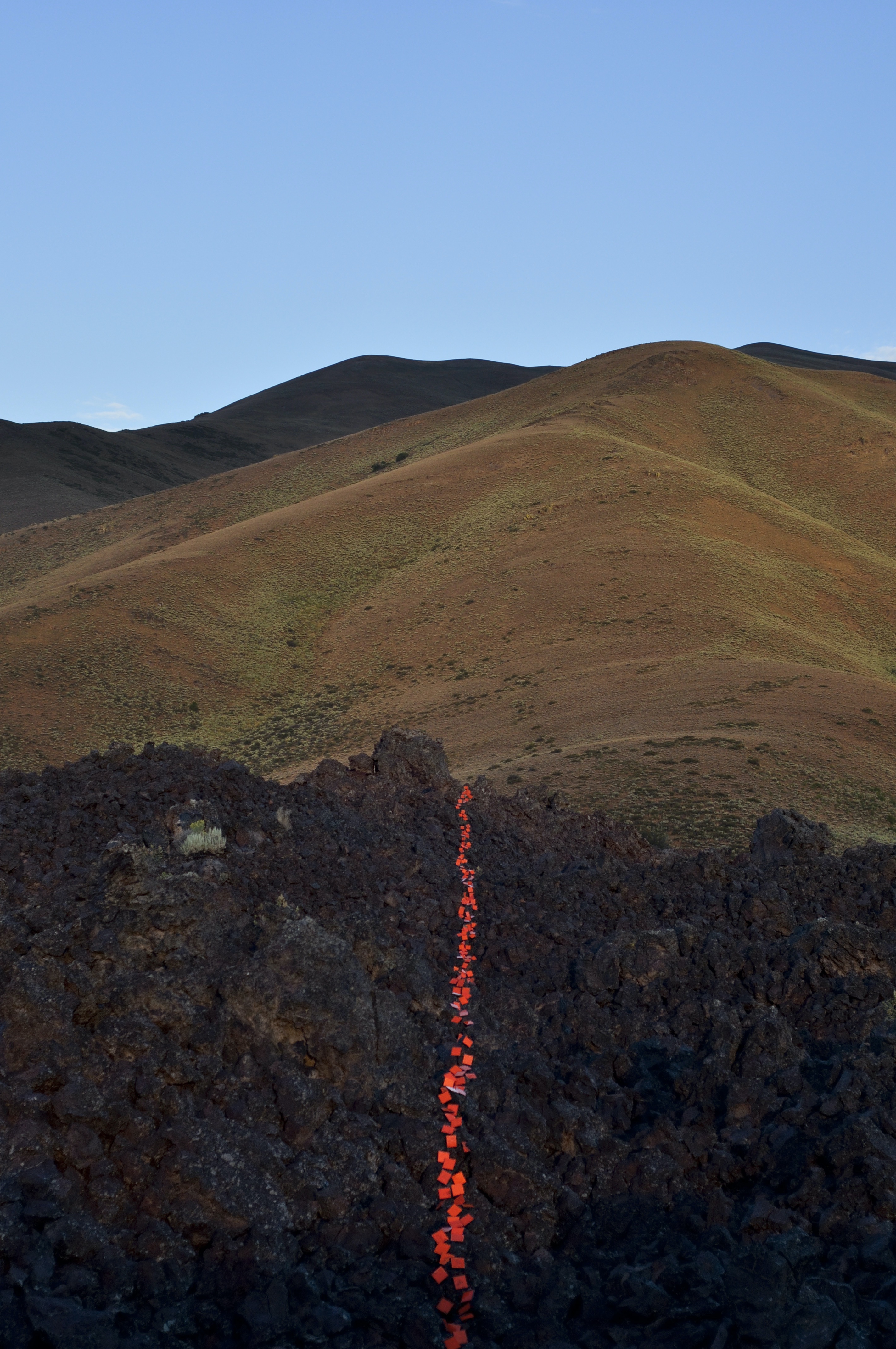
John is still busy with more traditional public art projects. He is currently working on several public art projects in the Seattle area and a big project for Bend, Oregon, called Water Tapestries.
In a rapidly changing city known for tech, John has created an enduring body of work. These pieces have become a signature part of Seattle’s identity. As Seattle often prioritizes tech over art, it fails to recognize tech’s ephemeral nature. Investing in public works like John’s fosters consistency in the public identity and memory of the city. Although I am no longer a child running and hiding between the Grass Blades, I have no doubt that every day there is a new child running, playing, and hiding in the sculpture, creating lifelong memories.


.jpg)

.jpg)