
Modern-day shrines of collective imagination emerge from the many symbolic spaces of Seattle and parts of the larger Washington state, where fragments of hope, resilience, wishes, and offerings emotionally charge these artistic environments. A Capitol Hill Wishing Tree carries deep desires of a shared community; a Labyrinth’s lookout in Bainbridge Island extends a space for tradition and self-introspection; a mailbox on the top of a rigorous hike sits with unsent letters to nowhere; a U-District street gets secretly tagged as the 11:11 Ave; the Moss Turtle at the Troll’s Knoll embraces growth and kindness through shared mythology; a Center of the Universe sign in Fremont urges people to believe in the magic and energy of public art; a view point fence at Alki Beach witnesses padlocks of protected love against the Seattle skyline, and the well-known Tree of Life along the Pacific Northwest coast upholds the message of resilience and spiritual wonder.
Between landscape and legend, a question quietly thrives—what makes people submit to these poetic sites? Has hope become a dangling thread so thin that humans hunt for any opportunity to tangle themselves up in it? Or do these urban anthropological spaces, whether naturally created or intentionally designed, have inherent characteristics that spread positivity, enrich psychology, and uplift community belief? Notably, none of these sites is officially recognized as sacred grounds, nor are they structured by any religion, and yet people seek them, searching for ritual and hope. Fostering the emotional connection between humans and place, these spaces act as urban shrines that softly dare us to believe.
In a rapidly progressing digital age wherein algorithms and notifications guide our movement, the architecture of hope makes us pause, as if compelled by primeval instinct. These fascinating spots do not require any orchestration; they flourish on self-guided movement and a child-like curiosity that pulls us towards them without any subscription or membership. And no, they’re not merely tourist spots or quirky sites. Instead, they position themselves as emotional urban breathers—environments that encourage shared memory, wishful dreams, and storytelling, contributing to the placemaking of the city.
Scattered across Washington’s mystic backdrop of gloomy skies, wooded wilderness, moody coastlines, dramatic mountains, and ambitious skyscrapers, the constellation of these spaces isn’t unique to the state, but it particularly feels at home here. When narratives and rituals seamlessly intertwine within natural settings, the boundary between the physical and symbolic softens, making hope tactile. While some of these spaces require dedicated effort to access, others either stand tall as public art or hide in plain sight. And yet they attract attention as if being noticeable is second nature to them. Persisting in duality, they exist in both vibrancy and earthy simplicity, equally framing little pockets of divinity and belief. Unsurprisingly, we already feel the essence of these spaces without even having visited them. That is because we as humans carry hope and look for environments that allow us to share it and amplify it through cohesive experiences.
Wishful Wayfinding
Adorned with handwritten notes, ribbons, and hopeful desires from strangers, the Capitol Hill Wishing Tree in Seattle has become a repository of deep faith and personal hope. Located at the intersection of East Galer Street and 21st Avenue East, this cypress tree rests quietly while the dangling wishes on its branch create a resonance of manifestation. According to The Seattle Times, approximately 30,000 wishes have been made at the tree since its inception in 2013. Jane Hamel, the owner of this beautiful initiative, continues to provide paper tags and writing materials at the site.
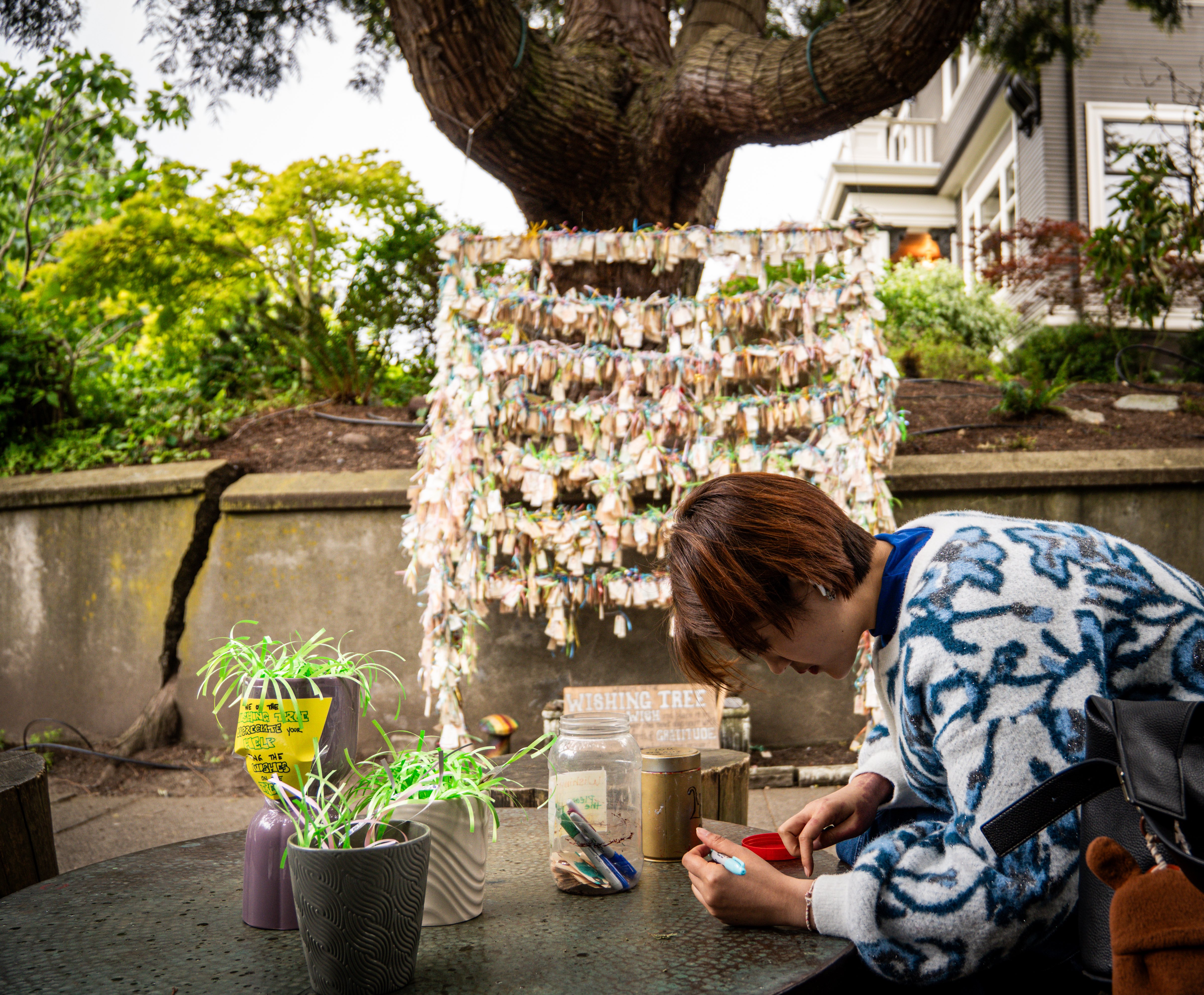
Visitors often arrive carrying the weight of emotions they can’t quite articulate or the excitement of newfound wishes, converting them into tangible expressions. In the process of penning down wishes and sealing them in a jar, a cathartic feeling takes over as deep, closely held wishes are released into the Universe. Whether the circumstances change or not, hope starts to become visible, thereby encouraging more passersby to halt and add to the process. The owner laminates the wishes and hangs them on the tree in the days that follow—welcoming people back to find their wishes. The site subtly forms a loop, reinviting users to witness the magic of praying at one place.
Spiral Solitude
As the meandering paths of Bainbridge Island’s Halls Hill Lookout and Labyrinth blend with nature, they offer a meditative space for introspection and spiritual awakening. Overlooking Blakely Harbor, this site seamlessly integrates work by local artists within the surrounding landscape. Owned and stewarded by the Bainbridge Island Parks & Trails Foundation, a small non-profit, the Lookout was donated to the organization by IslandWood founders Debbi and Paul Brainerd, who also commissioned all of the Halls Hill artworks specifically when they created the site.
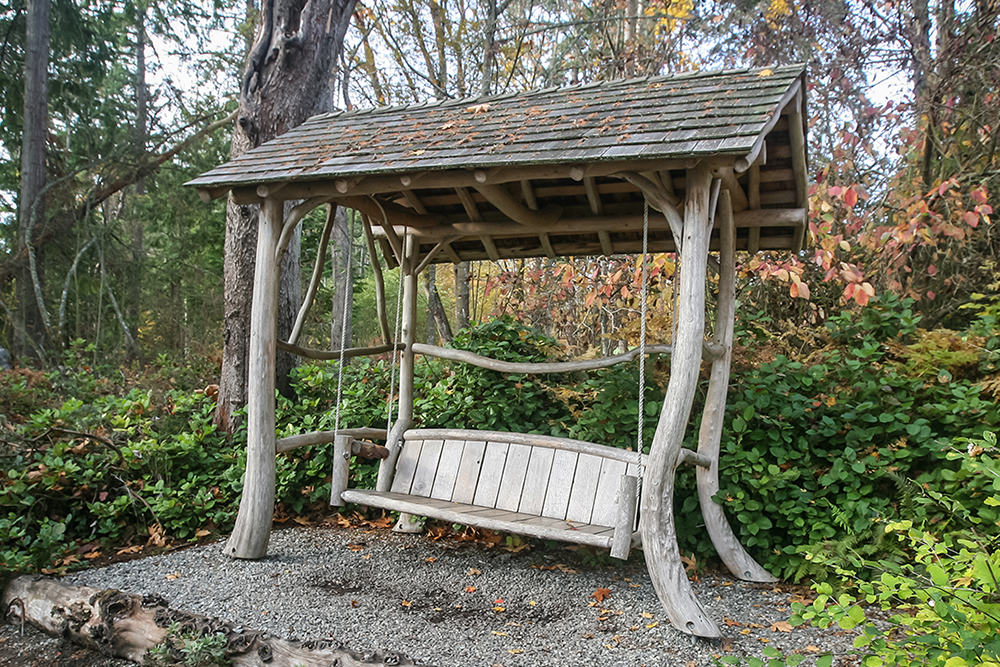
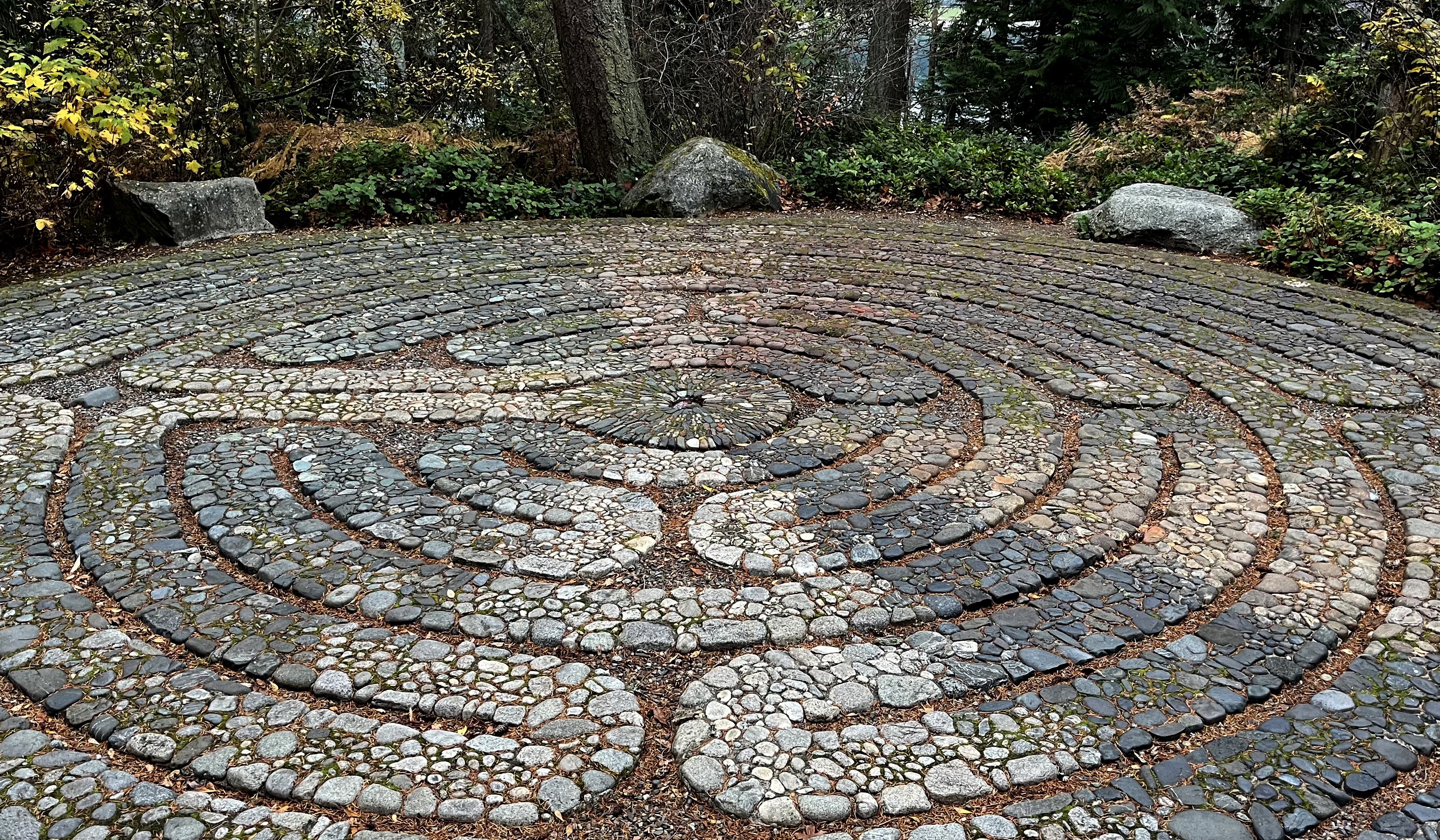
Established in 2008, the Lookout is a quiet, contemplative space featuring a stone mosaic labyrinth, a bronze prayer wheel, benches, and a chair swing that’s ideal for respite from the urban chaos and encourages conversations with self and loved ones. A primary element of the site, the Labyrinth is crafted by Oregon-based artist and landscape designer Jeffrey Bale, who incorporated symbols, patterns, and colors with the stones found on the island’s beaches. The Labyrinth’s 36-foot outer ring spirals inwards toward the center with visitors traversing twelve rings in total—aligning with the lunar and seasonal cycles—participating in an ancient practice known as spiritual walking. This ritual calms the mind and urges individuals to reflect on their actions. A sense of therapeutic relief prevails as patience is tested and focus is enhanced while going in circles.
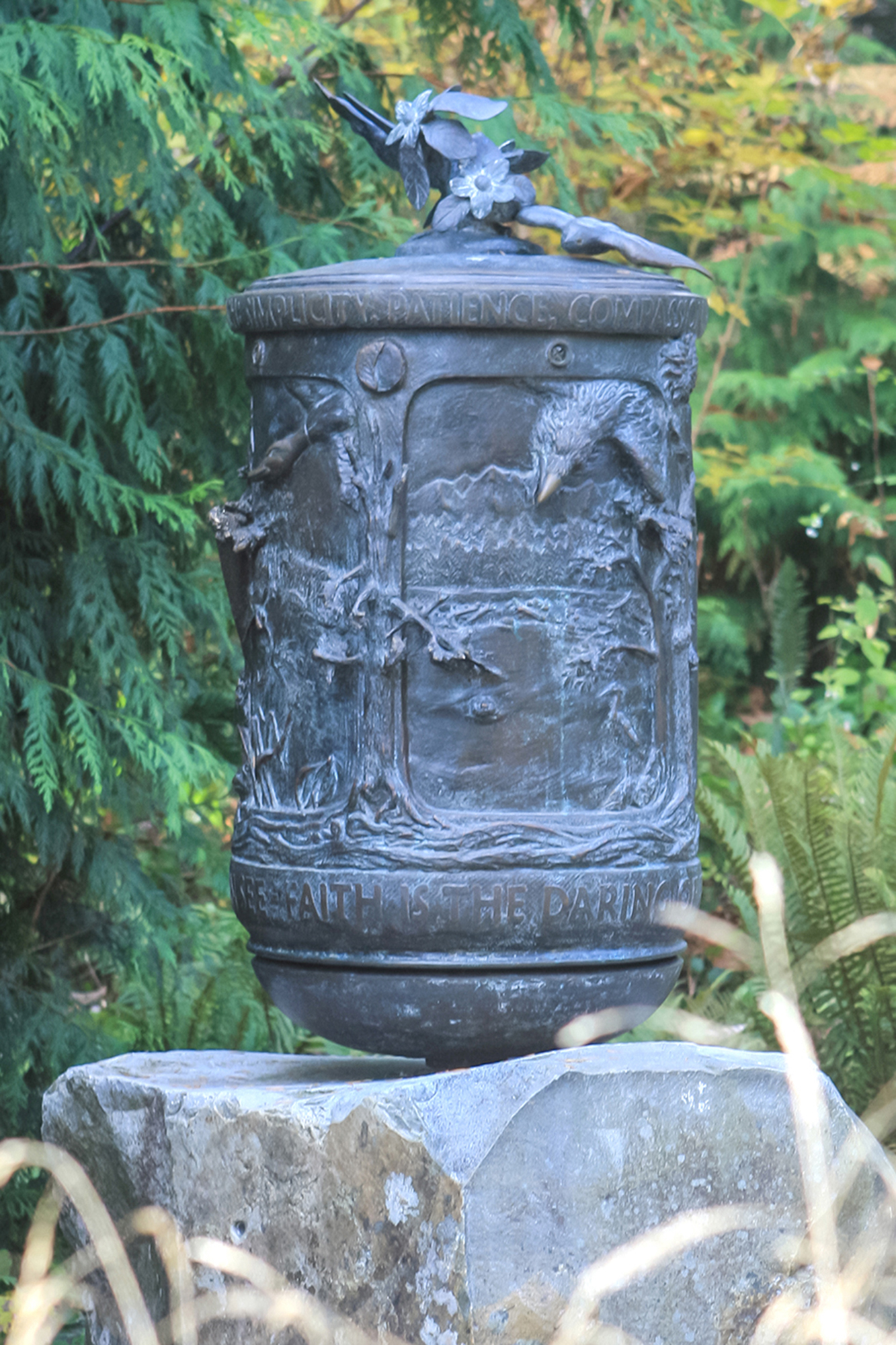
Enriching the spiritual charm of the landscape is the Bronze Prayer Wheel, which follows the Tibetan tradition of heartfelt wishes for the wellness of all beings. Commissioned by Washington-based artist and sculptor Tom Jay, the prayer wheel completes nine revolutions with its four plates—thoughtfully coinciding with the labyrinth’s diameter. As a matter of fact, each time Bale heard the wheel’s bell while creating the labyrinth, he added flowers or symbols in the circuit as an echo of that calming moment. Furthermore, Indigenous carvings, sculptural masks, stone sittings, and wooden footbridges embellish the site, embodying the characteristics of a healing experience.
High Hopes
Named after an eccentric mailbox bolted 4,822 feet high at a summit near North Bend, Mailbox Peak is a brutally challenging hike. Traversed through two different paths—the steep, Old Trail (5-mile round-trip) or the longer, toned-down New Trail (10-mile round-trip)—hikers can choose to test their limit or endurance. The weathered mailbox at the peak, covered in vibrant stickers, notes, and signs, acts as a reward for either route. The adventurous spirit of mountain-goers comes to rest here as they leave or swap out trinkets and handwritten letters to nowhere within the mailbox. One can also find a logbook inside wherein hikers record their names as proof of having conquered this thrilling hike. A curious exploration of what one may find inside the box drives an air of inquisitiveness into the landscape.
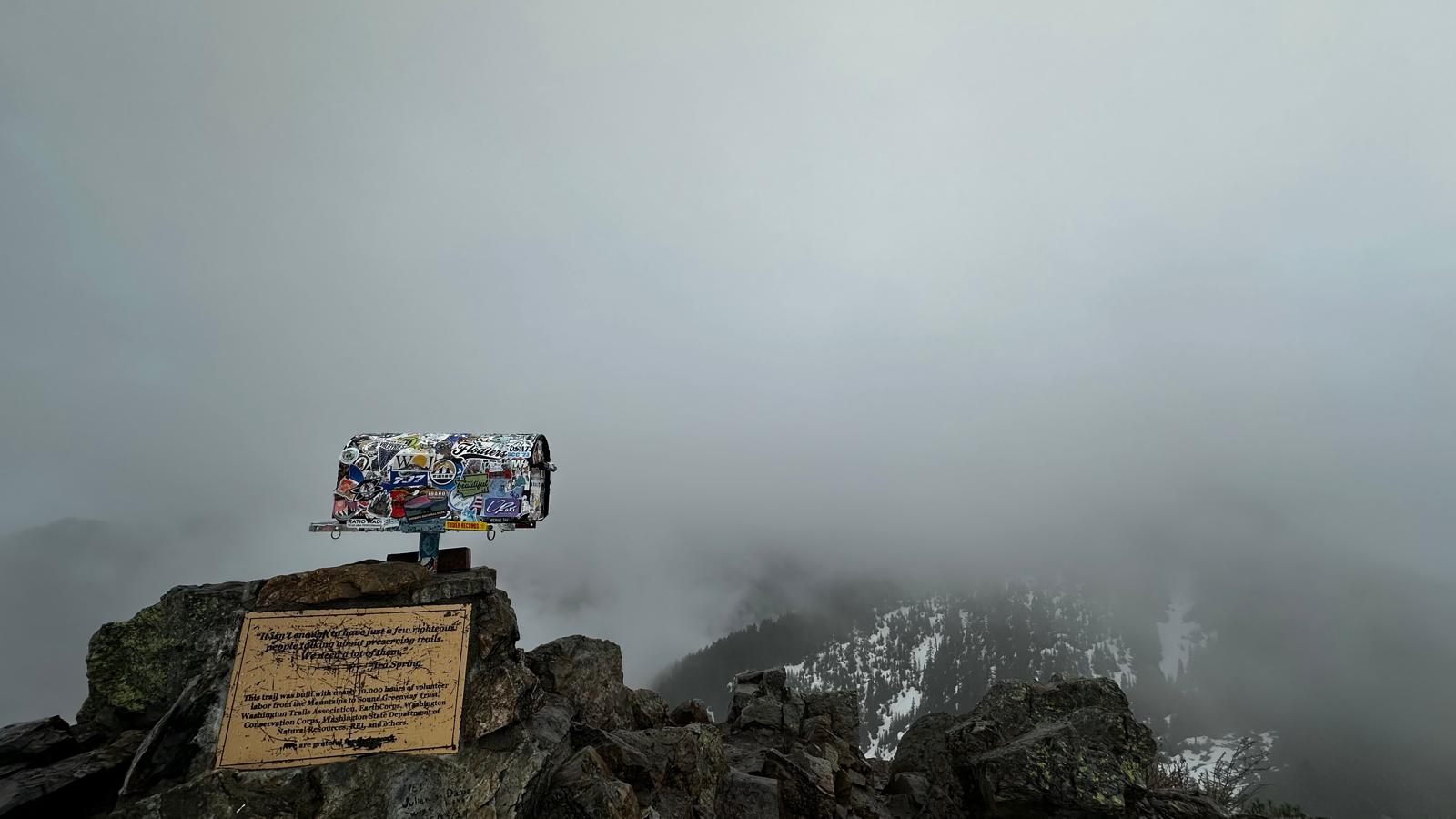
It is fascinating to see how the weather at the summit often differs from the trailhead, switching between a windy memory, a warm sunshine, a drizzling shiver, a snowy comfort, and a foggy embrace. A mystical layer engulfs the mailbox as it looks out over panoramic views of the Cascade Range, Mt. Rainier, Seattle, and the Olympic Mountains. Completing a difficult hike is not the sole reason for visiting this peak; it is, rather, the intrigue of finding the mailbox, posing with it, and, more importantly, adding an expression of self to it—with the belief that the message will reach its destination. The intense journey through the pine trees, clumsy roots, and rocky paths contribute to the restricted accessibility of this mailbox, and yet it is one of the most popular hiking spots in the state. Folklore surrounding Mailbox Peak suggests that back in the 1960s, a Seattle postman named Carl Heine lugged the mailbox to the summit and subsequently challenged a youth at the nearby Lutheran Valley Camp to hike the trail and sign the register as proof of their success (Seattle Met). What started as a fitness challenge for young mountaineers has now become a community ritual. By placing thoughts into a physical object and leaving them behind, people momentarily transfer traces of themselves into the landscape, highlighting a deeply human need to externalize emotions.
Chance Corner
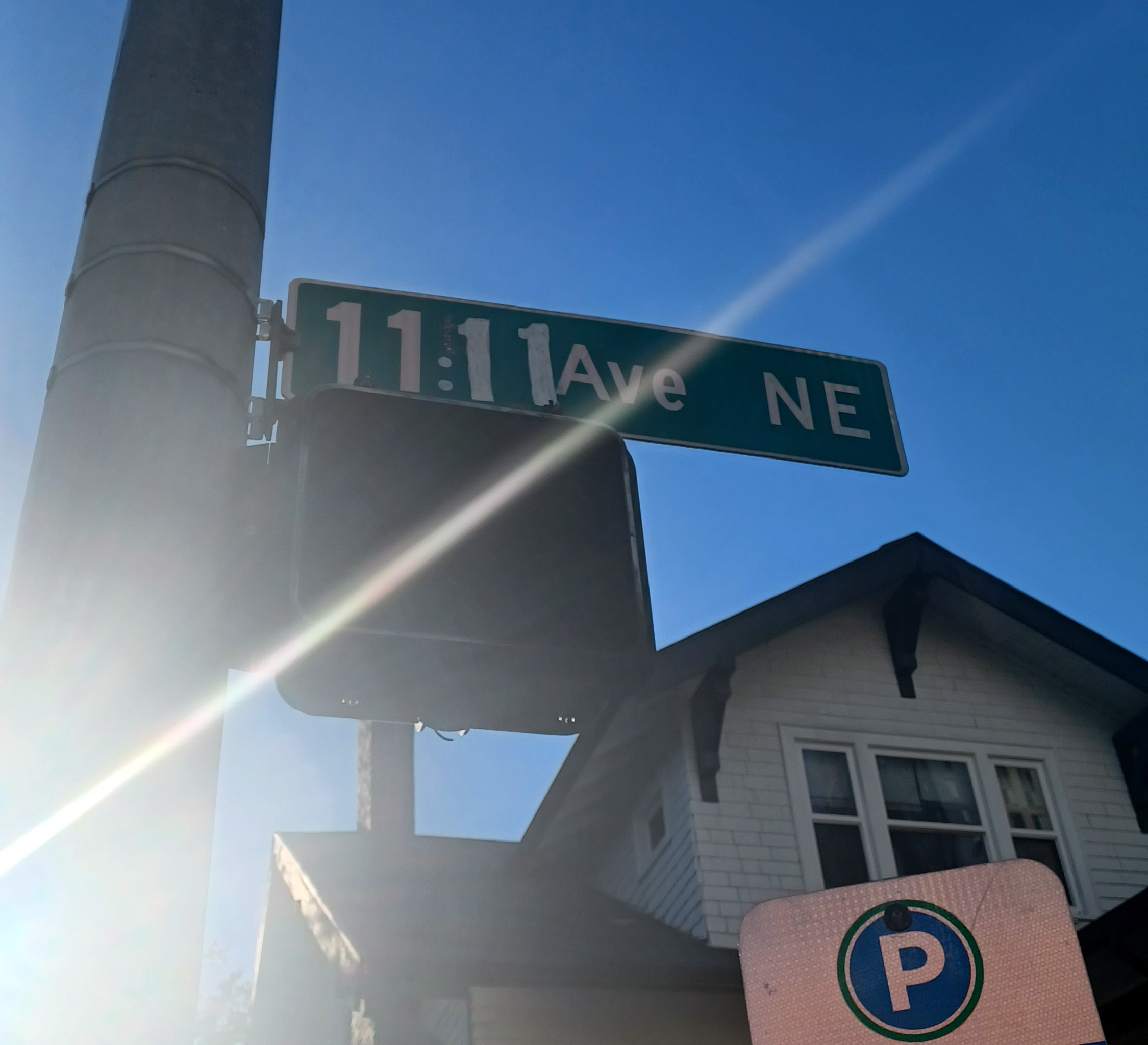
Imagine walking down a regular street in Seattle’s University District (U District) and encountering a street sign that says “11:11 Ave.” No matter what’s on the mind at that moment, a person who believes in the Universe’s message will stop and wish upon this cosmic coincidence. What used to be a casual intersection of 42nd Street and 11th Ave NE had been transformed into a little corner of magic and hopeful energy when someone creatively altered the signage from 11th Ave to 11:11 Ave. Referred to as an angel number, seeing 11:11 is often considered auspicious. Besides, the street element also reflects the numerological power of the master number 11. In an area surrounding the University of Washington campus, unexpectedly coming across unique signage that promotes wishful thinking in the age of vandalism challenges young minds to dream and take random chances. This moment of cosmic intervention was nice while it lasted, but the signage was ultimately temporary, since reversed to its original tag. And this rightly unveils a layer for the architecture of hope wherein its temporality acknowledges the temporary form, leaving behind an impression in the cultural conscience even after it has disappeared—all because the belief associated with its tangibility continues to live on.
Growing Grace
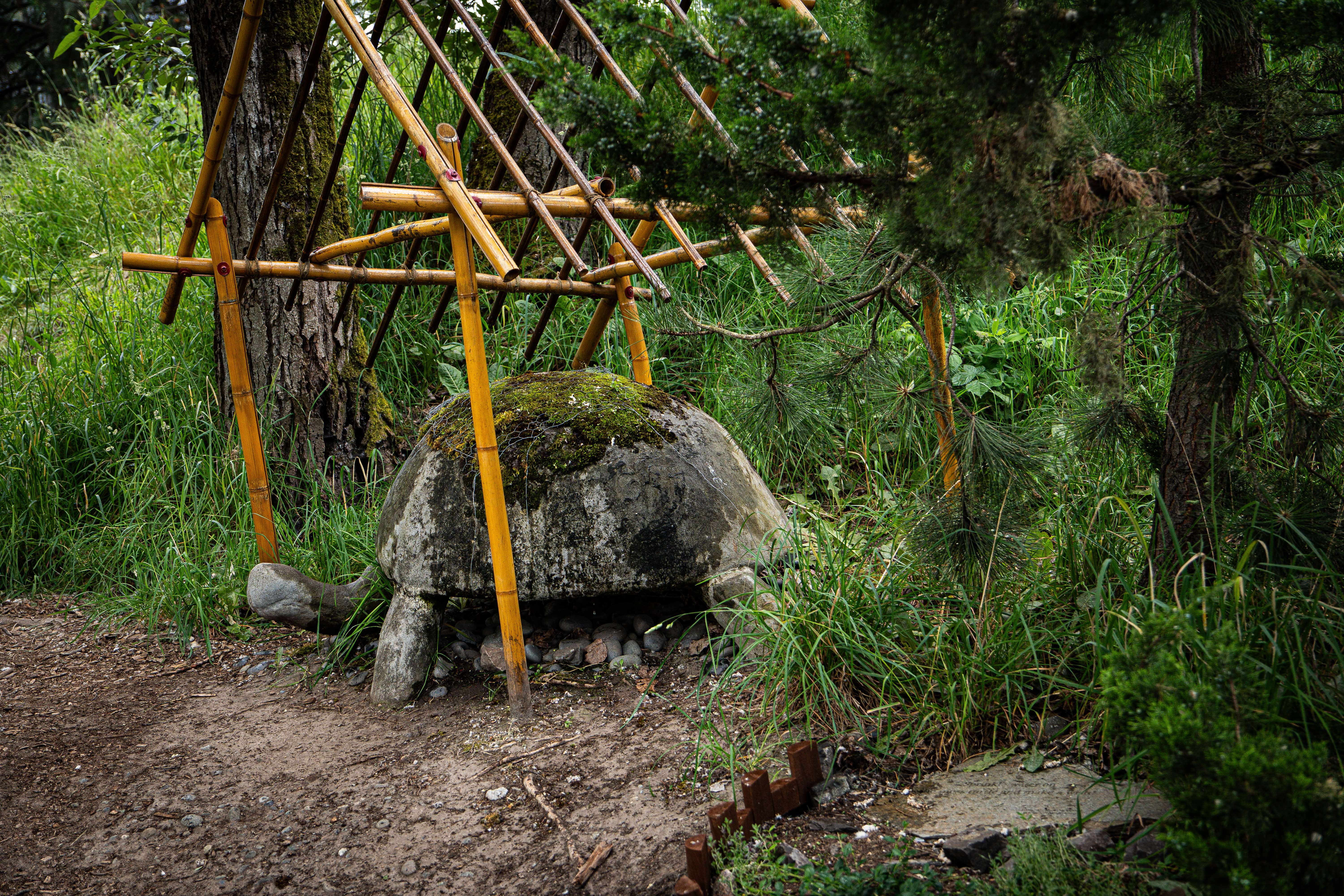
Developed as a living art and environmental installation by multimedia artist Michiko Tanaka, the Moss Turtle at the Troll’s Knoll in the Fremont neighborhood reflects the sacred belief of Japanese symbolism. Revealed to the public on Earth Day in April 2021, the sculpture appreciates nature and exudes positivity. The turtle statue is covered in moss and surrounded by stones at its base. Visitors are encouraged to participate in a shared activity of symbolically nurturing the turtle by sprinkling water on it, thereby leading to the growth of the moss on its shell. Philosophically, turtles are believed to bring in good luck and prosperity, a perfect example of the element itself and the space’s function around it working in unison. The site urges people to wish while watering the turtle, merging a psychological and environmental cause of nourishing the soul and space—and it’s a popular second stop for tourists visiting the more famous Fremont Troll. Apparently, sites that are mysterious without being inaccessible invite participation without demanding it.
Cosmic Calling
Elevating a traffic-island street sign into a culturally significant form of art, the Center of the Universe signage installation embodies collective imagination. Situated at the lively junction of Fremont Ave North, North 35th Street, and Fremont Pl North, this funky signpost points in multiple directions to real-world locations like Machu Picchu, the Louvre, and Timbuktu, as well as to local Fremont spots like the Troll, Rapunzel on the bridge, and the Fremont Rocket. The wooden signage crafted by Maque daVis playfully directs visitors to a bunch of quirky neighborhood landmarks.
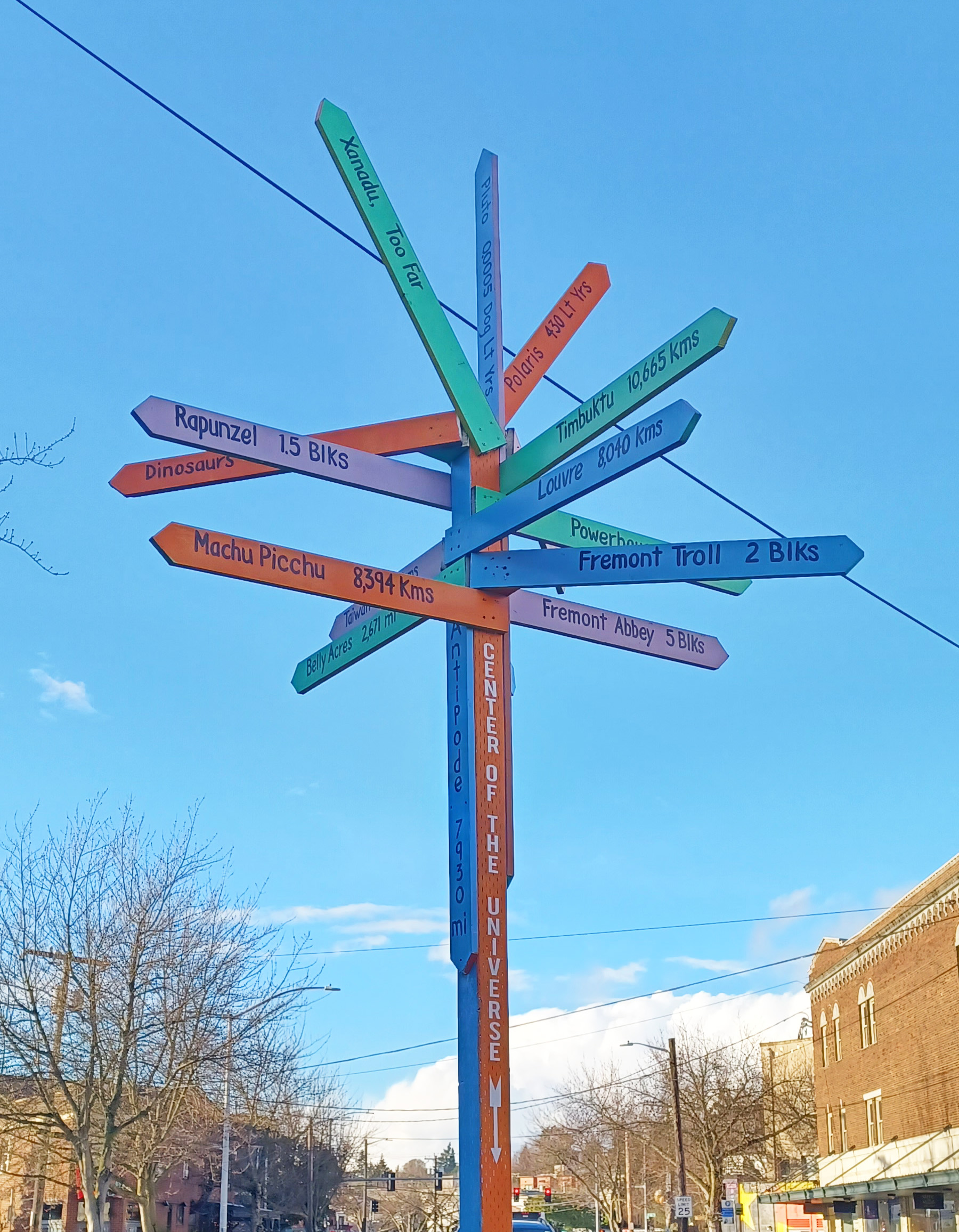
The sign claims to mark the center of the Universe in Fremont, owing to lore originating in the 1970s, wherein the residents considered the area to be a thriving center. The sign was officially placed at the spot in 1991. Since, many stories and myths have revolved around its existence, the most popular one being that a group of scientists in the ‘90s determined that Fremont was truly the Universe’s center. A rather logical reasoning insists that installing this colorful signage was part of Fremont's greater rebranding effort, shifting its industrial identity to an artistic hub with culturally rich community businesses. Even today, the sign does not just raise hope or passively urge visitors to wish, but also educates them about the eccentric landmarks nearby. And unless the claim is disproven, it might actually be the center of the Universe after all, who knows!
Lingering Locks
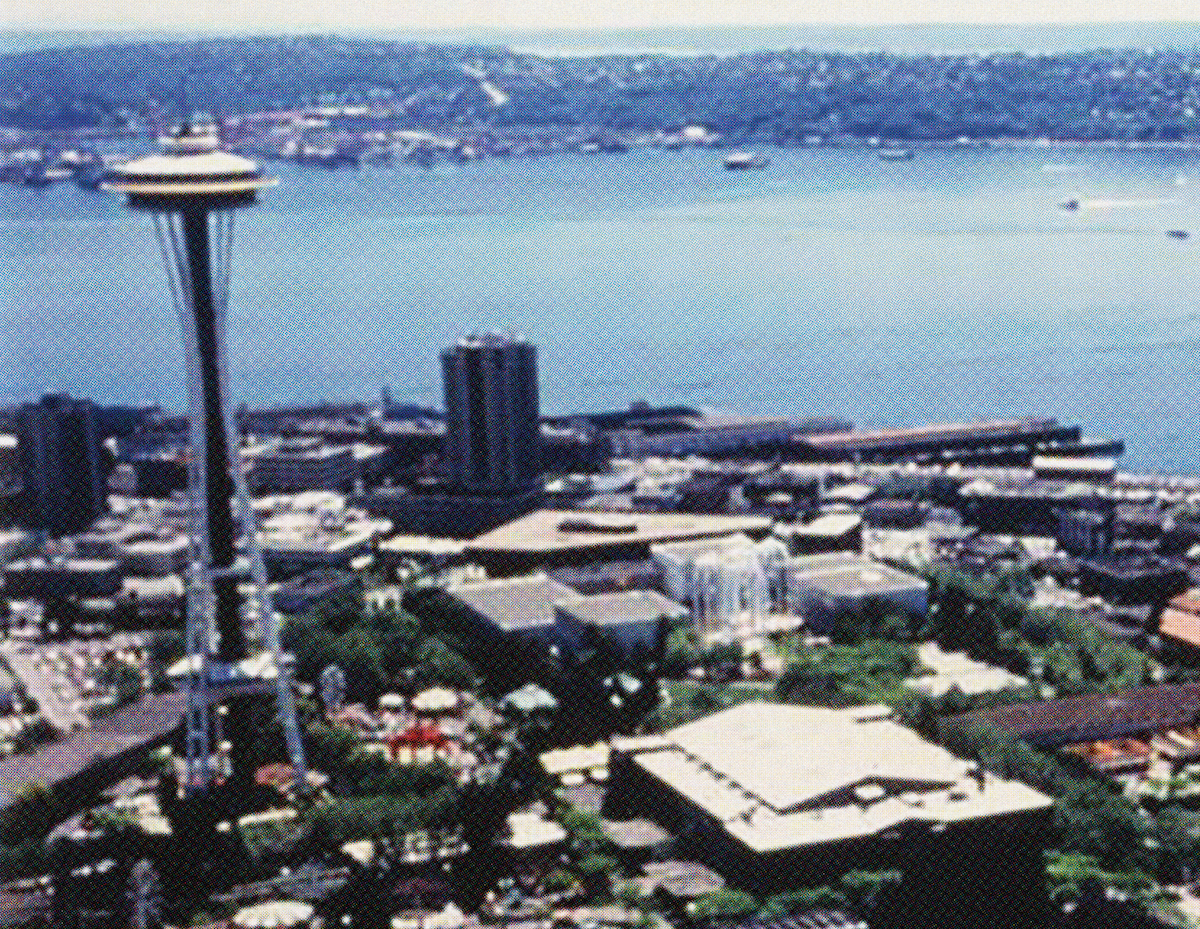
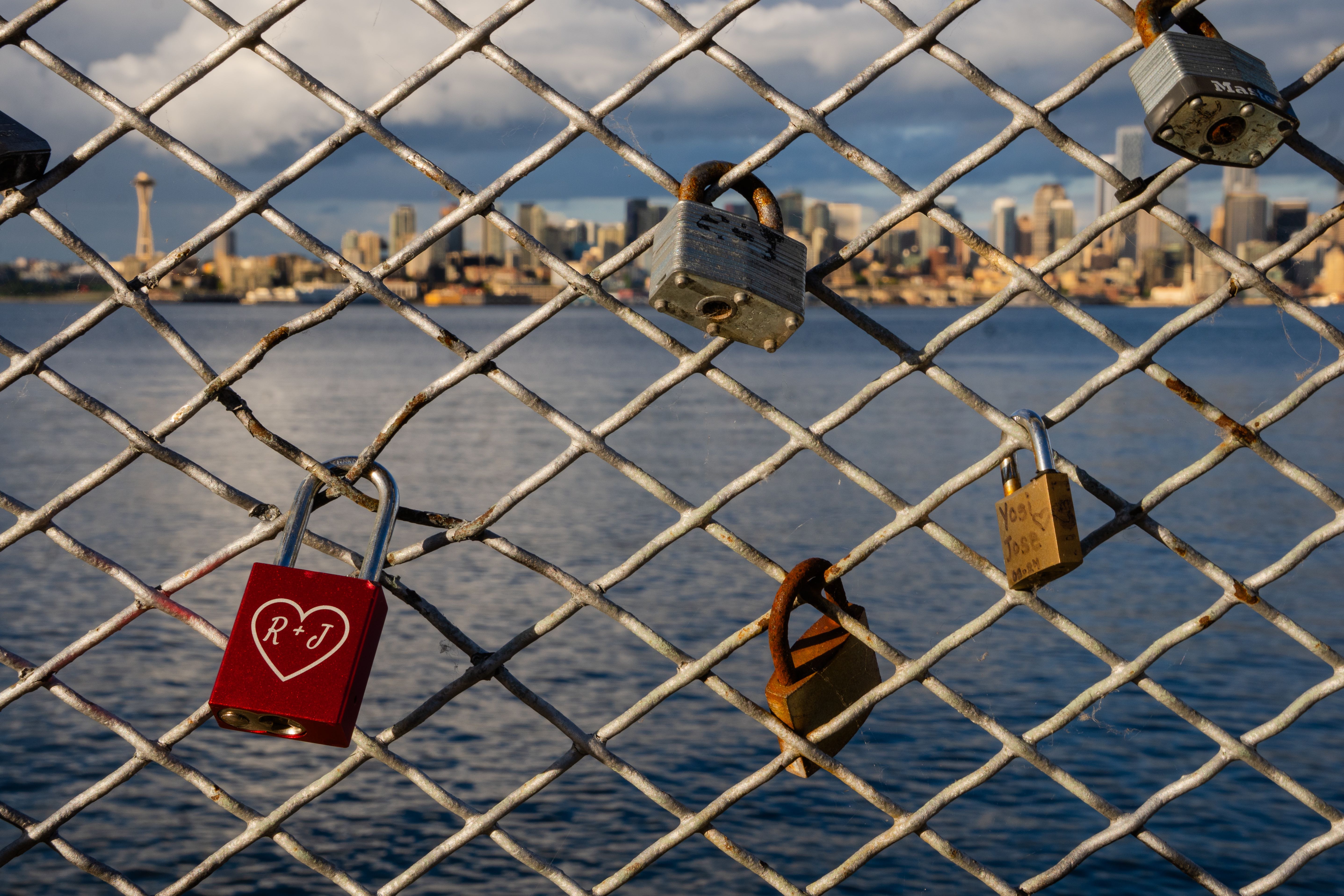
Almost two decades ago, a rendition of Paris’s declaration of love through attached padlocks on the bridges found its way to Seattle. Initially latched onto the Seattle Ferry Terminal Bridge near the Colman Dock, the locks were later moved to a chain link fence at Alki Beach, across Elliott Bay. Around 240 locks are affixed to the fenced viewpoint that frames the stunning city skyline. Visitors and couples add locks of all sizes and colors—inscribed with initials, dates, or messages—as a symbolic commitment to forever. What was simply designed as a passageway or a viewing deck doubles up as a canvas for human attachment and remembrance. This user interaction reveals that people aren’t simply looking for a destination, but rather searching for a ritual. With zero restrictions whatsoever, people from all communities, nationalities, races, genders, and colors use the same space to express their connection and participate in community art.
Nature’s Novelty
Standing tall as a living legend of resilience, strength, and wonder, the Tree of Life along the Pacific Northwest coast and the Olympic Peninsula defies the nexus of nature. Suspended between earth and the sky with its exposed roots stretching from eroded bluffs on either side, the tree is a sacred marvel of perseverance. The Sitka spruce has famously resisted gravity for decades, entwined in its landscape as it constantly reaches for the sky. Nestled near the campground, north of the Kalaloch Lodge, this mighty tree is a marvel to behold. While its surrounding beach landscape erodes and reshapes due to tidal waves and coastal storms, the tree, strong in adverse conditions, has given hope to millions of visitors each year who have been astonished by its resilient force. Despite its perseverance, the tree’s future is uncertain as nature begins to shapeshift its foundation, forcing it to move closer to the ground. The Tree of Life still somehow manages to hold tight till it has to completely submit to the fall.
The cavern between the bluffs observes the tree’s growth as its roots dangle in midair. The tree has greeted many tourists over the years who couldn’t comprehend its 40-foot existence, unanchored to the ground. As a naturally occurring landmark with an aura of spiritual strength, the tree becomes a metaphor onto which many personal narratives of faith, endurance, and survival are projected.

…
When viewed collectively, these spaces suggest that the quality of sacredness is not necessarily inherent in architecture or landscape; it is woven through human relationships and rituals of hope. A space feels spiritually alive when people repeatedly invest meaning into it—through stories, legends, attachment, memories, and belief. While the physical environment provides a stage, human participation writes the script for the architecture of hope.
As secular smart cities become increasingly digitized and user experiences migrate onto screens, the desire for these symbolic spaces will grow. How can one tie a handwritten wish to a digital tree? Throw a coin into a fountain on the internet? Feel the essence of spiritual activation in high-tech settings? While technology can upgrade our lives, it struggles to replicate the tangibility of embodied participation. The act of reverberating with an architecture of hope demands presence, touch, and vulnerability.
Urban shrines remind us precisely why the architecture of hope creates a fleeting but deep sense of connection—to place, to community, and most importantly, to oneself. They reinforce that beneath our modern personas, we still strive to seek places where hope feels tangible, stories feel personal, wonder is permissible, and the ordinary opens itself to a world of possibilities.
The underlying question isn’t why people choose to believe in these wishful environments. It is rather why we humans continue to require them. Perhaps because hope, like architecture, emerges from inner calling and needs a space to live.


.jpg)

.jpg)