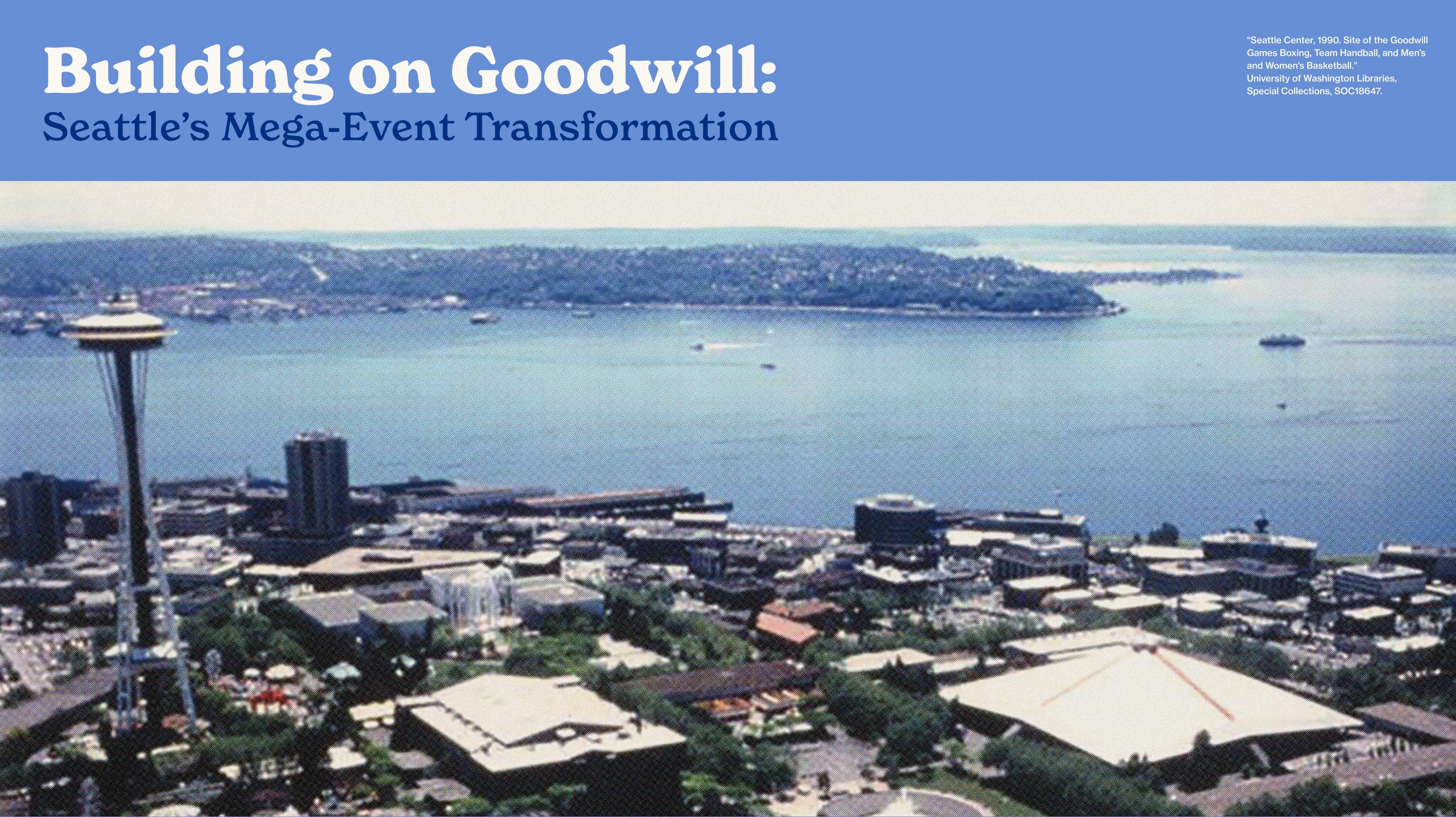

Seattle is preparing. Scheduled to host six Men’s World Cup matches this summer, the city's revision has been relatively subtle, emphasizing the adaptive reuse of venues and focusing on urban regeneration to enhance, renovate, and modernize key parts of the city. Athletic facility upgrades, infrastructure improvements, and overall beautification are ongoing amid the pressure of a global audience. But as we prepare for the eyes of the world to be on us, those who live here must contend with the idea that improvements to the city seem to happen quickest when they’re for someone else. And when it’s all over, when all the work comes down to just one month and six matches, the crowds will leave, the banners will be discarded, and these changes will disperse into our everyday lives. Without the deserted stadiums or hollow landmarks that can haunt host cities when short-term grandeur is prioritized over long-term integrated planning, understanding the legacy these mega-events leave behind when architecture refuses spectacle and instead adapts, reuses, and ultimately moves on becomes a game in itself—one of nuance rather than sport.
The classification of a mega-event refers to a high-profile, large-scale gathering, making the opportunity to host one a boon for many cities. The international tourism and economic impact of mega-events are transformative, shaped by multi-year planning cycles, international media attention, and global hype. The World Fair, the Olympic Games, and the FIFA World Cup are paradigms of the mega-event model. Seattle hosted the World's Fair in 1962 and will host matches for the FIFA World Cup this year, but somewhere in between, another mega-event unfolded, leaving an interesting footnote in the city's annals. Amidst the frigid tensions of the Cold War, organizers sought to thaw relations through competition and cultural exchange. The Goodwill Games were advertised as an apolitical alternative to the Olympic Games, a response to the 1980 Olympic boycotts. Seattle hosted the second of its kind in 1990, with the inaugural Games held in Moscow four years earlier. Although 54 countries competed in the 17-day multi-sport event, much of the hype stemmed from seeing some of the best U.S. and Soviet athletes face each other again.
Looking back, the desperate call to keep politics out of sports is nothing new, and the determination of when it’s socially acceptable for political discourse to intersect with sports is fickle. Possibly more poignant now than ever, from “shut up and dribble” to gold-medal locker-room laughs and a Ukrainian’s Skeleton helmet, it is evident that sports do not take place in a vacuum. The notion that the two can exist in isolation from one another is disingenuous at best and can be utilized as a form of soft censorship through social pressure and the threat of backlash. Though it's looked down upon when coming from the individual, systems and organizations with power don't operate under the same standards. The act of creating an entirely new mega-event to be “apolitical” is in itself a political act. Countries boycotting or banning specific nations from the Olympics is used as a political, punitive tool. And when one of the 2026 World Cup matches is named the “Pride Match,” it’s political when controversy is stirred up due to the fact that homosexuality is criminalized in the home countries of both teams set to play.
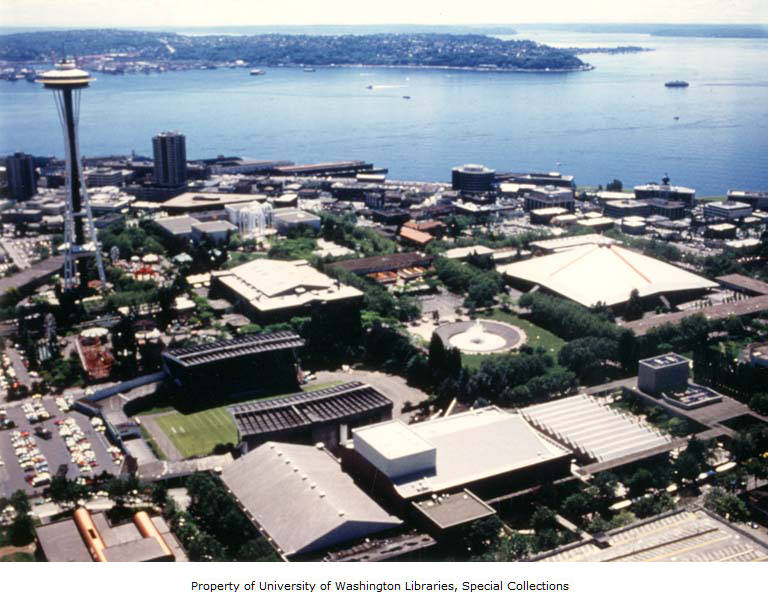
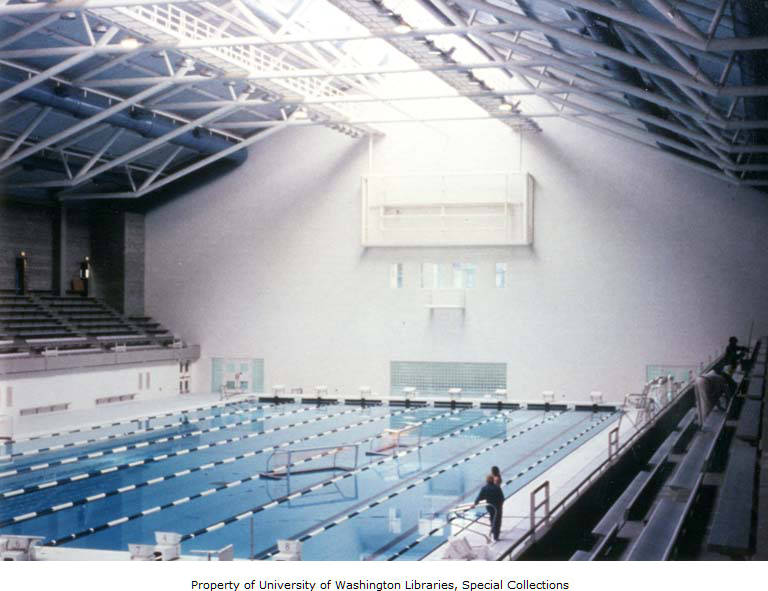
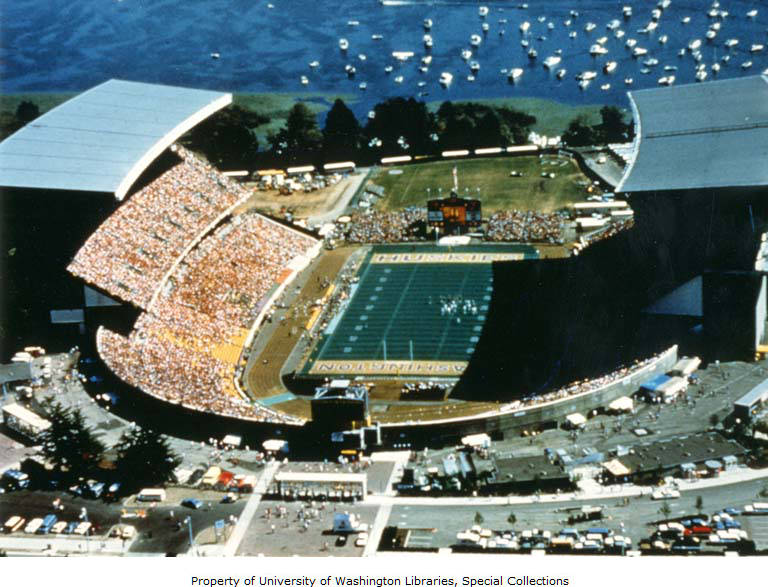
Today, 36 years later, the Goodwill Games are a faded memory. One that’s stored in the city’s archives, and on the outer edges of the minds of those old enough to have seen it. Most young Seattleites are none the wiser. Places such as the Husky Stadium, the UW dorms, Cheney Stadium, the Tacoma Dome, and Seattle Coliseum were outfitted for the event, with the Weyerhaeuser King County Aquatic Center built specifically for the Games. These are all well-known landmarks of the area, especially for those who grew up playing or watching sports. The fact that their association does not start or, by any means, end with the Goodwill Games speaks to their integration into broader urban development, thereby securing their longevity through multi-functionality. Strategically, the preparation for the Goodwill Games focused largely on adapting and upgrading existing facilities, tweaking aesthetics to modernize and enhance them. But hosting over 2,000 athletes from 54 countries is no small feat, and it was not without troubles. Strained relationships formed between those spearheading the mega-event and city leaders, payments to contractors went unfulfilled, and subpar viewership plagued the Games, which were completely defunct and dismantled in 2001 (it’s hard to capture an audience when your direct competition is the Olympic Games). But in Seattle, the architecture far outlasted the Games; it adapted and endured. It’s more than what can be said for many host cities, which, in the wake of their mega-event, were left drowning.
Athens was unable to convert the specially built facilities for long-term use after the 2004 Olympics and accumulated exorbitant debt, which heavily contributed to an economic hole the historic city is still digging its way out of. Sochi’s hosting of the 2014 Winter Olympics was among the most expensive in history, but the economic returns never materialized as predicted, in part because the facilities were underutilized following the Games. The citizens of Rio de Janeiro faced devastating displacement and gentrification during a series of back-to-back mega-events that completely altered the city's urban fabric (Wheatley, 2024). Unfortunately, the list goes on. A rolodex of environmental, social, and economic consequences born from the prioritization of the tourist rather than the needs of the citizen. Victims of the same killer, these cities are linked through rotting architecture haunted by the ghosts of use. What were once packed stadiums, exclusive athlete villages, flashy venues, and intense infrastructure projects are now solemn graveyards of poor planning and mismanagement. It’s why it is imperative that cities hoping to host these mega-events have clear, long-term infrastructural plans from the outset that invest in post-event utilization and are cognizant of the community’s needs, if they intend to avoid adding their name to the necrology.
Seattle came out relatively unscathed following the Goodwill Games and is implementing a similar strategy for the Men’s World Cup, hoping for another positive outcome. With projected estimates of around 750,000 fans flooding the city (Gasca, 2025), the approval of $45 million by Washington State lawmakers for these preparations (Kim, 2025), along with smaller grants from FIFA, exciting improvements to the city are underway. Sports-related facilities, transportation, and third spaces are seeing the bulk of these changes. Lumen and multiple University fields have undergone significant upgrades to meet FIFA standards and ensure the best experience for the players. Improvements to the Husky practice fields, such as lighting and maintenance equipment, will create the ideal environment for players and fans alike and provide greater value for future use. Seattle U’s fields have also been upgraded, developments that were already under heavy consideration; the World Cup fast-tracked those plans. Lumen Field is investing in long-term infrastructure upgrades, including security and seating. Most importantly, reusing existing facilities rather than building new ones to host these matches alleviates concerns about abandonment and improves the day-to-day experience.
Transportation services are being examined and enhanced to improve efficiency and capacity, with transit agencies expanding services and scaling back construction projects across the Puget Sound. The breadth of transportation preparedness is vast and two-fold. Airports, trains, buses, ferries, and cars, as well as infrastructure to accommodate travel by foot and by bike, must be prepared for the influx of visitors while still serving regular riders and mitigating disruptions. While many of the transportation preparations are temporary, the city is learning to operate more efficiently and on a larger scale, accommodating not only those in the heart of the city but also those in the rest of the region. And as the pre-event planning turns into post-event adaptation, what will remain is improved, accessible city infrastructure, enhanced operational capabilities, and a strengthened connectivity of the greater Seattle area’s transportation network.
The beautification of parks and other third spaces is more than just a temporary embellishment to the city. Taking advantage of the economic opportunities that come with hosting the World Cup means opening the doors for tourists to enjoy all that Seattle has to offer, not just the stadiums. Green spaces are essential to any city, providing a natural respite amid concrete jungles. A place for community and leisure, Seattle’s Parks and Recreation and the Seattle Parks Foundation have been working for the last few years to refine the city’s green spaces. Location, accessibility, and aesthetics have been the driving forces for renovation. Westlake Park’s essential role as a transportation gateway to downtown makes it an anticipated hotspot for visitors, with Lake Union Park, the Waterfront Park, and the Occidental Promenade also receiving long-awaited upgrades. Better lighting, new landscaping, and accessible staging and seating will breathe new life into these spaces. The President of the Seattle Parks Foundation, Rebecca Bear, has claimed the “tournament has only served as a 'catalyst' and is not the sole reason improvements are being made” (Gasca, 2025). The focus seems to be on sustained renewal that far outlasts the World Cup.
With just a few months to go, Seattle is in the final stages of preparation, and all these incremental shifts we’ve seen over the last few years are materializing as the deadline fast approaches. Even more compelling than the World Cup itself, though, is how the people of Seattle will live with these transformations. When performance folds back into routine, and the impetus of change fades, what we are left with is the realization that sometimes a city needs to be watched to act. Seattle has taken advantage of the socioeconomic benefits of hosting the World Cup to make improvements we hope will positively affect our quality of life for years to come, even if it’s in the smallest of ways. By focusing on revitalization and reuse, Seattle is well-positioned to reintegrate these changes into the urban landscape. The measure of a city’s growth is not often one of constant leaps and neat trajectories of progress, but is rather found in the incremental improvements that mega-events such as the Goodwill Games and the World Cup can accelerate, events whose true legacy lies in a city’s capacity to adapt and endure.
Citations:
- Archives West, 2024.
https://archiveswest.orbiscascade.org/ark:80444/xv98114
- Noel Gasca, Dec 2025.
https://www.kuow.org/stories/how-seattle-is-getting-ready-to-host-the-2026-fifa-world-cup
- Jeongwoo Kim, Nov 2025.
https://seattlemetronews.com/2025/11/12/seattle-world-cup-improvements/
- Christine Wheatley, Nov 2024.
- Alec Cowan and Libby Denkmann, April 2022.
- Joel Moreno, March 2026.



.jpg)

.jpg)