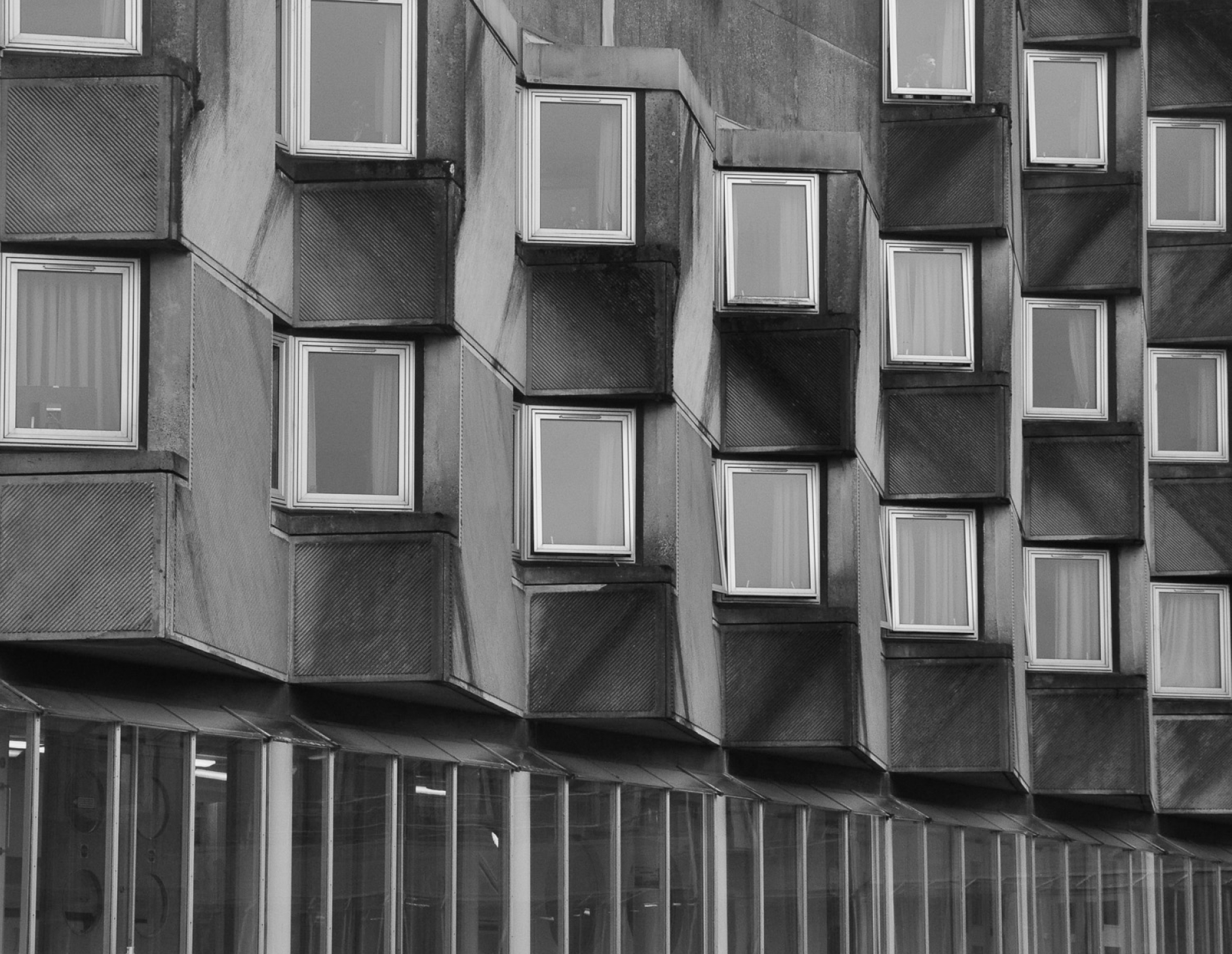

Much like the universities they populate, collegiate architecture provides a philosophical authority to a campus, constructing and making material the ideas, values, and legacy it wishes to project. The architect’s goal is to communicate to students and faculty — through design, function, and symbology — the relationship between academia and the built environment in which they live and work.
In the English-speaking world, the oldest universities utilize their religious heritage to correspond form with philosophy. Emerging from medieval divinity colleges, the academic buildings of schools like Oxford, St Andrews, and Glasgow share similar design elements as the Romanesque and Gothic churches to which they were once attached; the University of Edinburgh’s New College, for example, makes use of quintessentially Gothic spires and turrets, and St Andrews’ St Mary’s and St Salvator’s quadrangle plan follows that of the town’s ruined cathedral priory. This is the design language of the old academic establishment, relating notions of prestige and tradition through references to these institutions’ rich histories.
Stepping onto any British university campus, however, you will find neighboring these flying buttresses and pointed arches a strikingly modern juxtaposition: tall, vertical slabs of concrete, glass, and harling (a lime mortar and aggregate cast native to Scotland and Ireland). At some point, Brutalism, it seems, replaced the traditional, non-secular design language that defined collegiate architecture for the previous millennia. These are called the ‘new universities’ of Britain, a model of higher education guided by entirely ‘modern’ philosophies, institutions, and, most importantly, design. From a purely aesthetic glance, their publicly accessible green spaces, democratic plazas, and hyper-functional circulation paths contrast sharply with the jumbled, gated, and restrictive campuses of the ‘ancient universities’ — including Oxford, Cambridge, St Andrews, Glasgow, Aberdeen, and Edinburgh.
At my home university, the University of St Andrews, this division between the ‘ancient’ and the ‘new’ is especially prevalent. Students often remark on these two ‘disconnected realities’ that divide campus life. Looking at a map of St Andrews, the larger, more modern science buildings are geographically separate from the town’s medieval core, where the predominantly Gothic Revival humanities buildings rank. On the very fringe of the University’s North Haugh campus stands Andrew Melville Hall, St Andrews’ most polarizing and emblematic instance of this new collegiate style and philosophy.
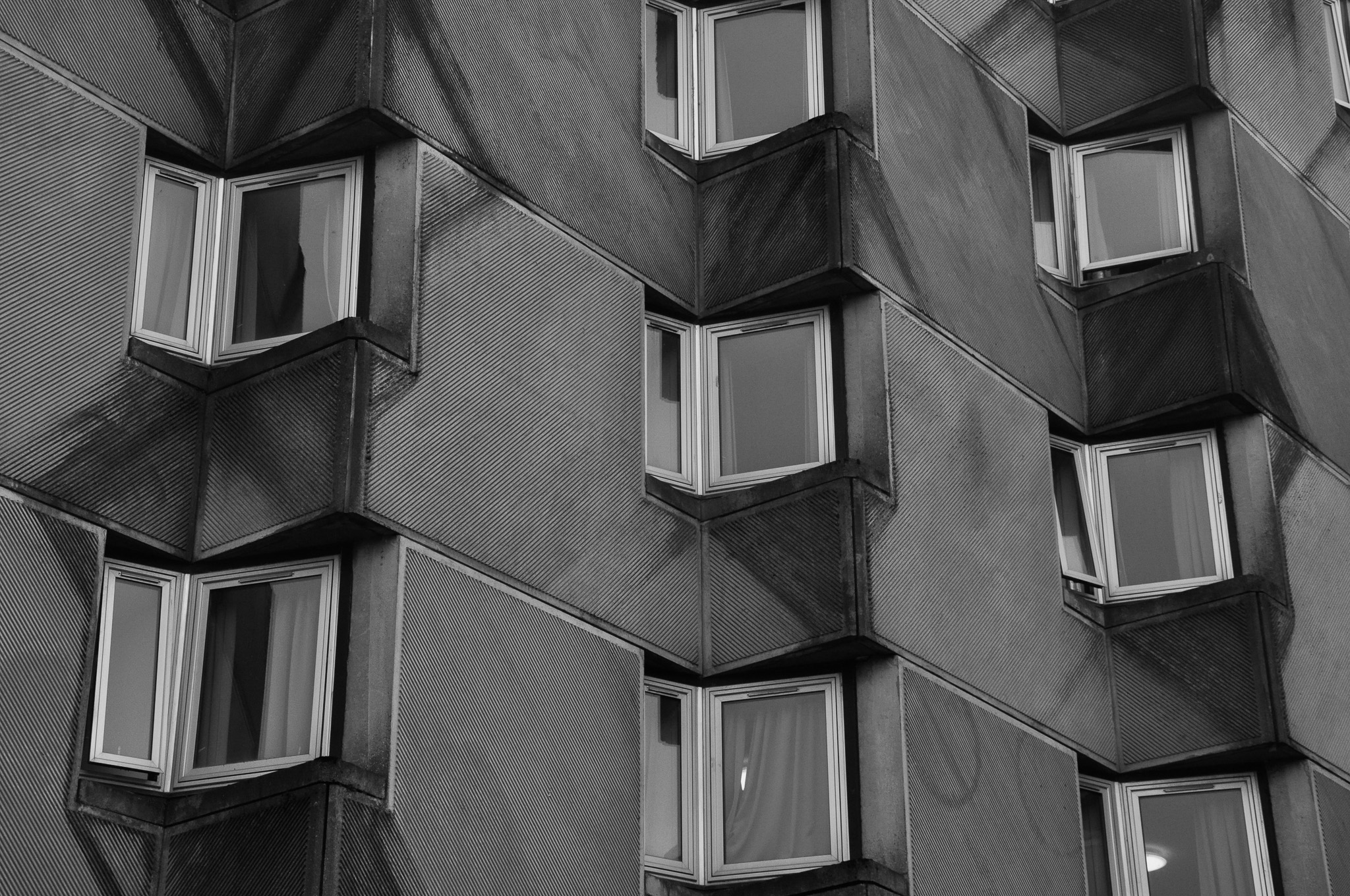
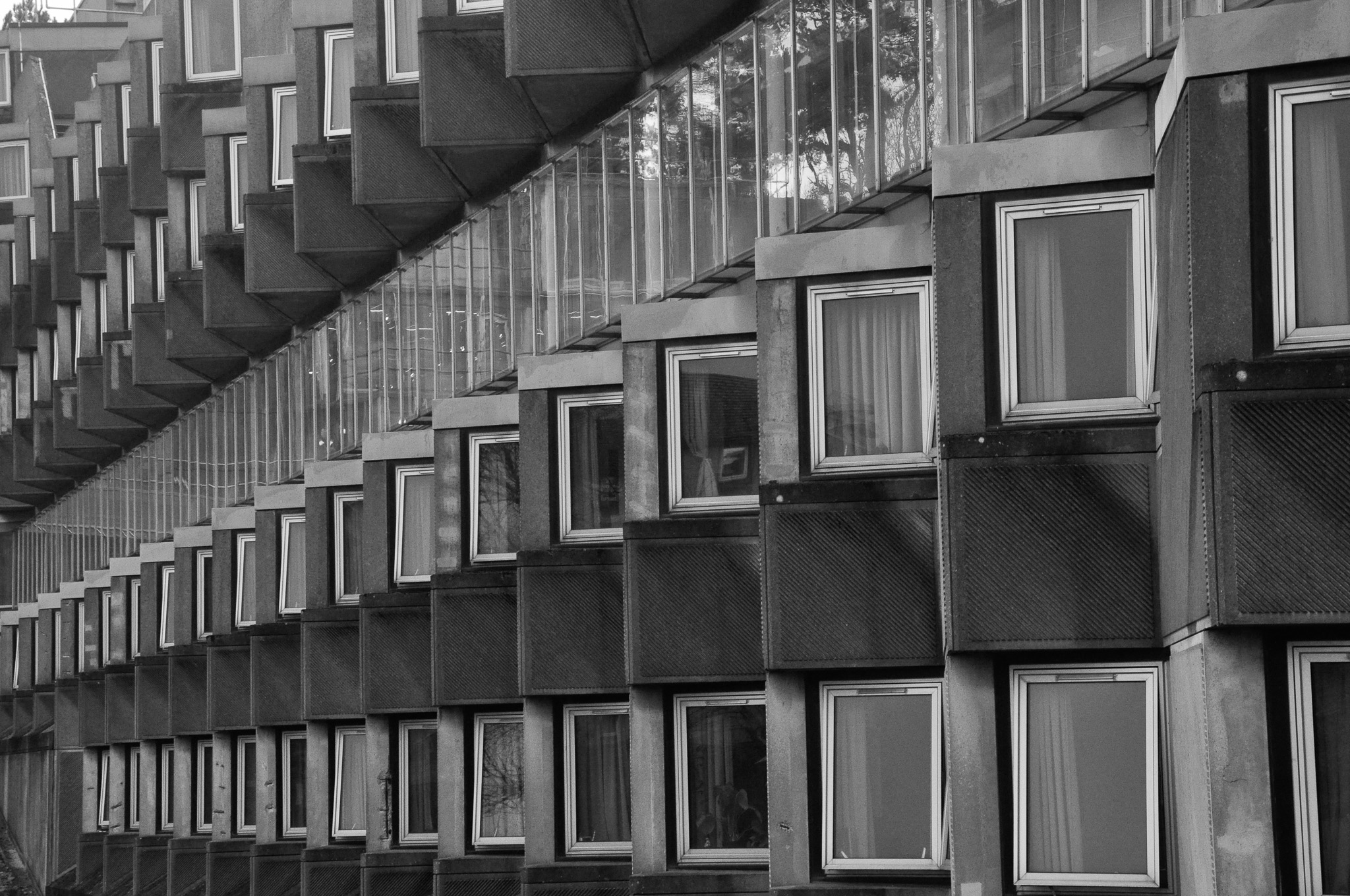
Designed in 1967 by British architect Sir James Stirling, Andrew Melville Hall draws a wide range of impressions, some likening it to a cruise liner, its critics, a ‘prison’ or an ‘asylum.’ Andrew Meville is undeniably striking; the residence building consists of two precast concrete-clad accommodation wings that jut from a central glass-fronted communal block. The hall follows the slope of the hill atop which it rests, stepping from four stories on the northern end of its wings to six stories on the south end. Each of Andrew Melville’s 250 bedrooms features an angled, north-facing window, and interiors are furnished identically with blond timber furniture, a motif that extends to the finishes found in the common spaces. “It’s a very alien building where it is. It doesn’t fit in,” affirms Mr Mark O’Sullivan, Project Manager for the University of St Andrews Estates Office.
O’Sullivan led the 2017 refurbishment of Andrew Melville Hall, a year-long project which acquainted him intimately with the hall’s history, design, and eccentricities. “[Andrew Melville] has a different feel to it, it’s very much a feel of the time,” shared O’Sullivan. During WWII, the Blitz destroyed significant portions of British cities and towns, motivating massive reconstruction efforts. “[Britain] had just paid off the war debts, and so there was investment to be made […] there was this time in the 60s where the government just had money.” Previously, the North Haugh was an empty field through which the now-defunct rail line ran; “I actually have a photo […] it’s an aerial shot, and there’s just nothing there. It just didn’t exist.” The post-war baby boom, alongside a growing welfare state and modernizing economy, promoted this expansion and renovation of the university system. Empty fields were becoming campuses.
Blank checks and progressive social change afforded architects the opportunity to radically redefine not only the aesthetic of the university, but indeed its founding principles. “Coming out of WWII […] you had a breakdown of the class system, and that’s where you started to see a different type of student coming through,” explained O’Sullivan. “We were building a whole new society, and the ‘new university’ was going to be the driver of it.” Coming into the 1960s, the university was ceasing to be an institution of the upper classes and emerged instead as a model for a democratized, utilitarian Britain. “The planners of post-war universities shared the belief that good planning and distinguished architecture could bring forth academically mature and socially adjusted students.” Function and efficiency, community and inclusion, collaboration and learning, were the ideals through which architects were to renovate these stuffy, ornamented, and exclusive spaces.
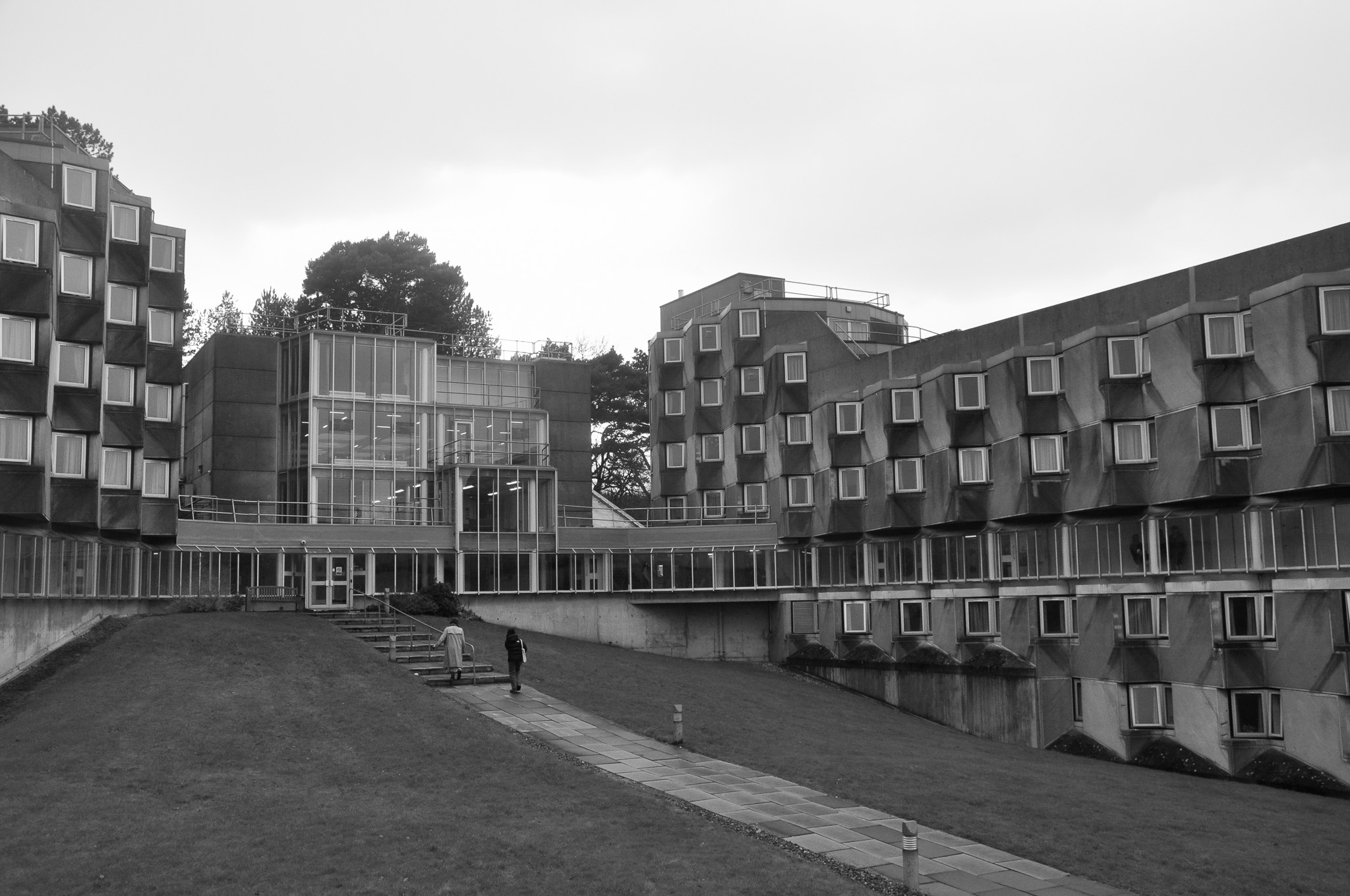
Stirling’s building achieves this spectacularly. Andrew Melville is, in its own way, didactic, enforcing behavior through design. Stirling notes that architecture is "not a question of style or appearance; it is how you organize spaces and movement for a place and activity.” Small, cramped rooms discourage student isolation and promote movement out of dorms and into communal spaces. “I mean, they’re cells,” explained O’Sullivan. “They’re about the same size as a prison cell, but it was to deliberately force people to mingle in the common areas […] the rooms aren’t comfortable enough to want to spend all of your time in there.” Like the arteries of a heart, Melville’s wings draw residents through to the building’s central block; Andrew Melville’s 2016 Design Review and Heritage Impact Assessment confirms that “these narrow, windows-less internal corridors contrast intentionally with the wide, naturally-lit promenade and viewing deck to encourage [...] students to congregate [in social spaces]”. The promenade contains the hall’s reception office, dining hall, bar, and social and games rooms.
The same assessment describes Andrew Melville’s interior as a “functional, pared-back scheme.” Exposed concrete, structural steel beams, and plumbing, complemented by flat and uniform blond timber finishes, while now commonplace in interior design, communicate an unadorned pragmatism — a stark contrast from the more intricate details of St Andrews’ pre-war academic buildings. Andrew Melville’s exterior displays a similar restraint; precast concrete slabs — a novel construction technique for the period — ribbed and arranged in a serrated pattern, provide both depth and an unpretentious uniformity to the façade. The angled, north-facing windows on the wings supply each bedroom with identical views of the North Sea, engendering the resident experience with a democratic homogeneity. Immediate access to green spaces, too, represents a humanism which the older halls lack.
Andrew Melville Hall is listed Category A for being of “national or international importance” — the same classification as Edinburgh Castle — providing it with the strictest preservation protections. Still, the building teeters on ruination. O’Sullivan described the plethora of issues that Andrew Melville raises: mold, poor weatherproofing, insulation, and keeping with modern safety regulations. “My career is all about maintaining buildings, keeping them alive, reusing them, refurbishing them […] it doesn’t make sense on a logical basis, because, in theory, in reality, [buildings like Andrew Melville] are impossible to maintain.” As such, Andrew Melville is, and likely will be, the last of its kind in Scotland; “I don’t know if, today, we could ever get that through our government system.”
As these universities — new and ancient — continue to adapt to mounting financial and political pressures, this collegiate liberalism and social optimism is too confronted by its own tedious durability. Like these architectural relics of a bygone era, this radical humanist philosophy and democratic mission in academia requires constant maintenance and attention. Our architects are our philosophers, and, in a sense, design and preservation hold the power to shape, enrich, and transform our society, for the better.




.jpg)

.jpg)