
Seattle is a hub of change. From the city’s recently renovated waterfront to the technology you hold in your hand, Seattle is home to many kinds of designers who antagonize or adapt to these continuous shifts in culture. The American Institute of Architects (AIA) uses the Seattle Design Festival (SDF) to host conversations about these changes not just with designers, but with everyone. Senior Communications Manager Bray Hayden voices this particular value of SDF: “Everything from the objects we use to the way our city is planned has been designed. We believe everyone should be invited into the design process and at least have a voice in design decisions that affect them.”
SDF is a multidisciplinary event showcasing what the design community is thinking about. Though it also consists of mixers and socials throughout the week, the Block Party yields the most interaction with non-designers. Held on Saturday and Sunday, the Block Party transforms Lake Union Park into a free and accessible gathering space for people of all ages and abilities; children run to interactive installations, dogs guide owners through the striking structures, and old friends sit to watch memorable mainstages. Communications Coordinator Claire Needs notes that although these visitors may not actively discuss design, “they can feel its impact on the experience that they're having.” This impact is essential—SDF is not just about design itself, but why design.
For the first time in its sixteen-year history, SDF chose a flexible theme: IN[FLUX], IN[HABIT], IN[FORM], IN[TENSION]. Hayden believes this thematic variety “encapsulates and fits the current times and context we are in.” Designers accepted the challenge to bridge the gap between cultural flux and design, thinking about how nature, strangers, and community influence change in the self.
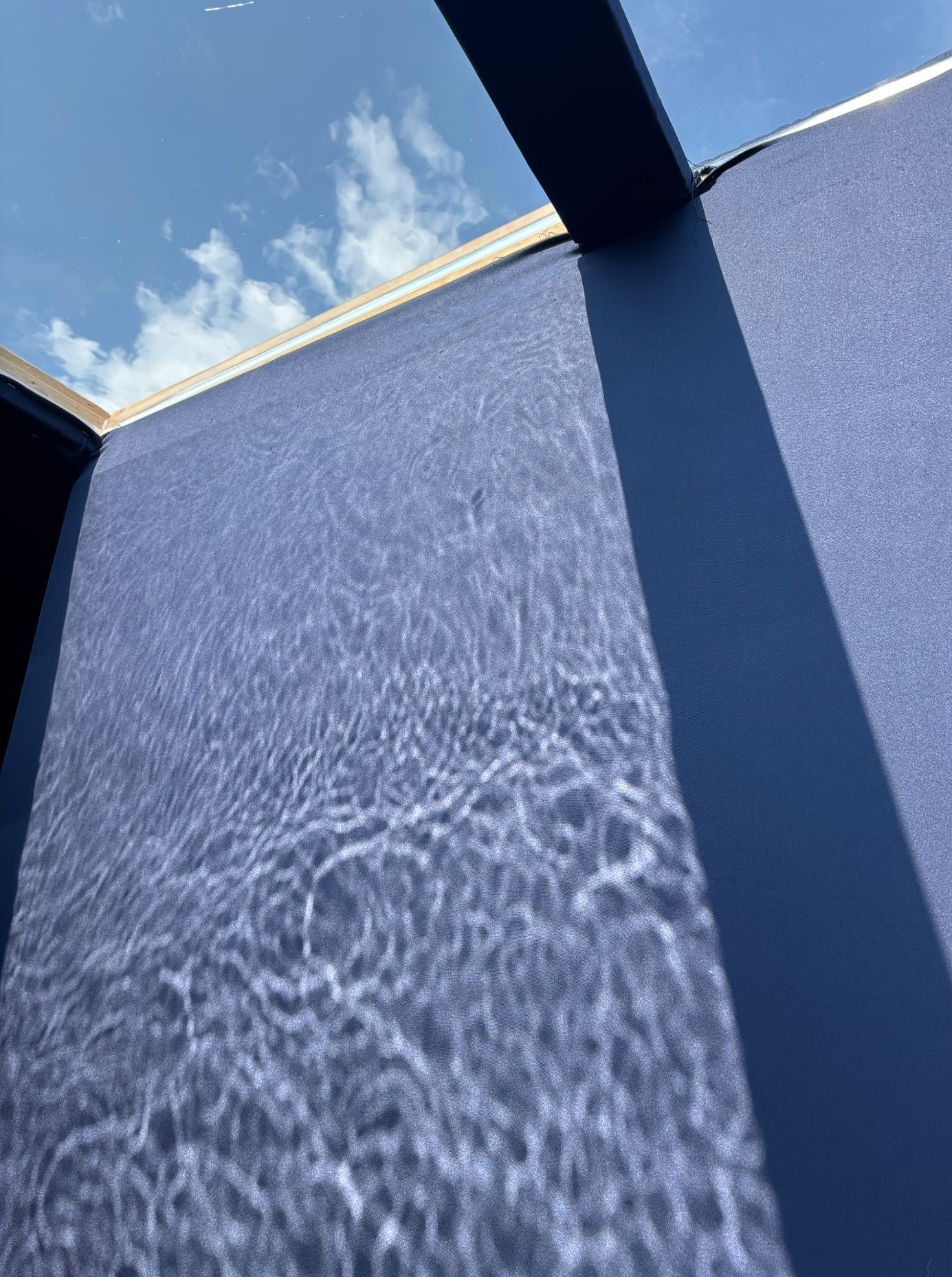
In[fluid]ence is a collaboration between global architectural firm HOK and construction company BNBuilders that turns the tide as its design causes visitors to look up at water. The lightweight woodstud structure holds up a quarter-inch acrylic tray of water that reflects onto walls of dark blue fabric. Calming music plays from small portable speakers, slowing people down until they’re fully hypnotized by the ripples shining on the wall. Joonhyuk Yun from HOK describes how he and the team endeavored “to have different angles on the corner because we wanted to stay away from a symmetrical experience inside.” The different angles and shapes in the upper corners creates a dynamic encounter with water.

But this all begins outside; the exterior invites people in, with swirling reflective sheets replicating water's attributes. One moment, visitors see mirror images of the festival’s joviality—the next, they’re having a heightened sensory experience. Yun explains the installation’s need for this drastic contrast: “Flux is something coming in, but that something is very new.” The team wanted to emphasize that although we cannot prevent nature’s changes, we're living in them. This installation uses water as a lesson in appreciating that which is out of our control. As HOK’s Jacky Wong says, “Water is a medium that helps people really think about all of these external feasible or infeasible forces happening around us.”

Visitors exit the structure and see Cold Calls, a piece in continual evolution. From reusing the A-Frames of projects past to reinforcing the piece with tents, Seattle Design Nerds have developed this piece since its “completion” in March. In the SDF version (3.0), visitors walk up to round cloth tents shading them from the sun’s heat. In front of them is the seal of a cleverly named fake government agency, a ‘70s-like cord phone, and an array of receipts. The tall display hides the stranger on the other side, which has a different agency. Both visitors pick up the phone—hearing famous dial tones such as 867-5309—and the machine spits out a receipt with government instructions to complete through conversation. The catch? They have different objectives and different kinds of receipts to fill out.

The idea is to spark real conversations with prompts that hit beneath the surface, and the receipts encourage new visitors to approach the tent and answer insightful questions. Trevor Dykstra, AIA, recalls how public interaction with previous versions of the project helped the designers determine that people “should be able to walk up later and actually feel the arch of these conversations.” The physical payoff is small but ultimately rewarding because it accomplishes the goal: “We’re getting people to get out of their comfort zone. It doesn't take a lot to force a connection—it’s just having to pick up the phone.”

SDF’s diverse mainstage programming allows curious guests to watch panels and performances. One notable presentation is Quorum Chorus by The Creative Center for Adaptive Praxis (CC4AP). Singers clad in sunglasses take the stage, silently wielding LED signs. No introduction, no instructions—just an audience with paper signs and random words.

This project was inspired by the Fluxus art movement, which valued breaking the barrier between audience and artist for near-unpredictable finished products. Managing Director Brad Muller testifies just how relevant community is to this art form: “The opposite of fragmentation is building connections. Community is probably one of the most valuable assets that we have as humans.”
The chorus contains nine improvising vocalists and one sound designer who stands stage right. He manages incoming signals from the performers’ LED signs. The audience’s paper signs each correspond to a singer. Their job is to figure out which sign goes to which vocalist, who sings only when an audience member raises a specific sign. The CC4AP didn’t put all this together aimlessly; each sign contains a word, and the audience must work together so they can form a nine-word sentence relating to the theme: “The only way through is to believe in something.”
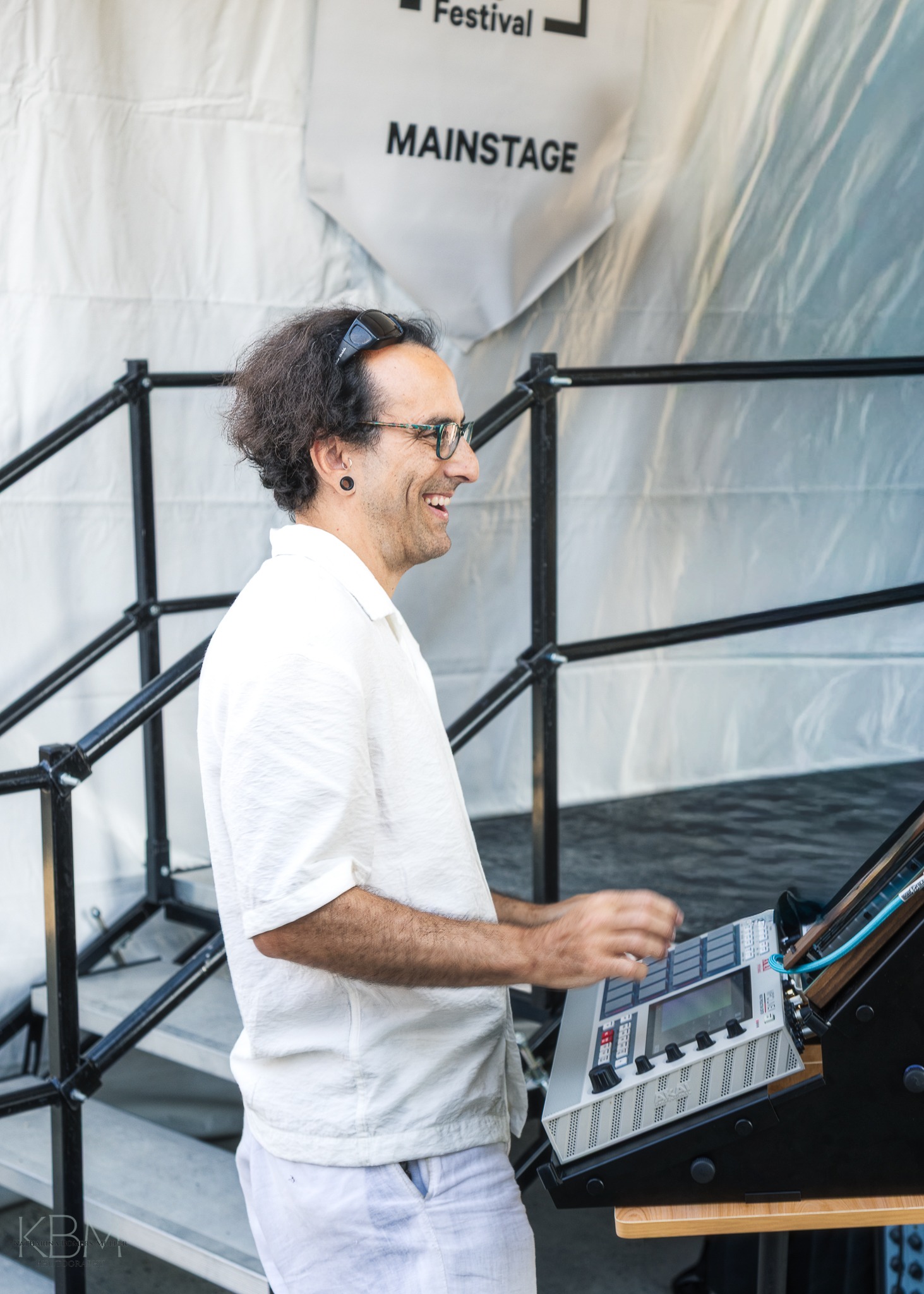
Muller guarantees, “We don’t try to overengineer the community. We try to provide a few constraints and a lot of freedom.” CC4AP creates an environment for people to come together and achieve a common goal. Then, they back off and let the participants complete the project CC4AP began. It’s a risk, but they’re betting in favor of the community.
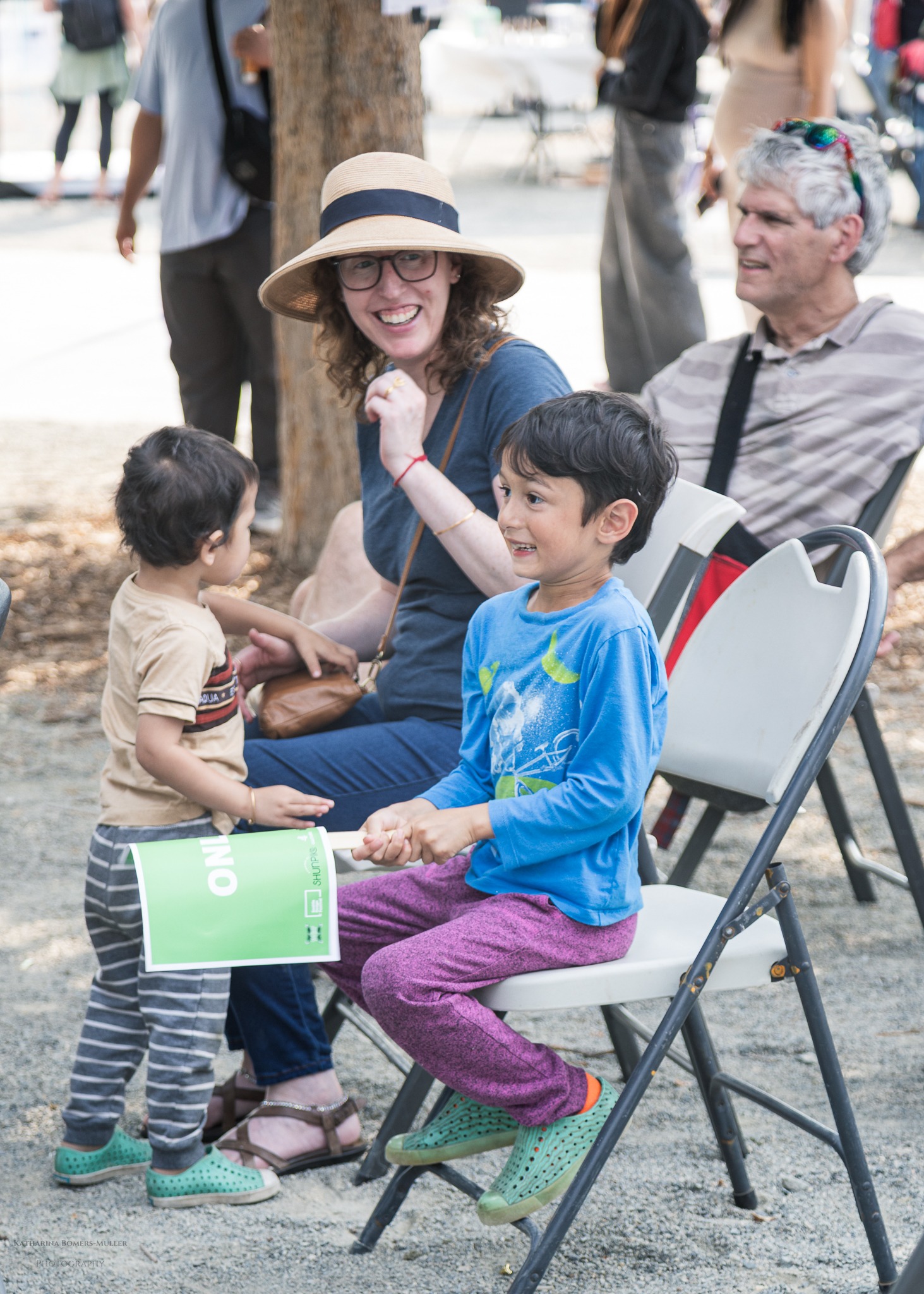
During a casual phone call between friends Jarin Tasnim Khan and Jolin Tran, the topic of SDF’s theme came up. Khan remembers the gamble: “What if we flip the concept?” IN[BETWEEN]: A Public Archive of Becoming defies expectations, Tran explains, by bringing attention to “the internal world—because we have to change as the world changes.” Collaboration with Better Builders’ General Manager Pete Baughman and Estimator Tanveer Rahim led to a simple design that focuses on the self through introspection, not so much the piece; it's a project that's meant to fade into the background.
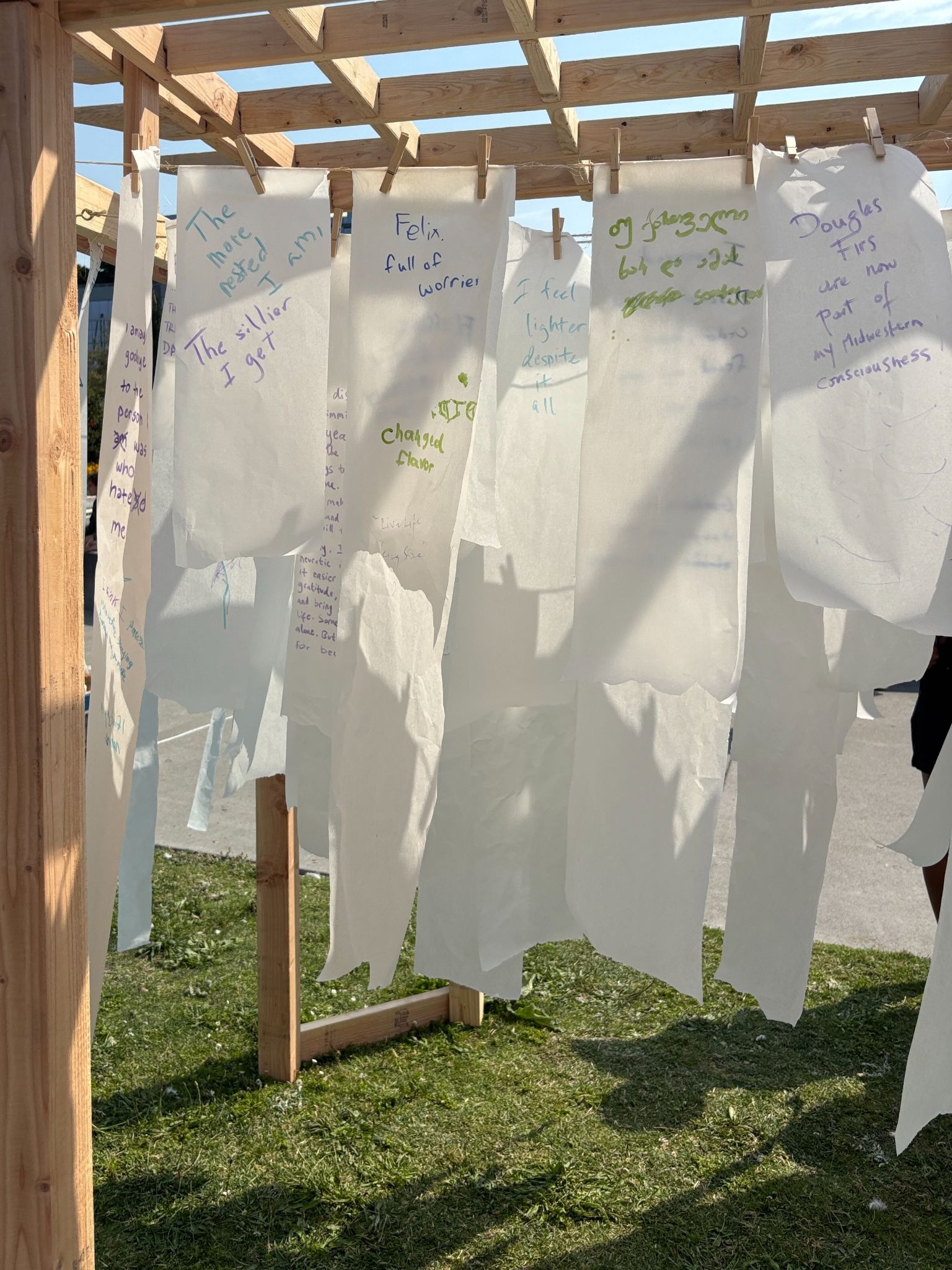
Visitors approach a bare wooden structure with streams of translucent paper—chosen because those who reflect are being transparent with themselves. Khan began collecting this kind of paper when her UW students used it for feedback and self-analysis. After SDF visitors consider the prompt about small changes they’ve noticed in themselves, they clothespin their contemplations to the existing collection of others’ thoughts. Khan emphasizes, “It’s a public archive because you are not just talking about your self reflections. You are mingling with others’ reflections.” Truly, a testament to how life works.

Flux can easily be viewed with pessimism, but these designs teach visitors to view change as a chance for transformation. Although SDF only lasts a few days, Muller insists that “the stories that get told afterward are the most important part of this.” The projects live on in all who experienced them, whether through casual conversation, explaining a photo’s story, or an article. Showing this glimpse of the design community helps regular citizens pass on the stories of SDF. That’s right—it’s another form of flux.


.jpg)

.jpg)