
If you work in Seattle, chances are you crossed a bridge to get there this morning. If you came from the north, chances are it was a drawbridge. And perhaps you had to wait while it opened, and perhaps, Could Zuckerberg have chosen a different morning to sail his superyacht into Lake Union, this morning that I’m already late to my 8 a.m.? But eventually you crossed, and you made it to work, and you entertained Tina from Marketing’s dull small talk (Just LOVELY! How was your weekend?), and this meeting could have been an email, and—chances are—you forgot about the bridge altogether.
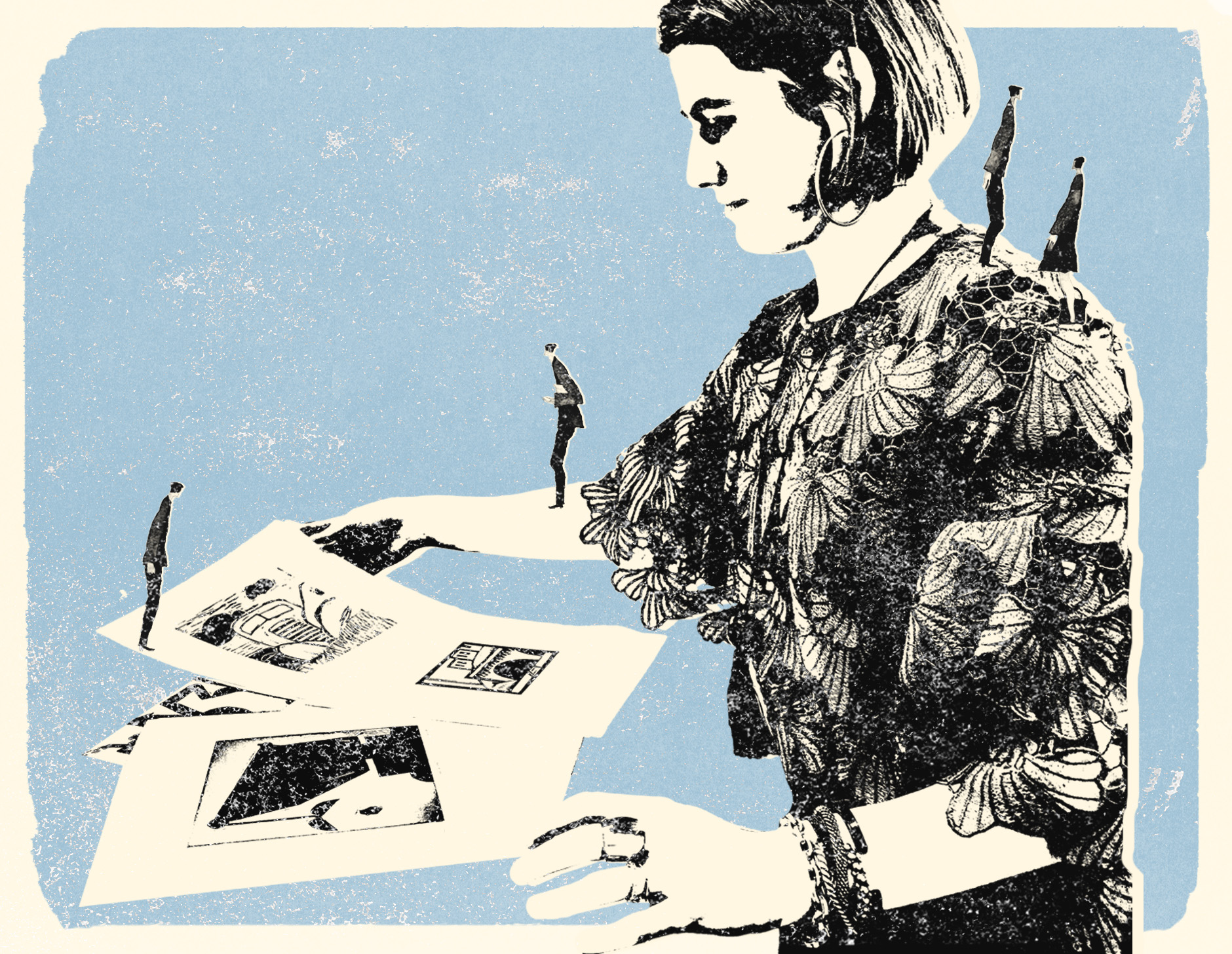
Or maybe you didn’t forget because a little person up in the tower caught your eye. Who’s that? No, not the bridge operator, but an artist. From their perch, windows plastered with sketches, they observe you—you, commuter—but also the birds, the boats, the bikes. And soon all of you become another sketch taped to their window.
If you crossed the Fremont Bridge, that was Freyja Whitney you saw; if it was the University Bridge you crossed, it was Vivian Cho: the animators selected for the Bridge Artist in Residence Program, an ongoing collaboration between the Seattle Department of Transportation (SDOT) and the Office of Arts & Culture (OAC) sponsored by Seattle’s 1% for Art Fund.

Founded in 2009, the residency gives two emerging artists studio space in one of the historic bridge towers, where they in turn produce a body of work inspired by their experience on the bridge. Jesse Jimenez, the Public Art Program Manager at OAC, says of the core idea: “Give an artist unusual proximity to a piece of civic infrastructure most people only experience in transit and see what they make of it.”
Each iteration of the Bridge Artist Residency focuses on a different medium—from lighting to music to data visualization—with this year’s being animation. Freyja and Vivan holed up in their towers from August to December of 2025, observing, sketching, researching, and animating—all culminating in a showcase at ARTS at King Street Station on display from June to August 2026.
Their final films—rooted in history, personal experience, and artistry—shed light on some of our city’s most vital and overlooked pieces of infrastructure. “Magic trick” is the phrase Freyja uses to describe animation’s ability to bring objects and stories to life. Magicians Freyja and Vivian are; after watching their films, it’s hard to see the bridges as inanimate again.

Freyja in Funky Fremont
For Freyja, who grew up in Ballard and has had a lifelong interest in engineering, the Bridge Residency was a natural fit. “This project was kind of a dream for me to combine my artistic practice with some of that [industrial] aesthetic,” she says.
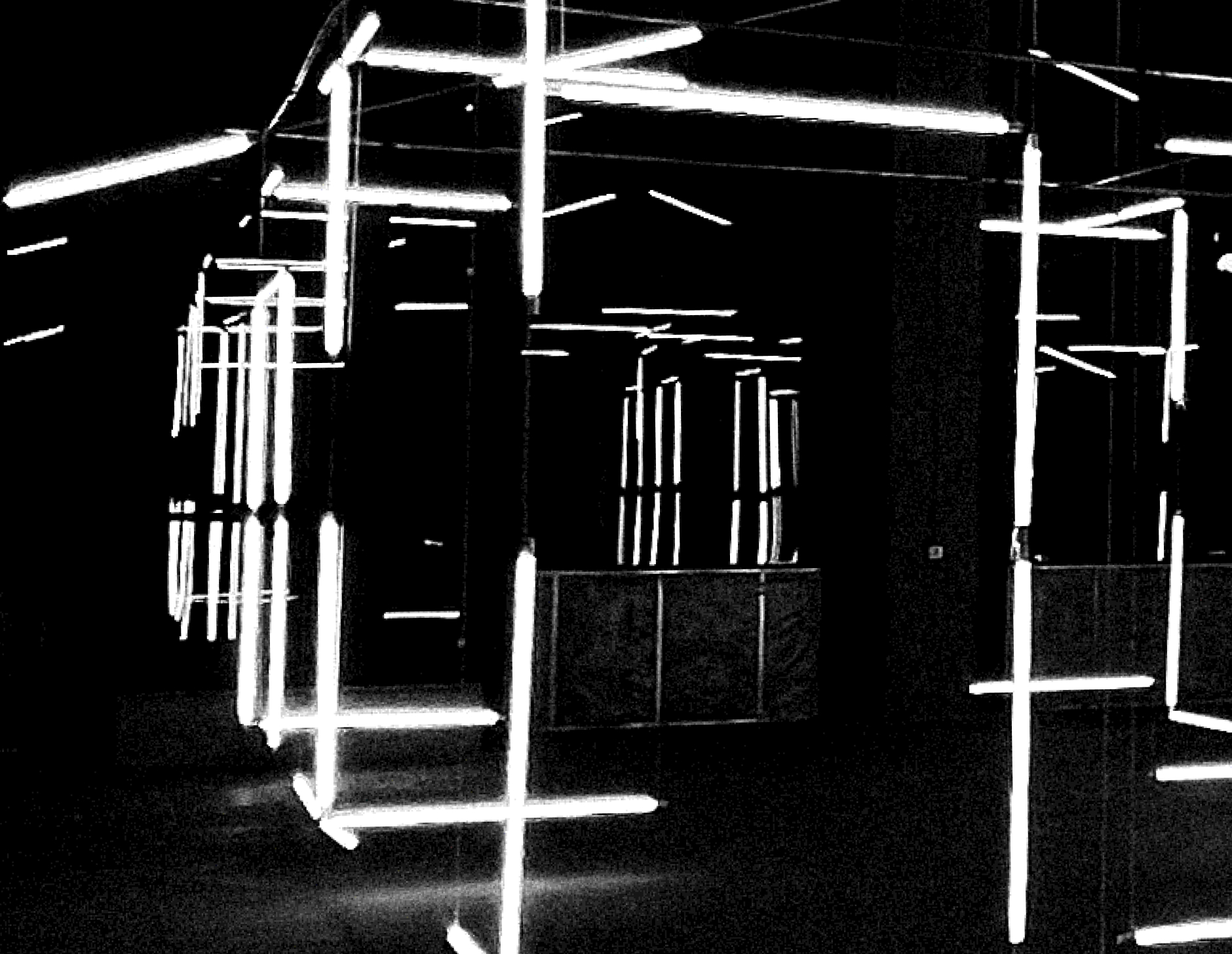
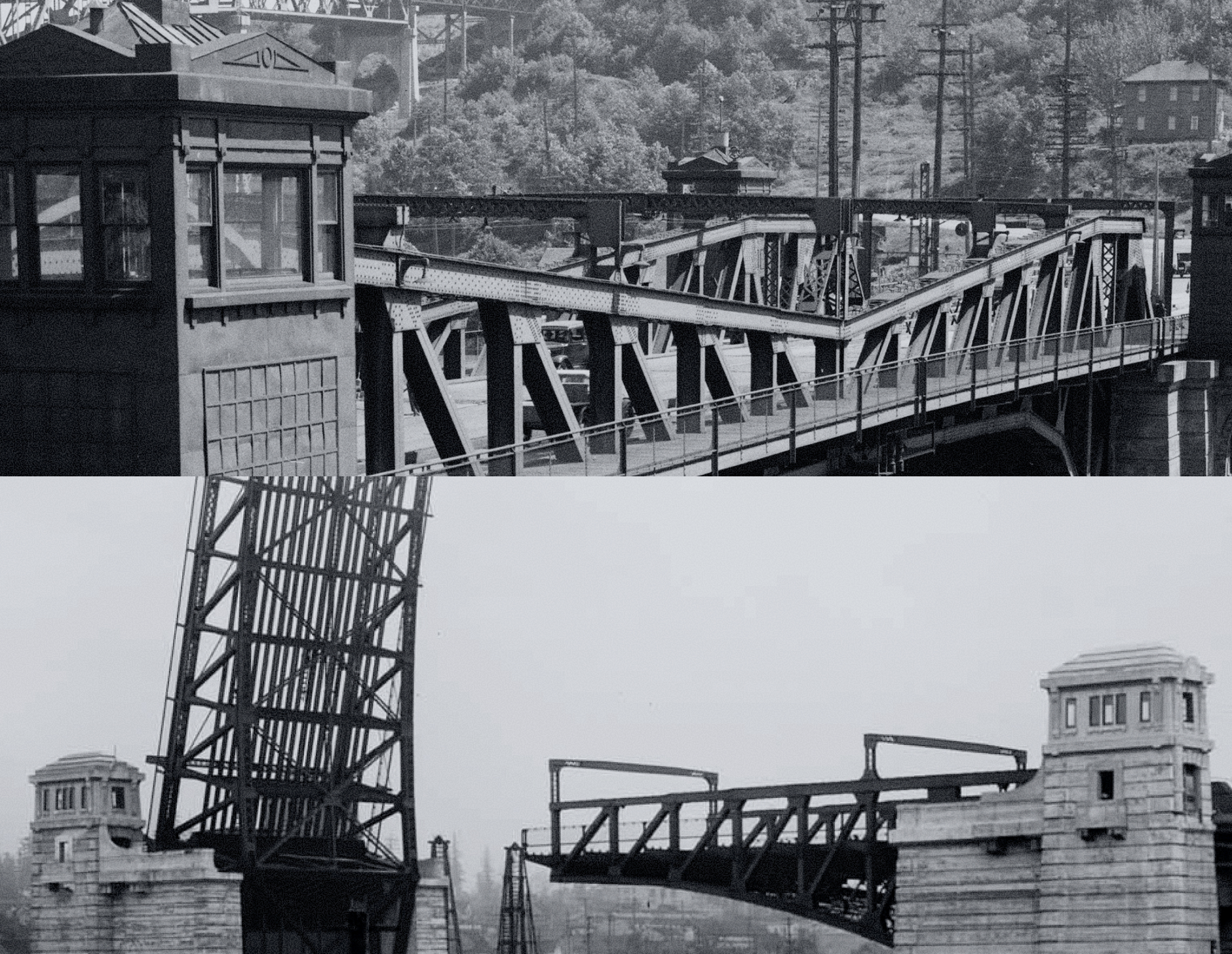
The Fremont Bridge is funky. Built in 1917, it now dons a vibrant blue-and-orange paint job (Broncos colors, unfortunately) and a neon Rapunzel in the northwest tower. Connecting quirky Fremont (self-proclaimed “Center of the Universe”) and Queen Anne, the busy bridge opens an average of thirty-five times per day.
Rumor has it the Fremont Bridge was once goat-powered. Between the nearby Fremont Troll, the neighborhood’s history of Nordic settlement, and now the supposed goat-fueled drawbridge, the allusions to the Norwegian fairy tale “The Three Billy Goats Gruff” seem uncanny. Too good to be true, I’m afraid; rather, the bridge was donkey-powered. That is, if the donkey engine (purely coincidental—that is actually the name for this kind of steam-powered winch) gave out, a turnstile was erected in the road, and as the asses paced in circles, the bridge opened and closed.

Freyja’s film, Life in the Cut, brims with anecdotes such as this one, information excitedly brought to life by kinetic animation and snappy narration that keep the viewer engaged and leave them educated. From the start, she knew she wanted to explore the bridge’s effect on all life in the cut, including the commuters, bridge operators, boaters, and wildlife. She interviewed experts in each category: Greg Silcox (City of Seattle Supervisor for Bridge Operations), Lee Marion (who has taken every kind of boat through the Ship Canal, from a water taxi to a hot tub boat), and Becca Johnson (a Fisheries Biologist for NOAA), as well as community members. Combing through more than five hours of interview audio, Freyja deftly weaves together their perspectives so that the film’s narration sounds like a conversation.
As if the voice-over weren’t enough to keep the audience engaged, Freyja’s mesmerizing animation practically ensures the audience can't look away. The bridge’s character informs the film’s aesthetic—gritty, textured typefaces pulsate across the screen in aged blues and oranges. “I was attracted to the way the paint is all chipped and layered, and then all the moss covering everything. Even if it looks pristine, you can see the age, like the layers on a tree—you can see the history, how things were made.” Freyja hand-designed two typefaces, transferred them onto linoleum rubber blocks, and made ink prints of varying densities, which she scanned into her animation to create “a texture that ripples and boils and feels really alive.” Part analog/part digital, part organic/part industrial, Freyja’s process mirrors the bridge’s weathered utilitarian aesthetic.
With a runtime of nearly twenty minutes, Life in the Cut is Freyja’s longest solo project. The motion artist reflects, “It was up to me to decide when a shot was done, when the audio was good enough, which was kind of daunting, but also really exciting to get to explore and follow my excitement!” In previous projects—like Savi the Cat, a critically acclaimed documentary animation—Freyja always worked with a director, someone over her shoulder to give her instruction, and pre-recorded audio to guide the narrative. But now, after overseeing everything from ideation to last-minute edits, she says, “I feel like I have a lot more confidence in moving forward with my ability to assemble something large.” In addition to her freelance practice, Freyja hopes to tackle a feature-length animation soon.
Taking a Moment with Vivian on the University Bridge
Vivian takes a more personal approach. Where Freyja details the history and function of the bridge, Vivian addresses the experience.
If bridges are overlooked pieces of infrastructure, then the University Bridge is the most overlooked of them all. Not Broncos colors like Fremont or Collegiate Gothic like Montlake, the University Bridge is, Vivian admits, “sort of plain.” Its history, as they discovered through interviews with bridge operator Barbara Abelhauser and visits to the Seattle Municipal Archives, is anything but.
Built initially in 1919 and rebuilt in 1932–33, it was the first open-grid steel surface bridge in the US. For those of us who don’t speak engineering, that means the roadway is composed of diamond-shaped metal mesh. This makes the bridge lighter and less slippery, and lets snow and dirt fall through. Vivian uncovered letters from engineers around the US and as far as Berlin who were eager to learn about the steel mesh grating.
In case that didn’t convince you of the University Bridge’s coolness (as if!), maybe this will: The very first Red Robin opened just south of the bridge in 1942. Still not convinced? Just watch Vivian’s film, Interstice.

Interstice follows a city dweller, not unlike the animator themself, a wanderer who finds comfort in observation. Taking the time to slow down and notice their surroundings—a heron overhead, a school of salmon below—the character reminds the viewer to be present. An “interstice” refers to the space between. It can be physical, like the gap between the bridge's leaves as they open and close, or temporal, such as the movement from one phase of life to another. The animation calls us to appreciate the in-between space.
Finding themself in a bit of an interstice after graduating from the University of Washington with a BDes in Visual Communication Design in 2025, Vivian, who interned for Netflix and is now a Designer at your very own ARCADE (ahem, the cooler of the two), reported feeling a bit lost. “Am I really passionate about what I'm doing? Is this where I'm supposed to be? Am I spreading myself too thin?”
Those feelings of doubt didn’t subside immediately after starting the residency, but they did, in fact, inform the film’s narrative. “I couldn’t stop having these emotions about my personal journey, transitioning out of school and feeling very lost. At some point I was just doodling and sketching these characters mindlessly while I was on the bridge, and then suddenly I was like, ‘Oh, this is going somewhere.’”
A second wave of inspiration came when the animator visited the archives and saw the bridge’s original blueprints. Drawing on their blue-and-white aesthetic, Vivian employed cyanotype, a temporal printing process in which the artist places objects (or, in this case, hand drawings transferred onto transparent sheets) atop photosensitive paper, exposes them to UV light, and waits for the image to develop. “It’s an annoying process and a little bit meticulous, but so worth it,” said Vivian, who had to think more intentionally about each shot’s composition. In a way, the process itself mimics the film’s thesis—it’s a lesson in slowing down.
These days, Vivian is no longer teetering in the interstice. They feel much more grounded thanks to connections with UW alumni, the Seattle art scene, and people they met after posting about their artist residency online. “I'm feeling hopeful for the future. I feel like I have a sort of sense of direction, a foundation that I can work on.” Out of the bridge tower and into the real world, Vivian will keep up the habit of observing.
It All Came Together – The ARTS at King Street Station Showcase
On June 4th, 2026, the Bridge Artists in Residence Showcase opened at ARTS at King Street Station to resounding success. During Pioneer Square’s First Thursday Artwalk, more than 1,200 people—including Mayor Katie Wilson—came through the station to see Freyja and Vivian’s work.
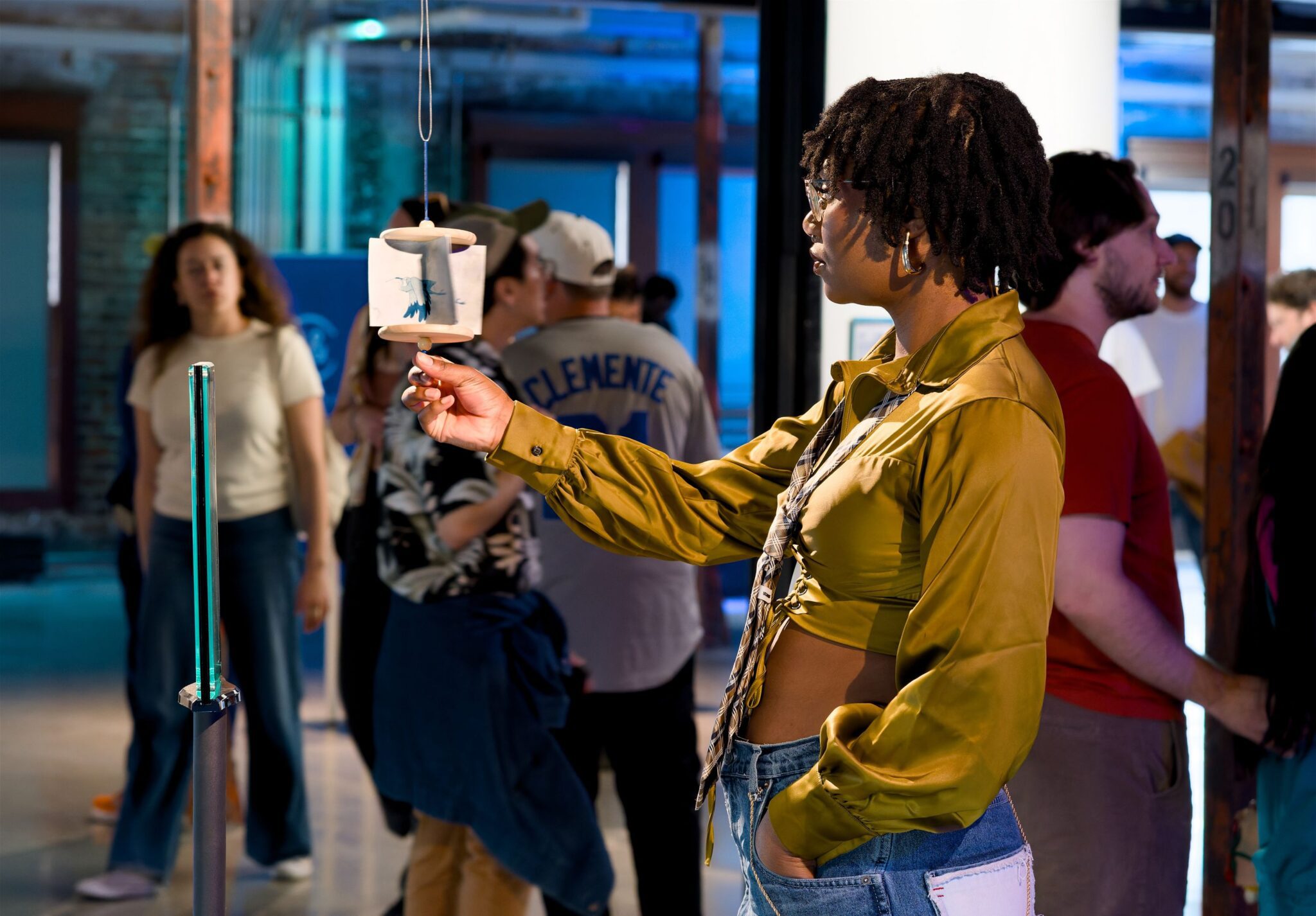
Visitors could watch the films with a pair of headphones and engage with process work—sketches, contact sheets, prints. Vivian also produced two physical animation devices: With the turn of a crank, the rotary flipbook machine See-saw depicts the open and close of the bridge; and as the ornament-like mobile thaumatrope called Revolving Heron spins, a heron flaps its wings.
Freyja notes that it was exciting to have so many eyes on her work. Vivian echoes that sentiment, adding that the teary eyes of one attendee meant more to them than any other—Barbara, the bridge operator to whom Vivian sat in opposite towers from for three months, whom they called every time they came and went from their tower studio, and whom they bonded with over a shared habit of observation.
“Barbara told me how much the film spoke to her, and she feels like a lot of people don't understand what it's like being on the bridge and being able to be an observer there. She really connected with the film, and it expressed her experience of being a bridge tender and an observer.”
The show at King Street closed on August 8th, but as any commuter knows, closed bridges open again. We are eager to see what medium SDOT and OAC select when applications for the next iteration open, and how the selected artists enliven these aging, ever-important pieces of infrastructure.


.jpg)

.jpg)