
Good makers know how things come together. You know the adage: measure twice, cut once. It’s easy to reduce craftsmanship down to a clean joint or a well-laid brick, but making architecture requires more than a steady hand and a well-honed chisel. It means bringing budgets, materials, schedules, clients, and trades together; countless competing realities that shape a project. Figuring out how those parts fit together is a craft all its own.
By Design is an ongoing series where I sit down with architects running their practices while navigating the early days of my own. The last installment, “The Story,” explored narrative as a way to bring people closer to the work. This conversation dissects craft more broadly. Not simply how things are made, but as a way of thinking about the people, relationships, and conversations required to make them.
I first came across DAAM at the 2026 Chicago Architecture Biennial’s New Firm Roundtable. What struck me most about their “small but mighty” firm was how they spoke about making things happen. With backgrounds in fabrication and construction, its founders, Elyse Agnello and Alex Shelly, described an approach that extends well beyond traditional tools and fasteners. From experimental furniture to large-scale community spaces, their toolbox incorporates a broad ecosystem of collaborators.
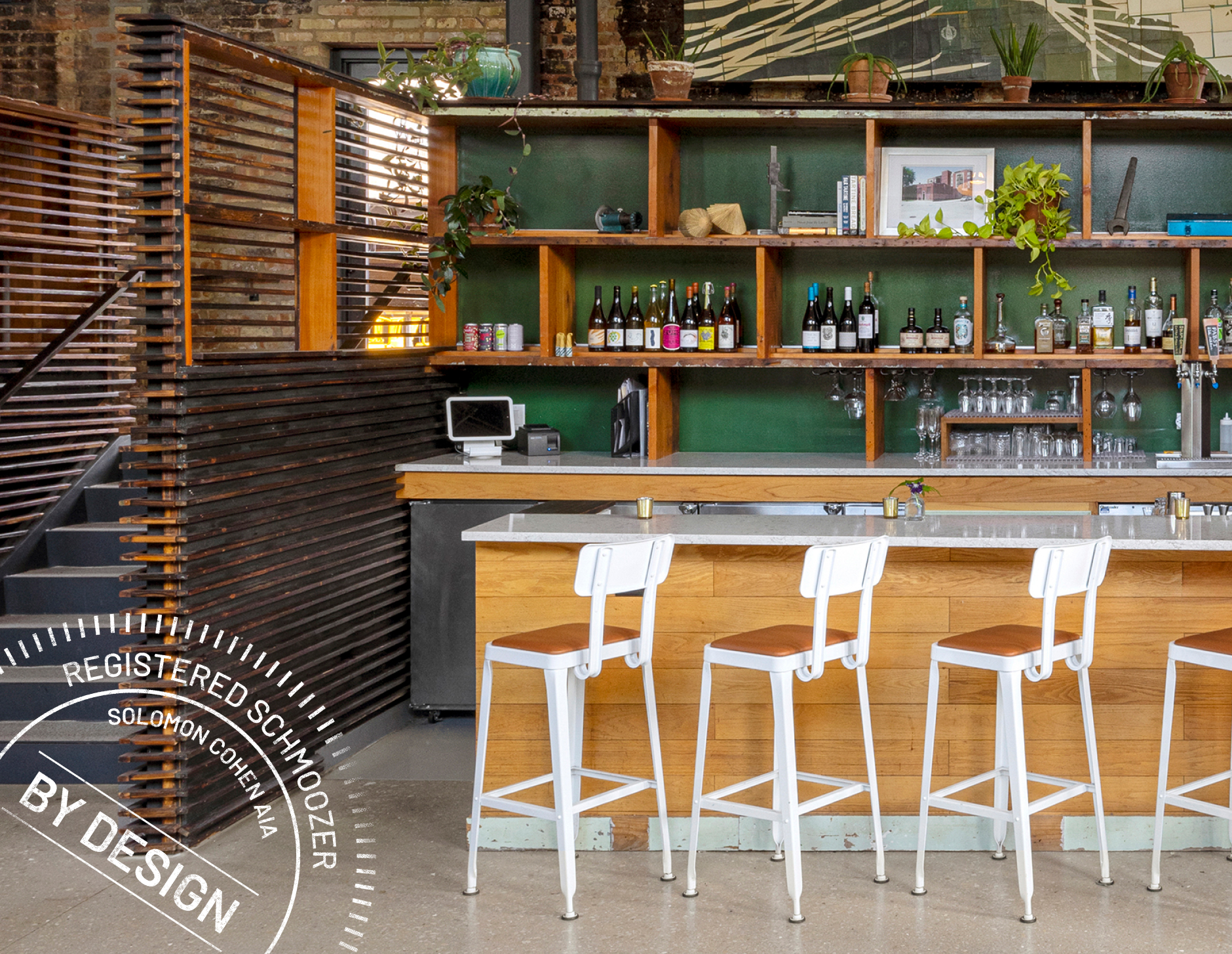
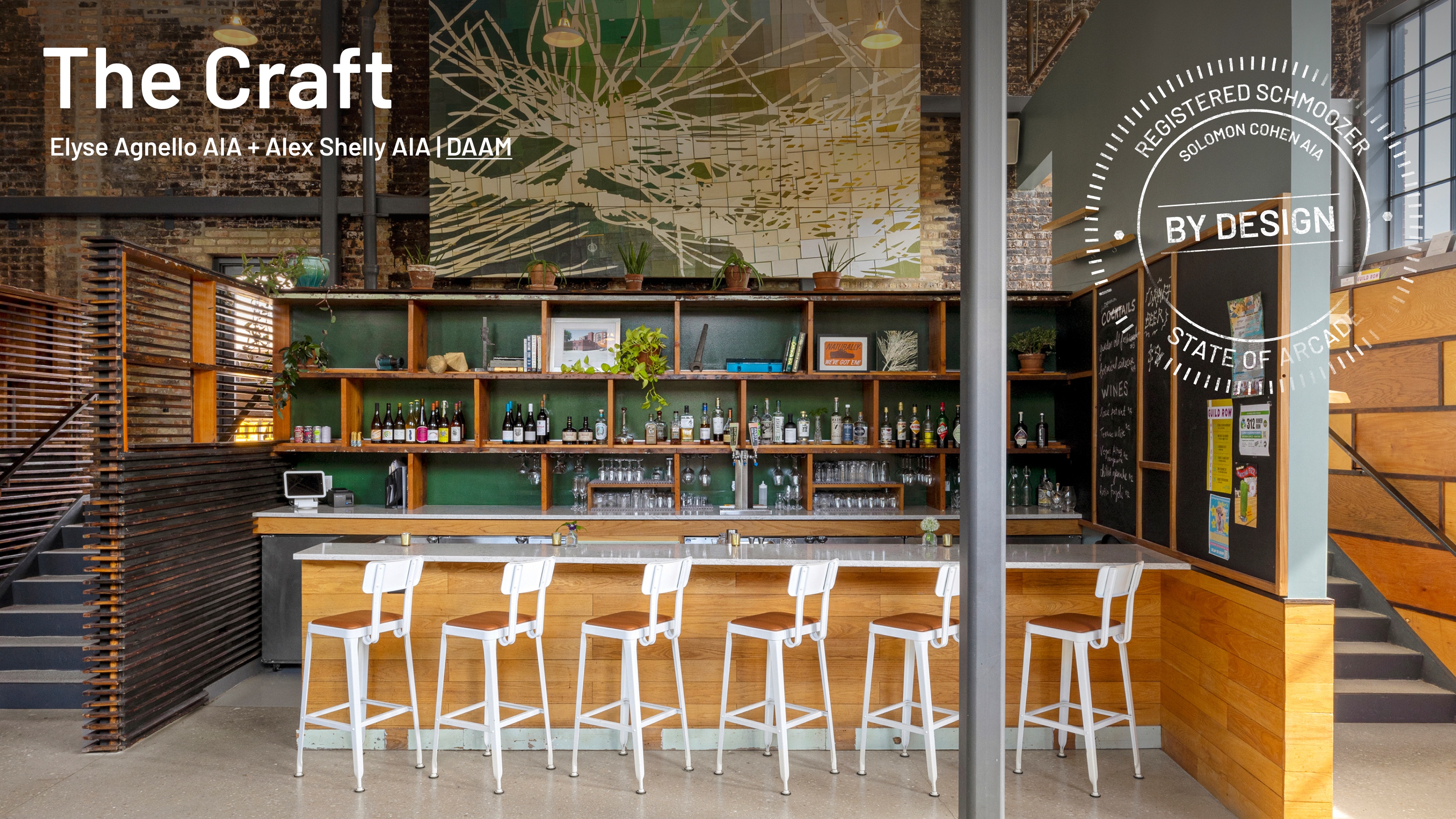
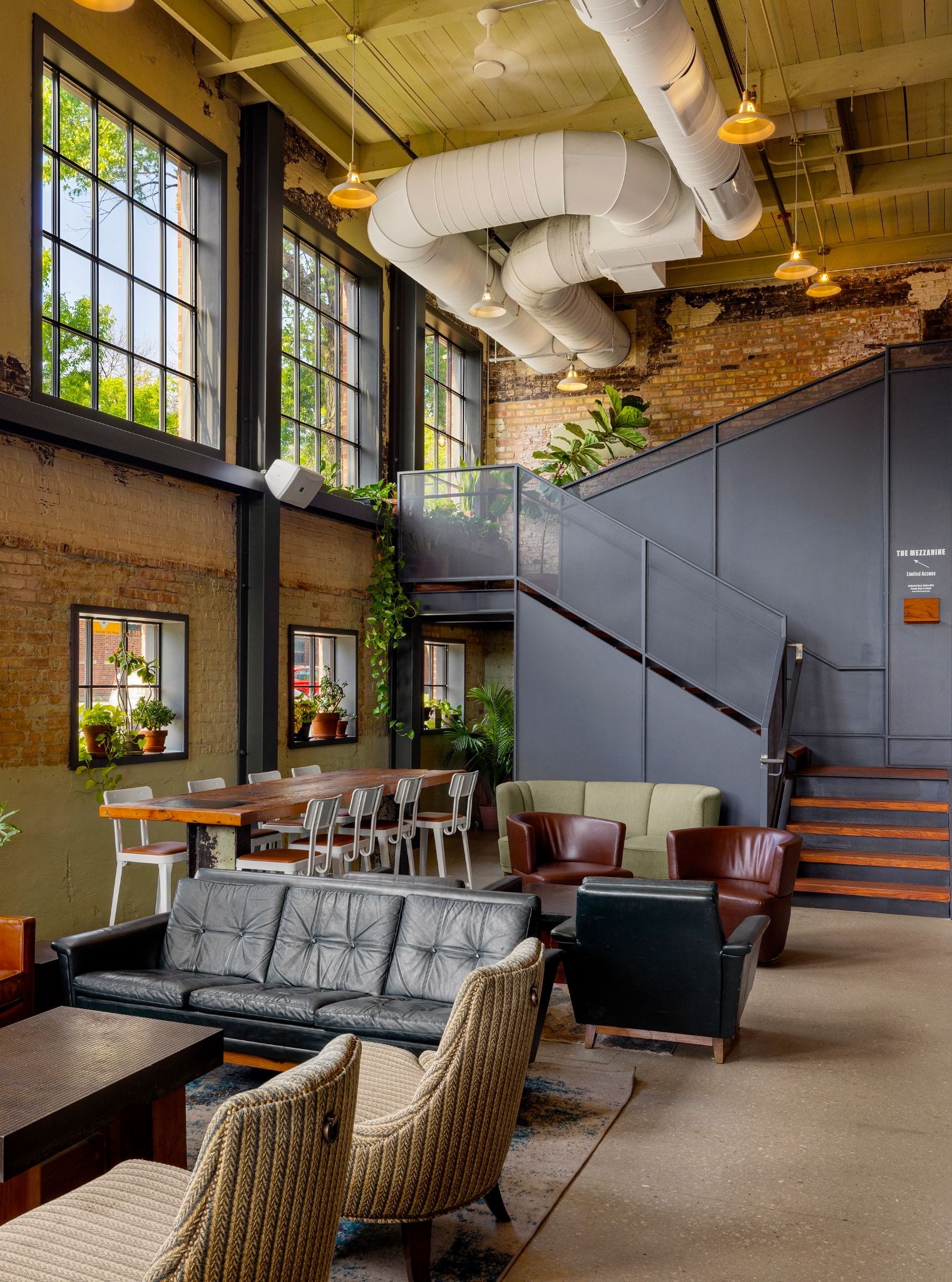
That became clear when I visited Guild Row, a self-developed coworking space and social club in Chicago’s Avondale neighborhood where their design studio is based. Walking through the building felt less like touring a finished project and more like meeting the people who continually shape it. The in-house barista, the woodshop manager, the restaurant team, their staff, the folks tending the plants. Everyone was on a first-name basis. Everyone had a smile on their face. Everyone beamed with pride in what they were building together.
What followed was a conversation about the craft of bringing it all together.
Indulge.
* * *
SOLOMON COHEN: What is DAAM’s origin story? Was there a specific point when you knew it was time to start your own practice?
ELYSE AGNELLO: There wasn’t necessarily a singular moment. We worked for different firms, at different scales, and eventually, it became clear we wanted to own the product. It wasn't an ego-driven thing; hence the Designers, Architects, Artists, and Makers moniker. We’re serious people, but there’s a playfulness to our work, and we’re proud of that. We talk a lot about the idealized architect, designing precious spaces with perfect white walls. The reality is much more lived-in. It's less perfect. We’re interested in architecture with moments of precision worth celebrating, while still accommodating the real world.
ALEX SHELLY: Making is important to us. We look for it in our staff. We take pride in bringing quality spaces into the world and serving our clients. Architecture can be a struggle, especially when you’re pursuing good work. We aspire to make high-quality, accessible architecture. Something that can adapt to lived experiences. That resilience is important to us. In our projects and our studio.
SC: How have the early expectations of running an office compared to the realities?
EA: To be clear, you have to be an insane person to do this. We knew it was going to be hard, but it was also going to be worth doing. That was part of the original vision. We definitely underestimated the nuts and bolts of managing cash flow, clients, and pipeline, but that doesn’t mean it wasn’t worth it. We’re about to hit a big milestone birthday, and looking back, it feels like we’ve accomplished a lot, but there’s still a ton left to do.
AS: Maybe that's a window into the inner workings of our psychology. Even when we pause to recognize everything we’ve achieved, it never feels like enough. We used to put in 80-hour weeks at other firms, but we knew we’d work even harder when it was our own. It’s a different type of work, but it’s incredibly rewarding. We get so much out of our projects. You hear it all the time, but when you’re running a practice, maybe 20% of your time is spent designing architecture.
EA: If you’re lucky.
AS: Our staff spends most of their time on project work, but as principals, some of the things we got into this for take up the least of our time.
EA: We’ve learned what it means to have a seat at the table. To be involved early on. Whether it’s a small office or a larger mixed-use development. For us, that usually involves taking on unknown challenges. Investigating new business models and how spaces can be designed to accommodate them. Unpacking those questions is exciting. It doesn’t always fit neatly within the standard architectural practice model. Envisioning new futures has required expansive thinking.
SC: How has that approach taken shape over the past decade?
EA: I’d love nothing more than to design a project totally unencumbered by the million other things essential to making it work. In reality, most design work happens on the fly. Unknowns are discovered in the field. Clients change their minds. It’s reactive and technical. We tweak things constantly. The legal separations can complicate things, but we’re always managing that tension. Having a foot in construction and development allows us to solve problems differently.
AS: Our approach is super hands-on. We try not to hide behind our documents. Some professionals draw that boundary, often for liability reasons, which makes sense, but we’re focused on being helpful. Elyse has a background in fabrication, and I worked in construction, so we love leveraging those experiences. It allows us to explore atypical materials and communicate with craftspeople. It’s important for us to understand how bricks are stacked while also being able to write Grasshopper scripts. Those skills go hand-in-hand. It helps us have better conversations with our collaborators.
EA: We learned those lessons early on. No matter who the client is, leaning on drawings to tell the full story isn’t the most effective way to solve problems. The drawings are the basis for conversations. But you still have to talk to people. It can be exhausting. Making space for understanding takes time, but it yields the best results. It’s why we tell our clients that fast isn’t how we work. Even when you communicate effectively, it’s a slow process. But it’s slow with purpose.
AS: Slowing down with intention, the invisible logistics, and careful planning save our clients money and significantly reduce their stress over the life of a project. That pace is essential if we want to be thorough and effective partners.
SC: Can you point to a project or a sequence of projects that helped reinforce that idea? From what I saw during our tour earlier, we might be sitting in one of them.
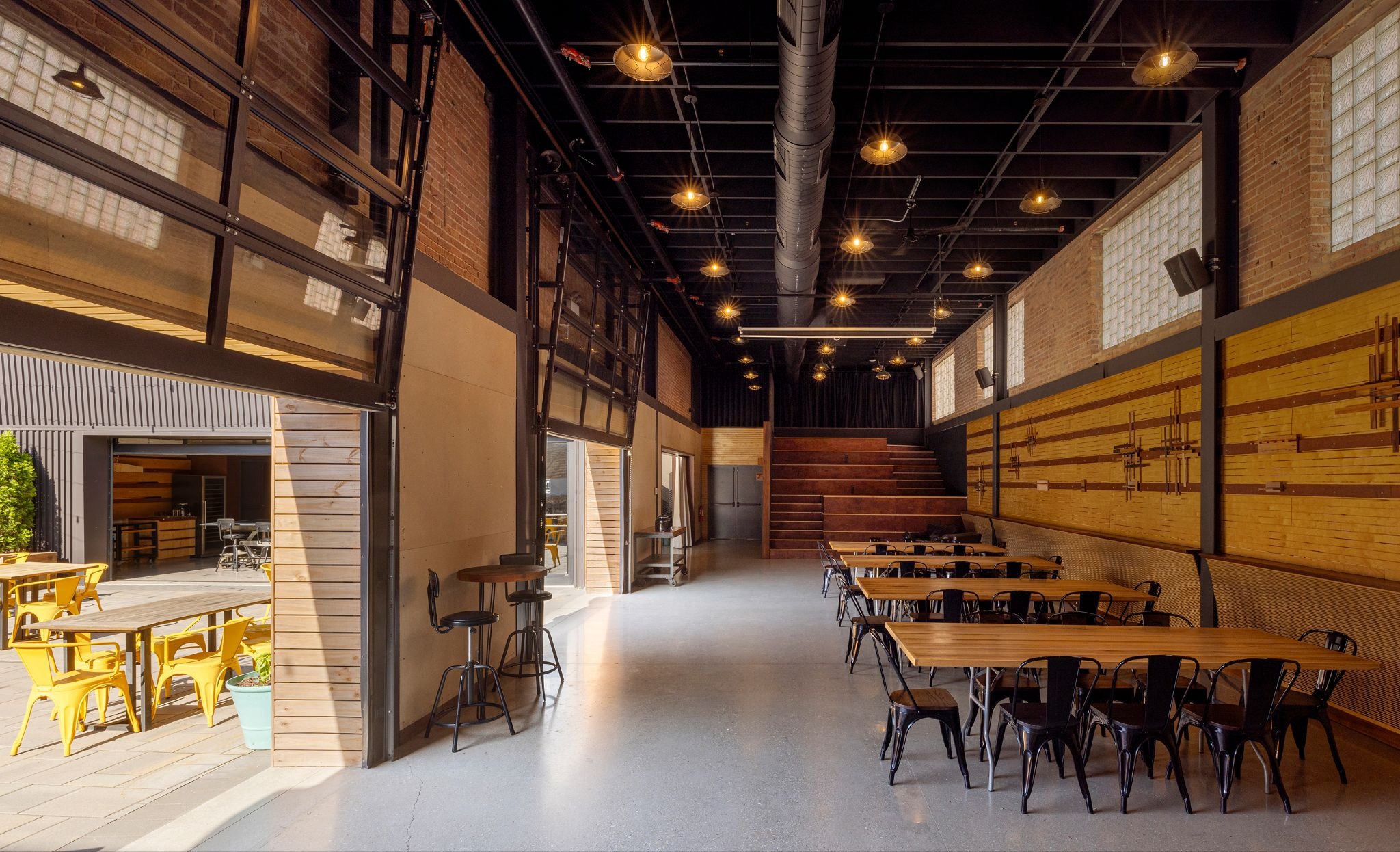
AS: For sure. Guild Row is perhaps the pinnacle of it. And it’s still evolving. We have two meetings to discuss active projects here later this afternoon.
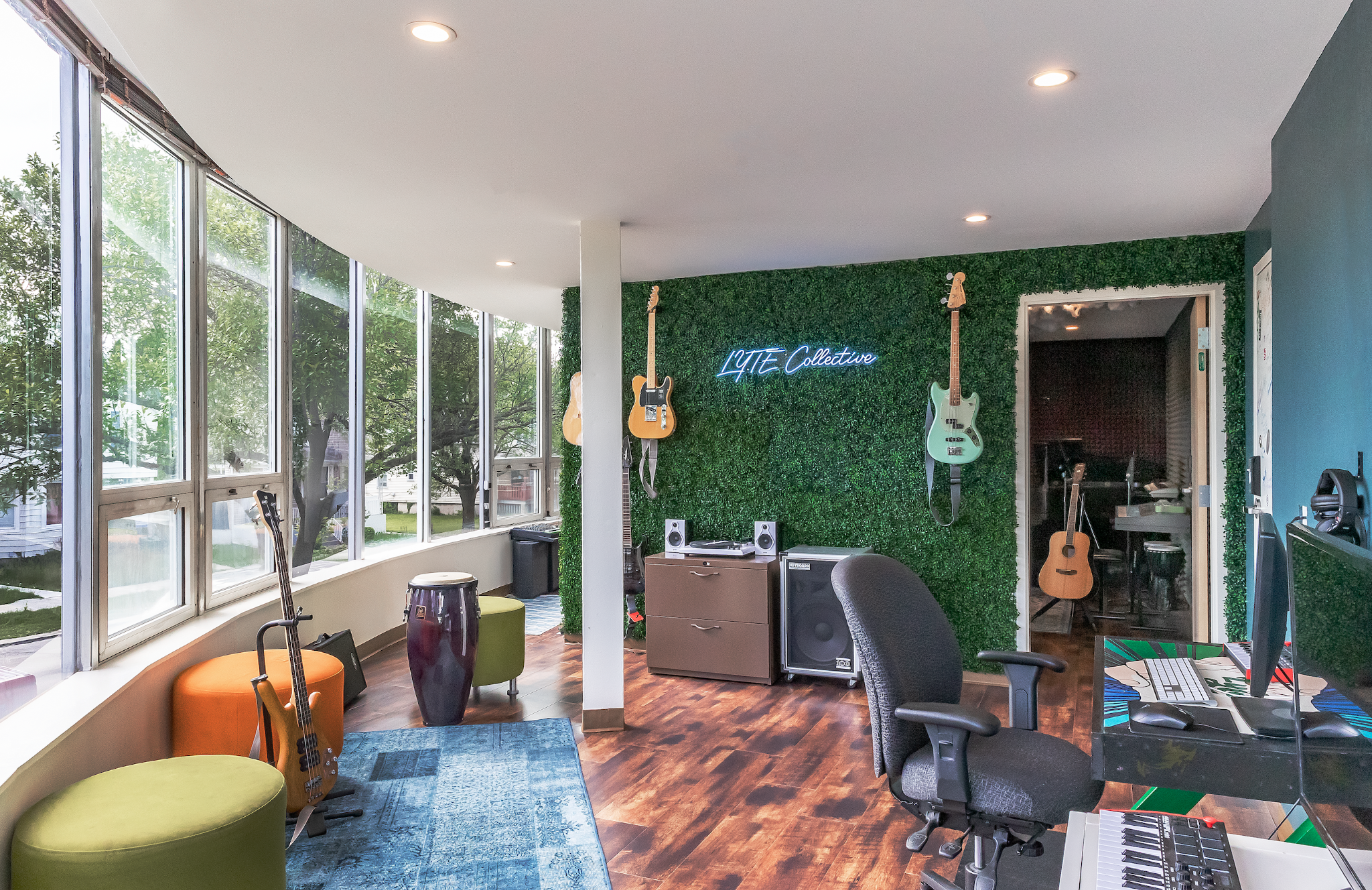
EA: LYTE Collective is another good example. It was an early project where we helped an organization transform a former nursery school in Chicago’s South Side into a community center for at-risk youth. We helped prospect potential sites, fundraise, and coordinate construction during COVID. We did everything we could to get them situated in the space during that period and came back a year later with a team of volunteers to help with the landscaping.
We returned a few years later to take additional photos and met someone who uses the space. Totally unprompted, they expressed so much gratitude for all the work we did. It melts your heart to hear that from people who visit your buildings. It really motivates us to stay connected so we don’t have to close the book on a project.
AS: For the most part, our projects haven't had huge budgets. Any planning or design moves we make have to perform multiple functions. At Guild Row, for instance, the plywood cleat display wall on the other side of the courtyard is certainly a dynamic design feature, but its acoustic and thermal properties were big drivers.
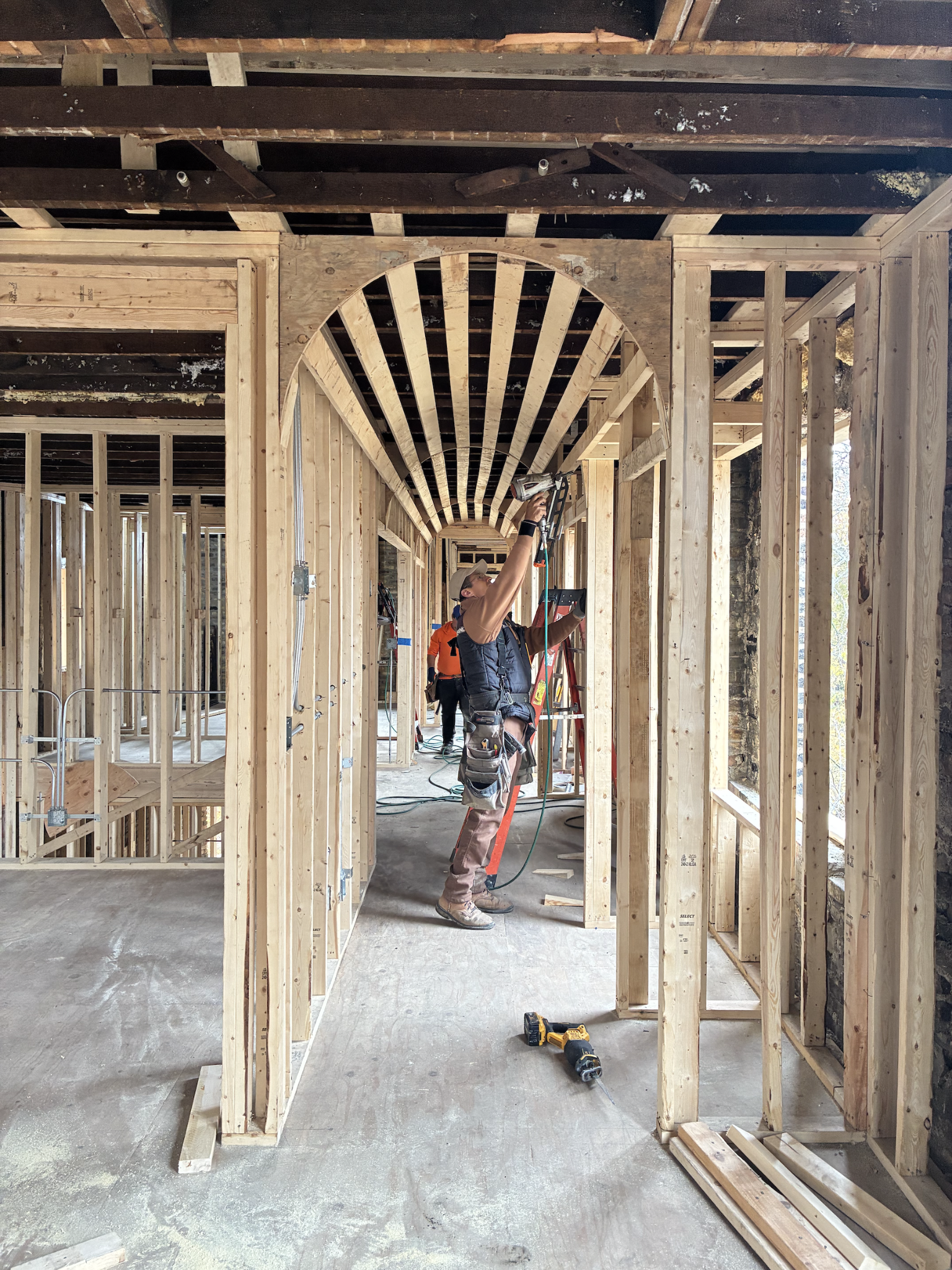
A project we’re currently working on, a historic single-family home in Kenwood, has a series of vaults and arches throughout the interior. You’d think those are purely aesthetic forms, but they shape light and circulation. Their massing allows us to run ductwork through the poche so those components can stay out of sight.
EA: We worked on so many projects early on that were academically rigorous. But the more time we spent with builders, the more we thought about how to get the most bang for our buck. Even when projects have generous budgets, we’re looking to think four-dimensionally at every turn. This house in Kenwood is a design-build project, so it feels like we’ve had to level up. There’s a huge atrium, so we’ve been coordinating with HVAC contractors to figure out how to incorporate a hyper-efficient full house fan. It’s really exciting.
SC: A lot of people might misinterpret that approach as being too concerned with control. But it seems to be more about finding new ways to collaborate. I don’t know too many people this excited about working with HVAC specialists.
EA: We can't have the ceilings without resolving the HVAC. Figuring out how things come together is the design challenge. When you put equipment on the roof, it becomes part of the design. It can’t be an afterthought. A lot of that comes from the time I spent working in metal shops. Everything was down to thousandths of an inch. That level of precision can drive you crazy. You want things to be perfect, but you also have to step back before getting lost in that one beautiful detail. You don’t want to miss the bigger picture.
AS: That’s especially true in our adaptive reuse projects. We inherit imperfect sites. You learn that everything doesn’t have to be pristine. If the floor levels don’t align perfectly, we can highlight that condition and move on. We don’t need to be wasteful. The structure doesn’t need to be removed and realigned to satisfy a need for something to be square. It can be a simple transition so we can focus our energy elsewhere on the site. It’s a balancing act. We’re constantly juggling our own design ambitions with material and economic realities.
SC: Now that you’re about to hit that big 10-year milestone, have you reflected on what you hope to accomplish in the coming decade?
EA: Turns out a decade is a long time. There are two things I want to focus on over the next 10 years: people and projects. I’d love everyone working with us to still be with us. To continue growing and thriving. We take sincere pride in training our staff and celebrating their accomplishments. I want to continue being a close-knit studio. It gives us the space to be hands-on with our clients and collaborators.
As far as the work is concerned, I'm excited to continue doing things atypically. We're more grown-up now, so we don’t have to be crazy cowboys about it, but continuing to challenge the way these projects get done is exciting. To push the practice of architecture forward in that way is an aspiration of mine.
AS: Certainly focused on continuing to grow as an unconventional practice. To productively blur the lines between traditional roles. But a big goal is to make sure our employees want to stay with us for a long time. We hope they see us as longer-term mentors as we learn and grow together.
SC: What have been your favorite parts about running DAAM? What’s been the most challenging?
AS: I’ve had a lot of fun building our staff. We take a lot of pride in our portfolio, but mentorship has been incredibly rewarding. Watching our team grow as architects, gain their footing, getting exposure. The most challenging part for me is making sure they have interesting projects to work on.
EA: For me, the biggest challenge has been bandwidth. Striking a balance between practice, family, and general wellness is difficult. Feels like I’ve finally found a good approach in recent years. It can be better, but I’ve made a lot more space for other parts of life. The most rewarding thing has been the people. I love our team. I feel great about all the people we’ve met through our projects. We have so many fond memories of the relationships we’ve formed. From the clients to the interns to the electrician who calls every year on my daughter’s birthday.
SC: And finally, if you could go back to the early days of the firm, what piece of advice would you give yourselves?
EA: It’s such a cliché, but you're going to fail a million times, so fail fast and move on.
AS: I’d say to cast a wide net. You need to be focused, but going out to make friends and business alliances is essential.
EA: Absolutely. Chat it up.
* * *
Order and precision are often the mark of great craftsmanship, but assembling architecture is rarely a clean process. Whether it’s a piece of furniture or an urban community space, the very best projects are continually shaped by many hands. It’s an ongoing act of making, built through communication, experimentation, and a small army of collaborators working beside you.