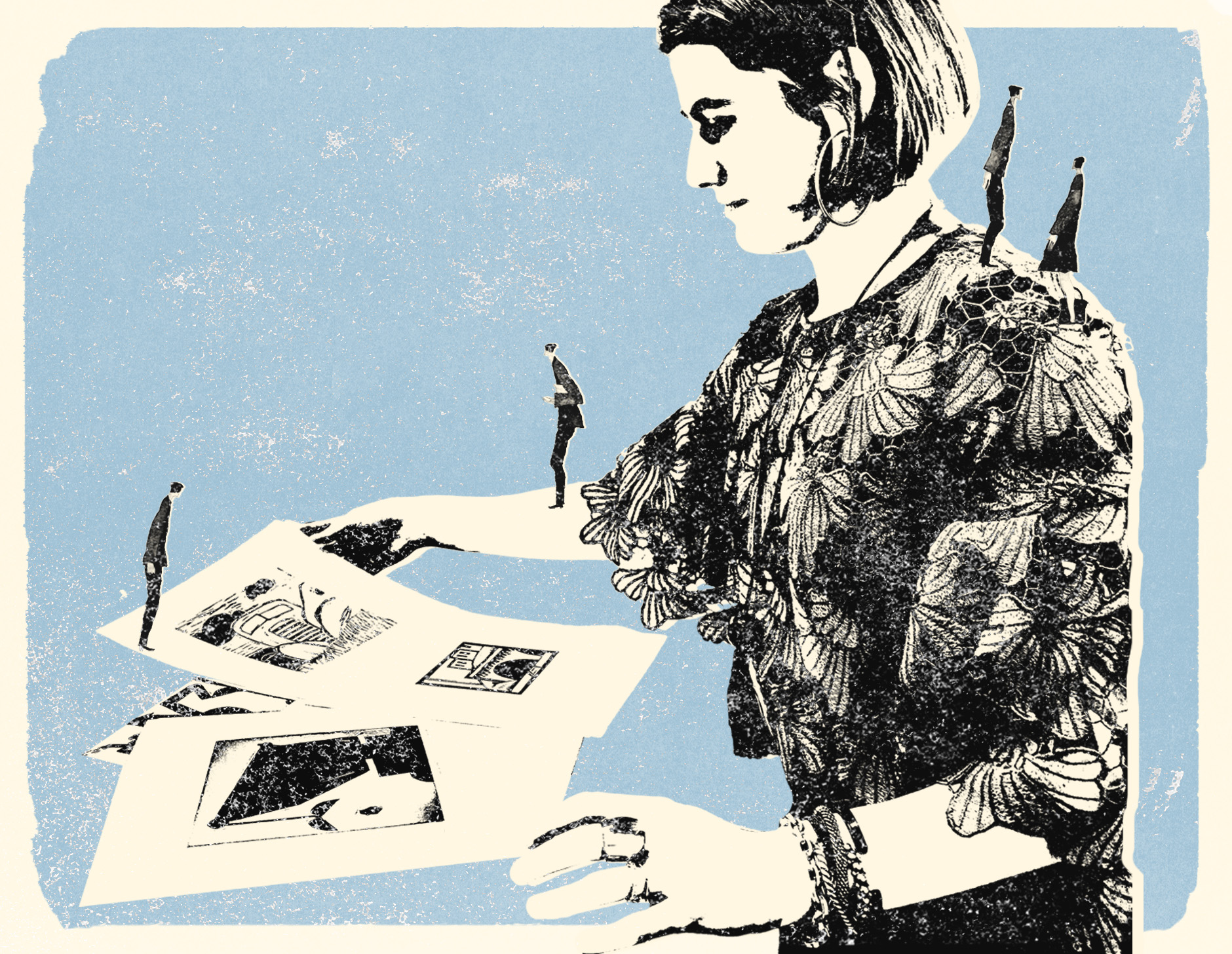
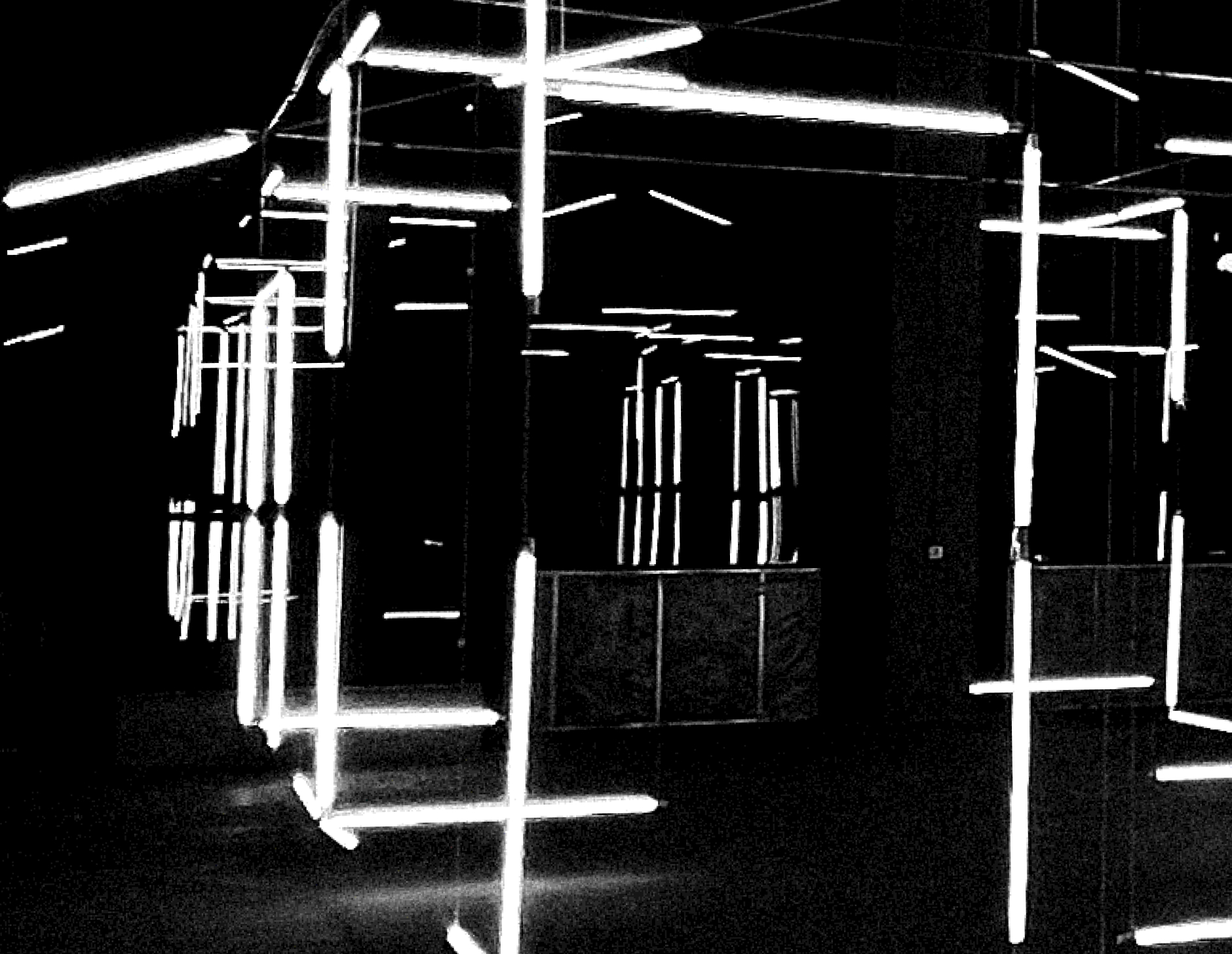
xispa is a new art innovation lab, residency, and exhibition space at 325 Westlake Ave N in Seattle, founded in February 2026 by curator Lele Barnett and technologist Doug Carmean. Its first exhibition featured works in progress by multidisciplinary artist Susan Robb, alongside the six-month residency of artist Samantha Yun Wall, whose practice is now extending into new material territory at the intersection of drawing and materials science.
Futures Made By Hand
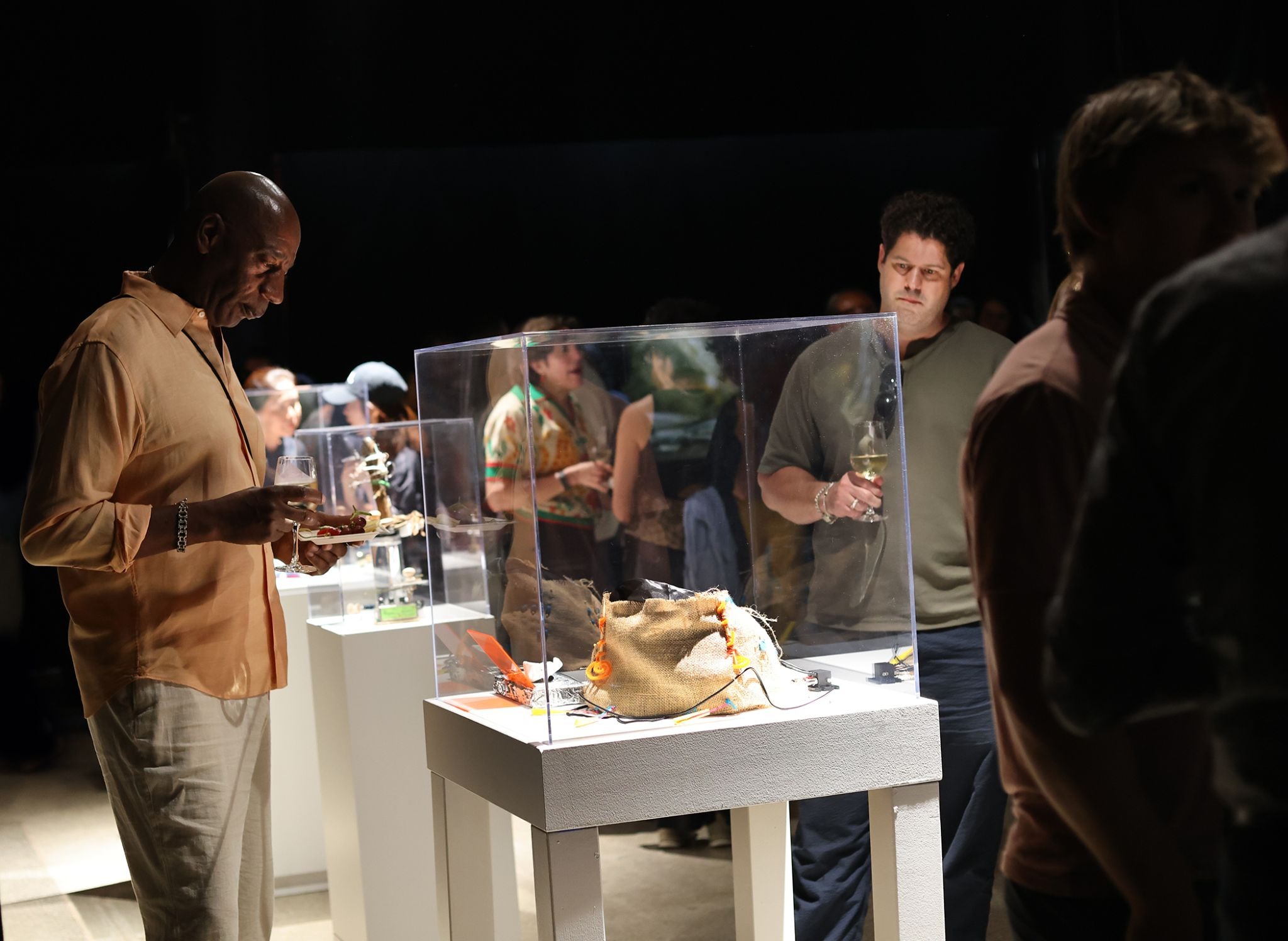
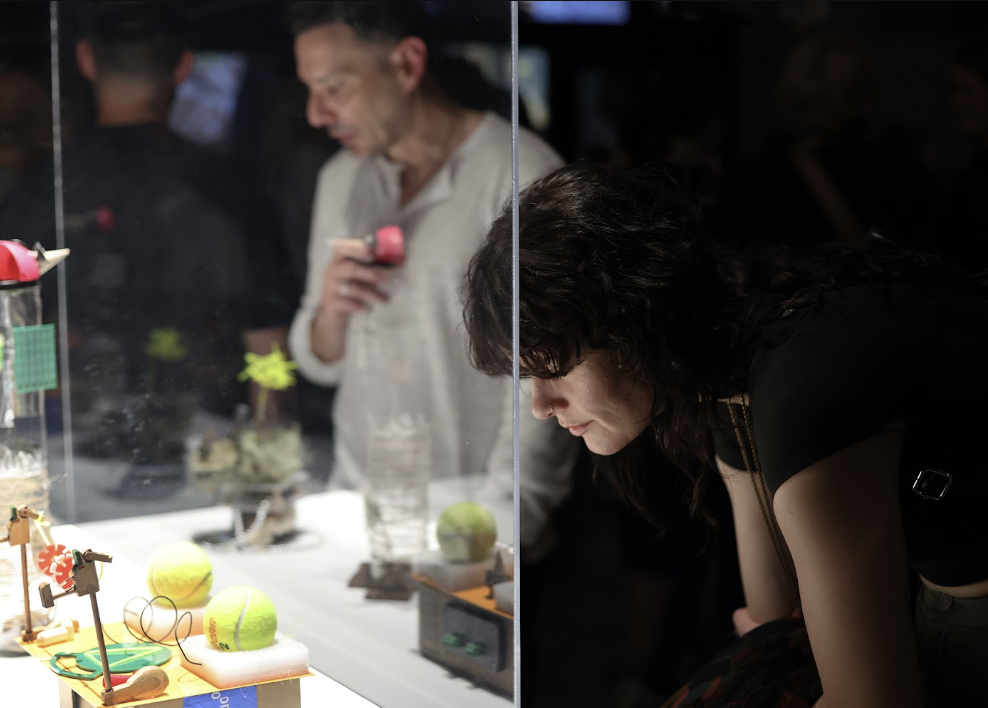
During her residency at Meta Reality Labs Research, Susan Robb ran collective experiments to imagine the future, handing small groups of scientists a bag of studio debris (pipettes, zip ties, LEGO, and a can of hot dogs and beans) and a deck of cards. Each card assigned a year, a condition for the world (flourishing, mutation, or collapse), and a domain to work within (signals, power, the body, atmospheres). The participants built something. They wrote a story around it, verbally processing what the objects in front of them might mean in a future they had yet to live. Then Robb took their descriptions and fed them into a generative AI model, asking it to visualize the futures her participants invented.
It rarely worked the way she expected. The model could recombine what already existed, reshuffle, remix, and reassemble the world as it had been recorded, but it kept stumbling at the edge of the new—the way a foot finds the last stair in the dark and meets only air. "It can't imagine," Robb says. "It only knows what's been done before." She found herself shoveling, photoshopping stills, feeding the same images back in over and over, coaxing a system toward something it had no real reference for. The friction itself became the finding. A person can picture a future nobody has built yet. A machine, trained entirely on what already happened, cannot.

Robb has spent three decades asking what wilderness means once most of the physical kind is gone. In 2013, she walked the Pacific Crest Trail from Mexico to Canada as a work of art, combining 3D printing and social engagement with 2,680 miles of trail, at a time when only 3 percent of the contiguous United States remained undeveloped. People tend to remember the landscape: the Sierra, the North Cascades, the sheer distance. What she was actually after ran deeper than geography. "I was interested in the parts of experience that remain unmapped, unshared, and resistant to control," she says. "The wilderness of imagination. The wilderness of memory. The interior territories that can't be fully measured or managed." She asked what happens as fewer physical places stay undeveloped. She also asked what happens as the inner landscape gets mined and shaped by forces outside it.
That second question followed her into the Meta residency, where she kept returning to one version of it: What would a social practice artwork, art made in relationship and shared collaboration, look like using AI? Her earlier work had always depended on collective participation, conversation, shared acts of imagination, and she wasn't looking to replace any of that with technology. She wanted to see whether technology could join the process without taking it over. The speculative prototypes that came out of that question—the Biometric Datacenter, the Cloak of Origins, the Emotion Sampling Device—started with people, not machines. Small groups imagined artifacts from possible futures, built physical objects, and wrote stories around them. "The AI wasn't generating the ideas," she says. "It was helping visualize futures that had first been imagined by people."
She described watching the workshops take on a life she didn’t plan. Researchers who arrived skeptical left reluctant to stop collaborative artmaking; small groups bonded over an hour of building something out of nothing in a way that felt, to her, like the closest thing to wilderness left inside a corporate research lab. These companies center “their competitive position, rather than thinking about humanity," she says. "I think artists walk into these spaces and immediately point that out, one way or another." The workshops became a small, structured way to insist otherwise, to ask the scientists and engineers who spent their days optimizing systems to sit instead with something irreducible: a can of hot dogs and beans, a roller skate wheel—no clear use for either.
Robb's cards work on the principle of structured chance, similar to Brian Eno and Peter Schmidt's Oblique Strategies, built to unlock creativity and collaborative lateral thinking. The chaos cards, Robb says, echo something she has watched happen inside corporations like Meta: chaos sown as a byproduct. “A project ends abruptly, you're moved to a different division, your budget gets cut.” These weren’t art projects; they were prototypes, physical stand-ins for functions and systems that didn't exist yet, working under constraints designed to force real collaboration.

Long before the Meta residency that built real collaboration, Robb was building work in relationship with people the culture overlooks. As a teaching artist at Gage Academy, she worked with historically marginalized LGBTQ and homeless youth. As an artist in residence for the City of Seattle and the Seattle Department of Transportation, she wrote the city's Center City Public Art Master Plan, work answerable to a public that includes people with nowhere fixed to live. The empathy that shows up in her speculative workshops, the insistence that the AI serve the group's imagination rather than replace it, is not a new instinct arriving with the technology. It is the same commitment she has brought to public space for two decades, applied now to a different kind of public.
Robb graduated with a Master's in Clinical Mental Health Counseling from Seattle University recently, four days before the xispa opening, and she sees the two practices as the same inquiry through different means. "It's about sharing the internal with somebody else," she says, "and how they respond to it." Whether the somebody else is a researcher in optics, a stranger at a workshop table, or a body in motion, the question doesn't change.
The work at xispa, which she began last August during her residency in the ART and Expansive Thinking program at Meta Reality Labs Research, arrived at the opening still in progress. Titled Chance, Prediction, Repetition, Robb and her collaborators didn’t get to present the work before they were laid off from Meta this year. It arrived at xispa unfinished, the way it looked when the program that produced it came apart.
"When you start down a new path," she wrote afterward, "you really have no idea what your life will look like on the other side of it." Two milestones in one week, a degree and a show, both still mid-transformation, both refusing to resolve into something finished simply because an audience had arrived.
That gap, between what has been imagined and what can only be remembered, sits at the center of xispa.
Visible From Certain Angles
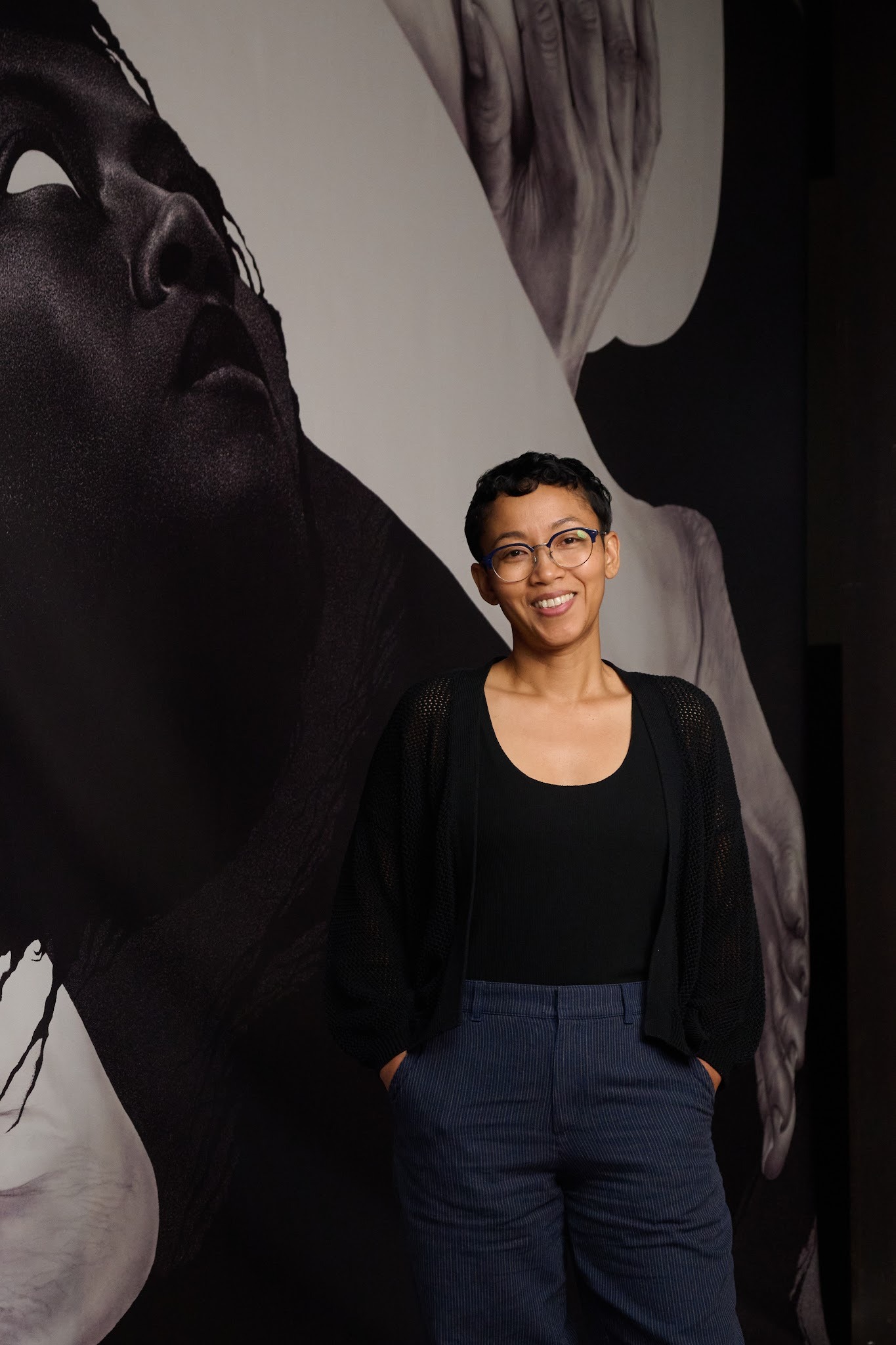
Samantha Yun Wall works in carbon, graphite, conté crayon, and ink, building figures on Claybord and Dura-lar through patient, repeated layering until the surface reads almost as skin, dense and light-absorbing, occasionally lifted by touches of gold leaf or copper. Her work is grounded in Korean shamanism and diasporic folklore, in inherited forms of knowledge that survive in gesture and repetition rather than in text. She has always been concerned with what a surface holds beneath its visible layer, what gets concealed, and what conditions allow something hidden to finally be seen.
At xispa, that question finds a new material form.
Yun Wall has worked in what she calls "pocket time," alone, away from anyone who might watch the work arrive before it was ready. At xispa, that's no longer an option. The studio has glass walls on a street with foot traffic, and anyone walking by on Westlake can watch her draw. She wondered what it would do to her process to be witnessed mid-thought, rather than only once a piece is finished, difficulty smoothed out.
To put it directly, she said that she likes to sit within the uncomfortable rather than retreat from it. “It's not a competition,” she says, “but it has to feel risky.” What she's doing at xispa moves outward, toward visibility, toward collaboration with people outside her own discipline, toward a material that doesn't fully exist yet and that she can't be certain will work.
Yun Wall is extending a project she began before the residency even existed. The original idea came from a collaboration she started with researchers at Oregon State University, developing a nanoparticle ink from biomatter, the ink’s copper and silver particles shifting color as it ages. The residency moves that question to the University of Washington's Molecular Information Systems Lab, co-founded by Doug Carmean. There, Yun Wall will study, develop, and use the material with access to decades of optics and photonics work that began, for Carmean, with nanotechnology built for the lenses in AR glasses. What changes in the new setting is the application: not a lens, but a hidden layer embedded into the negative space of a drawing, invisible from most angles. She draws into what looks like empty space, knowing that the negative space isn't empty at all. "There's no vocabulary for this yet," she says. "It's outside of language at this point."
The epistemic opacity lands harder than she may intend. Yun Wall has spent years describing her work as an act of recovering what got erased, in African American and Korean history, in her own family, in the gap between what her mother could afford to say to a grandmother overseas and what she actually wanted to say. A material that hides an image until the viewer moves is, in a very literal sense, a technology for making the unspoken visible only under the right conditions. "I think it speaks directly to the erasure that continues to haunt immigrant families," she says.
She has also spoken about growing up trying to make herself smaller. "I made myself very small for years," she says, "trying to smooth out the edges so I wouldn't stand out." The particular pressure of being a first-generation kid taught to assimilate, to read the room, to absorb whatever the culture asked of her even when it wasn't healthy, is not abstract to her. Over time, she has tried to identify those inherited shapes and set them down, to find a version of herself that felt more true. Anyone walking by on Westlake can watch her work; she chooses visibility. "There's nothing I've done that I haven't touched," she says. Every layer carries her hand. In an era when images can be generated in seconds, that insistence on touch is its own kind of argument.
A Curator of Possibilities

Lele Barnett has spent more than two decades curating for corporate collections at Meta, Microsoft, and Starbucks, and for public institutions including the Wing Luke Museum and the Tacoma Art Museum. Asked who she thinks about in Seattle's longer art-tech history, the names come quickly: 911 Media Arts, Dorkbot, Future Arts, Seattle Creative Code, Jack Straw, DXARTS, Passable. "I was new to all of this when I started McLeod Residence," she says, "and I learned from each of these organizations and the people behind them." xispa, in her account, is not arriving into empty ground. It is arriving into a lineage of small, persistent institutions, some still standing, that she hopes to collaborate with rather than replace.
Barnett and Carmean are building a counter‑model to the precarity she witnessed when Meta dissolved entire art teams overnight. Her residencies last six months, not six weeks; works are sustained in “a space where the unfinished gets to stay unfinished a little longer.” She argues that artists should lead technological development as meaning‑makers, not merely receiving tools after the fact, a philosophy of creative stewardship that resists the optimization of culture, privileging curiosity and process over corporate advocacy.
In 2022, Meta dissolved most of the team Barnett was a part of at Open Arts, nearly sixty people working globally, gone without much notice. Barnett’s contract allowed her to further manage projects until 2023. A similar thing happened to colleagues at the ART and Expansive Thinking residency program she ran with Carmean: Whole projects, whole working relationships, ended overnight, not because the work had failed but because a corporation had decided not to fund it anymore. "I kind of feel like [art is] always the first thing they cut," Barnett says.
That history shapes what xispa is built to prevent. Even the name carries that history forward. Xispa (t͡ʃisˈpa), Catalan for spark, was Carmean's idea. The word had already inhabited their shared vocabulary since the Meta years, when the ART and Expansive Thinking program existed to spark creativity, experimentation, and innovation between artists and researchers. Carmean used Catalan words in earlier projects, so the name arrived as a continuation of language they already shared.
The Technologist Who Bets On Artists
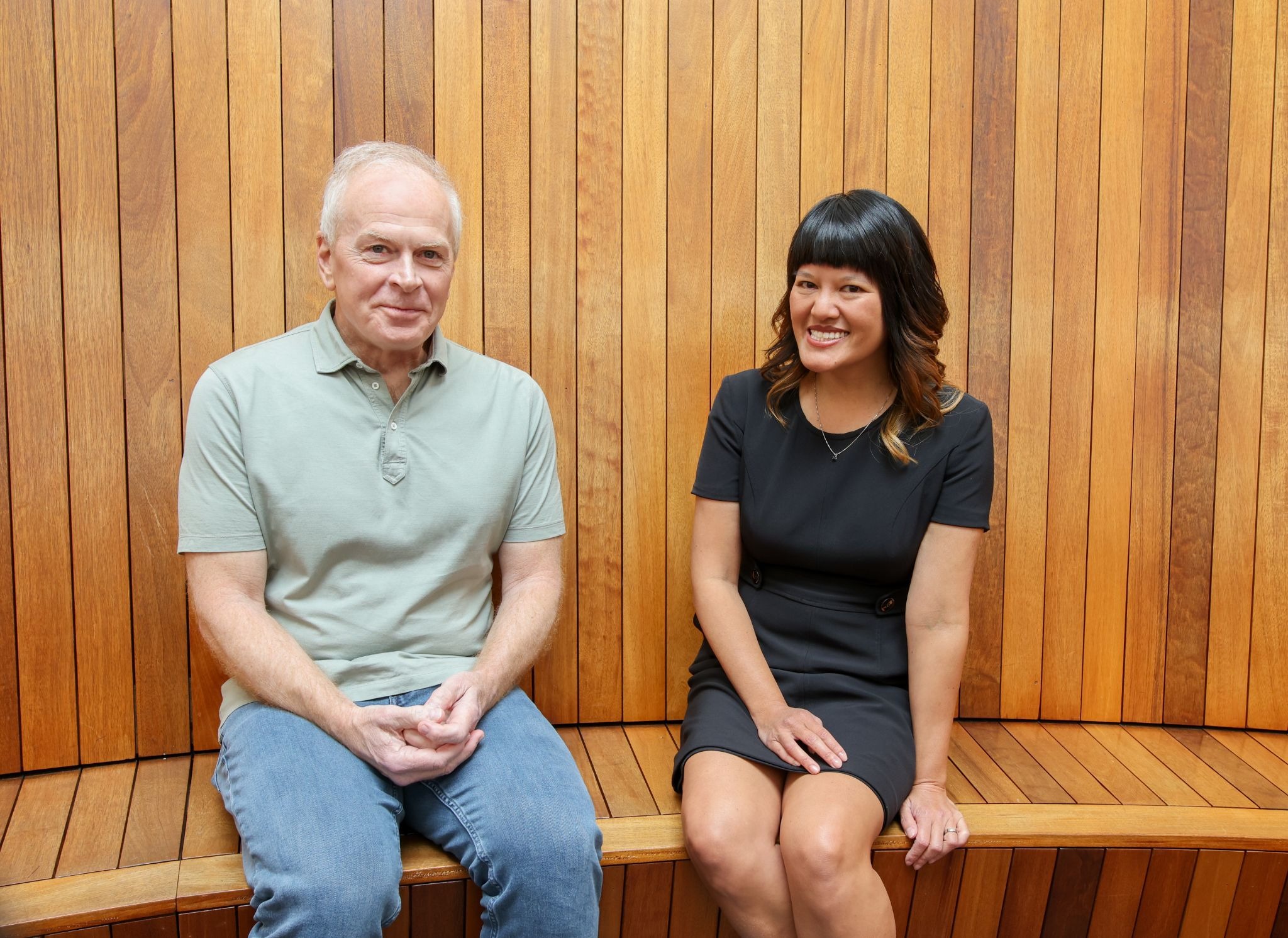
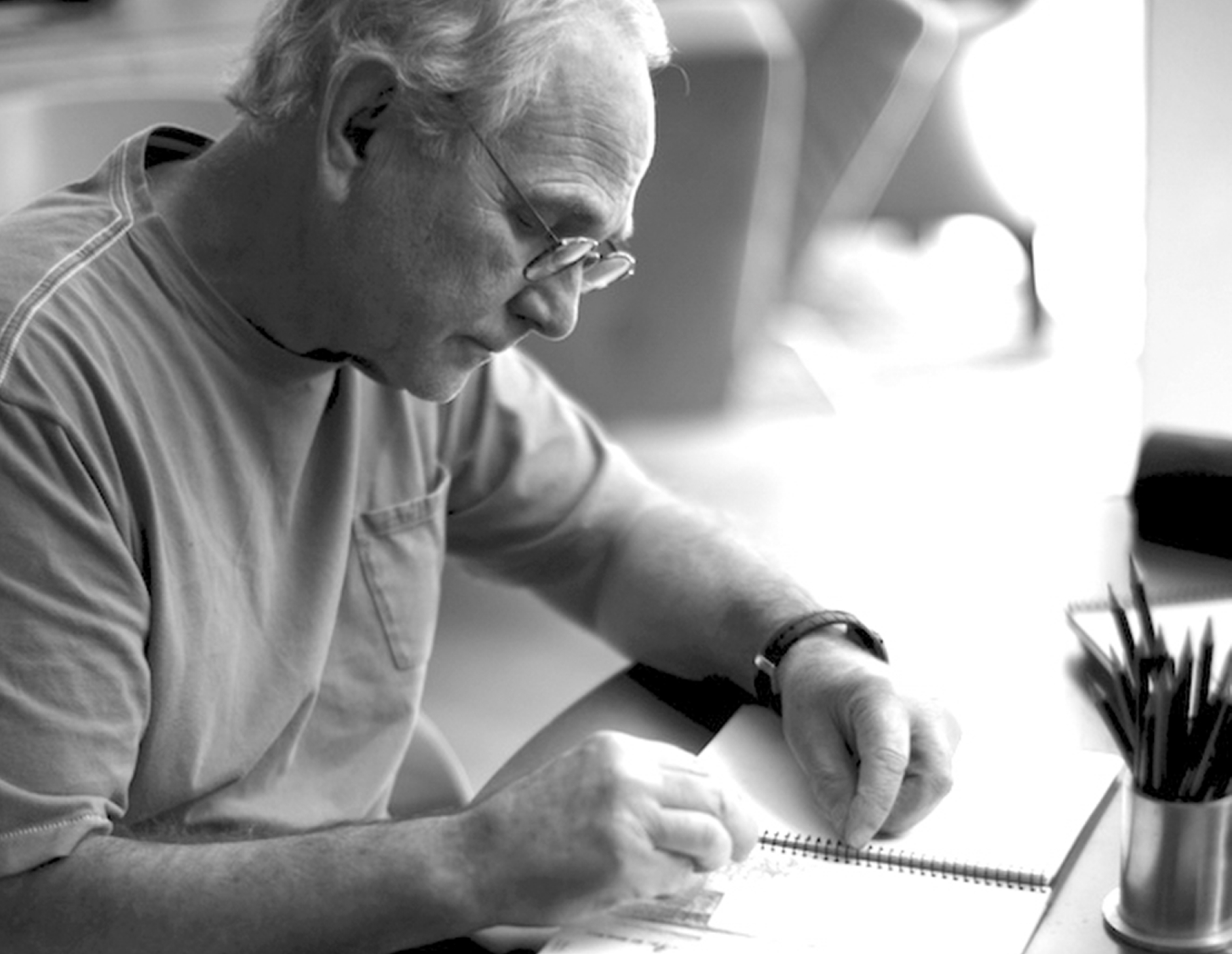
Doug Carmean paints. That detail surprises people who know him primarily as a technologist, someone who spent nearly four decades designing chips at Intel, working in quantum computing, and leading a team of 130 scientists in optics, photonics, and light systems at Meta Reality Labs Research—a career that produced roughly 128 patents and earned him a place in Oregon State University's Academy of Distinguished Engineers. He is also, as Barnett describes him, someone who understands what it feels like to make a work of art, conceptual art, what an artist puts of themselves into it, and what makes a work genuinely great.
That understanding has its roots in his time at Intel, where Carmean was involved with the Creators Project, a collaboration with VICE Media that connected artists and technologists across seven countries, featuring exhibitions, conferences, and live events in New York, London, São Paulo, Seoul, and Beijing. It was an early, large-scale experiment in what it might actually look like for a tech company to engage with creative practice rather than simply commission art for its walls. Through that project, Carmean saw something he hadn't been able to name before: Artists think differently, and that difference could push researchers into genuinely new territory. "I just have a feeling that artists could shake our researchers into new ways of thinking," he told Barnett when they met, "and get them out of any ruts they've been in.”
What Carmean intuited at Intel, and has built his subsequent career around, is something closer to neuroscience: that artists, working across disciplines and resistant to the kind of siloed thinking that deep technical specialization produces, offer technologists a kind of cognitive expansion that purely internal collaboration rarely generates. His own painting practice may be part of what gave him that instinct from the inside, the felt knowledge of what it means to approach a problem without a predetermined solution path, to sit with uncertainty long enough for something genuinely new to emerge.
Barnett describes their backgrounds as almost opposite and entirely complementary. She knows the artists; he is connected to collectors and museum supporters. She builds exhibitions with artists; he designs the technical infrastructure that makes new materials possible. Where they converge completely, she says, is in the belief that artists are innovators, that their ways of thinking push boundaries and inspire directions that purely technical teams rarely find on their own. At Meta, Barnett says, Carmean was the first person to encourage and empower her to be a researcher, not confined to the boundary between art and institution where she had always been placed before.
Beyond technical knowledge and institutional relationships, Carmean brings a less obvious quality. Barnett reaches for the word generosity, and means it in the fullest sense: a willingness to bet on artists, to trust that the work will become something meaningful without knowing in advance exactly what that something is. He started with a business plan, then left the rest of xispa’s future to the artists.
One story from Meta keeps coming up between them. Robb, working alongside the team developing what would become the next version of Meta's smart glasses, pushed back on the assumption that a fourteen-year-old girl would want a face full of hardware. They didn't want glasses, Robb told them. They wanted something else entirely, and nobody had asked. She's circled back to the same instinct since: Fourteen-year-olds know exactly what they want, and are rarely the ones product developers think to consult, even for products built for them. It's a whimsical story that carries the same argument as everything else at the artist residency lab, that the people closest to a need are usually the last ones asked about it.

What stands out most is the way four very different relationships to loss and care have found their way into the same room—Barnett's account of watching whole teams and programs dissolve overnight at Meta; Carmean's decades spent building bridges between two fields that rarely trust each other; Robb's vanished funding and the body of work that kept moving forward anyway; Yun Wall's receding language and the years she spent making herself smaller than she was. None of them describes this as resolved, and none of them pretends it should be.
A lab cannot promise that the next round of layoffs won't come, or that a company will remember what it built before it decides to tear it down again. What a lab can do, if it is built carefully enough, is hold a room where the unfinished gets to stay unfinished a little longer, where people with different relationships to erasure get to make something, with the promise of possible futures, growth, and sustainability.
Near the end of one conversation, Robb returns to the Alignment card, the one that asks you to connect your prototype to someone else's, to form a single new object, without erasing either. On its face, it is instructions for a workshop game played with garbage and zip ties on a table in South Lake Union; however, this instruction also embodies xispa's founding principle: Bring a painter and a photonics researcher together, a Black Korean artist and a materials scientist, a curator and an engineer, and see what they build when neither one has to disappear to make room for the other.
xispa is open at 325 Westlake Ave N. Please contact Lele Barnett for an appointment. Susan Robb's exhibition closed June 30; Samantha Yun Wall's residency continues through December.


.jpg)

.jpg)