What if tearing down a building could be the start of building something even better—not just different, but more expressive, more conscious, and more alive? Sustainability and affordability aren’t just modern day buzzwords—they’re survival tactics for our built environment. As resources become more scarce and climate considerations non-negotiable, reusing existing materials is not only about cost savings, but also about reducing embodied carbon, the total greenhouse-gas emissions embedded in construction materials. When a designer opts to repurpose timber, steel, or concrete from an older structure, they’re sidestepping the energy-intensive processes of harvesting, manufacturing, and transporting new materials. That saved carbon “budget” can translate directly into lower project costs, making sustainable design accessible to a broader audience—particularly community-driven or nonprofit developments with tight budgets.
This article dives into the unexpected creative potential of adaptive reuse—but without ignoring the nuts and bolts. From sourcing eccentric panels sizes to navigating tricky tolerances and reversible connections, the challenges are real. But so are the rewards: originality, affordability, and impact. This way, readers can prepare to integrate large-scale reuse strategies in their own work.
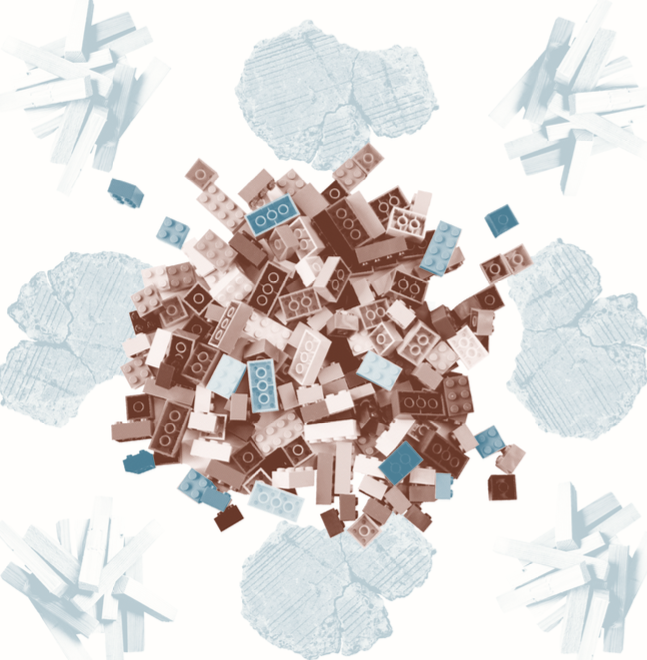
Imagine giving a designer a box of architectural Lego blocks—except the blocks are real pieces of an actual building. That was the introduction to CLT (Cross-Laminated Timber) Cannibalism, a recent studio taught at the University of Washington by local Seattle firm atelierjones. Instead of asking, “Where should I put these walls and columns?” the studio began by inviting students to ask, “Where did these walls and columns come from?” By taking apart a real building and carefully cataloging each CLT panel, beam, and connector, students confronted hyper-specific material constraints. Freed from the usual site-program paradigm, they were able to experiment with novel configurations that might never occur in a conventional design studio. Suddenly, constraints weren’t barriers—they were provocations.
Lessons learned from the CLT Cannibalism studio extend far beyond an academic exercise. When architects and designers witness students/peers treating reclaimed panels like Lego blocks—allowing every notch, blemish, and drilled hole to inform rather than conceal—they begin to see material reuse as an open-ended toolkit instead of a rigid checklist.
CLT—or Cross-Laminated Timber—is no ordinary wood. It’s a mass-timber product made by gluing perpendicular layers of lumber under high pressure. The result is a structural material with the strength of steel, the warmth of wood, and the poetic appeal of visible grain. It’s both robust and visually appealing, which makes it an ideal candidate for expressive reuse. The studio’s main focus was to explore how the environmental advantages of CLT could be amplified through adaptive reuse—and how a shift in process could spark a new way in design thinking. The goal wasn’t just to build something new, but to build differently.
For the CLT Cannibalism studio, students arrived not with site analyses or program briefs but with precise inventories of reclaimed CLT panels, sourced from a deconstructed residential building in Seattle. Each student team received an almost equal number of slabs, columns, and beams, varying in size, thickness, and finish—some pieces bore the wear and tear of their past lives—cutouts for ducts, odd angles, even the ghostly outlines of long-gone nails. The objective was to create an entirely new building program using only those rescued elements, embracing their uniqueness as defining features. “This studio was a chance to explore how reuse could embrace imperfections and how materials can carry history with them,” says Matt Cattrow, an architect designer at atelierjones who helped lead the studio alongside Susan Jones. “Rather than seeing reuse as a compromise, it could be something that adds meaning and life to new designs.”
Limitations can be surprisingly invigorating. When students realized that a certain CLT panel had a water stain or a chunk missing at one end, they didn’t throw it aside; instead, they celebrated that flaw by highlighting it within a façade pattern or carving it into an interior art installation. Some discovered that weathered finishes could serve as a tactile storyboard, guiding users’ experiences through the building. The fixed quantity of panels forced teams to think strategically: would they reorient a panel horizontally to create a wide-span roof, or stand it vertically as a load-bearing wall? Such constraints demanded engineering clarity: every connection had to be reversible, every load path explicit, because you couldn’t simply “order more material” if something failed.
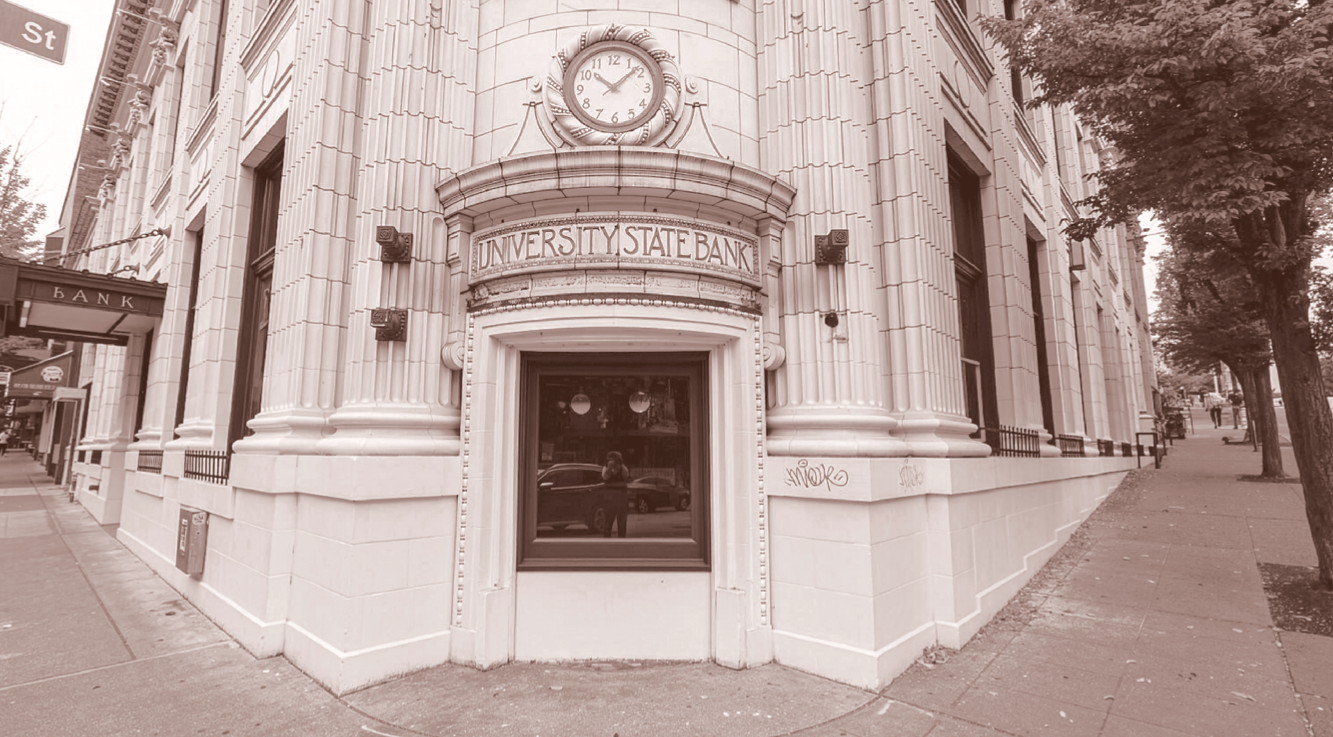
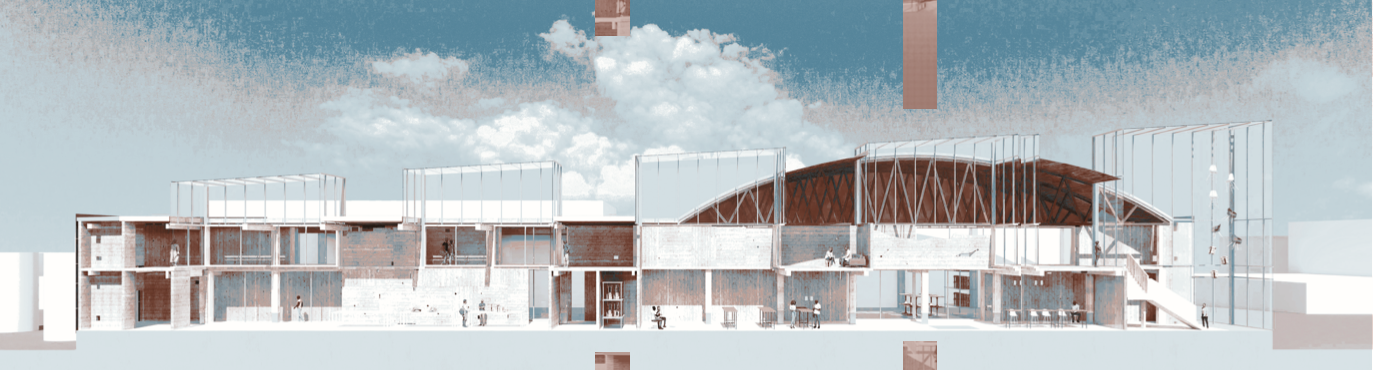
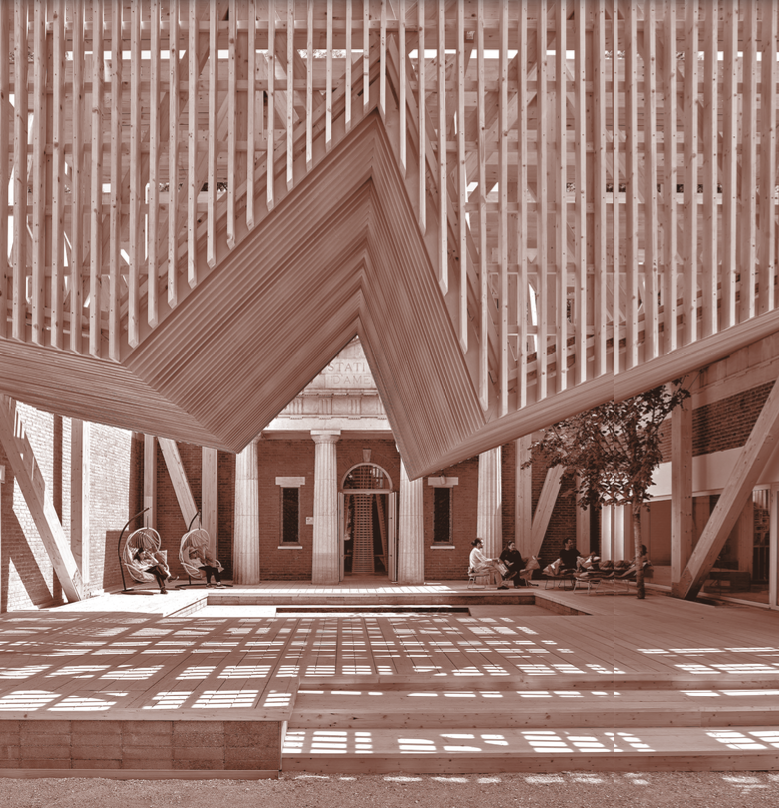
My own project for the studio, titled “The Canopy,” began with an abandoned concrete-frame industrial building on the outskirts of Seattle. This ghostly skeleton of a giant warehouse was begging for a new life: Why rebuild from the ground up when a frame-work already stood in place? By adding reclaimedCLT panels to the old concrete columns, I molded a community center “parasite” that hung over the abandoned space like a treehouse. The historic nail-holes and duct cutouts from the reused CLT panels transformed into visual textures on the ceiling above and the floor beneath visitors. The existing concrete frame provided primary structural support, meaning I could allocate more of my limited CLT toward spatial partitions, and mezzanines. Weaving new timber forms into old concrete bones was both economical and poetic, honoring both the former industrial site and the reclaimed wood’s heritage. The effect was both efficient and poetic: concrete met timber, past met present.
Aesthetically, I approached the project by clearly distinguishing between what was old and what was new—separating the building’s essential “skeleton”from the added, almost parasitic layers of wood. The design was built on contrasts: cold, industrial concrete met warm, inviting CLT, and I fully embraced this tension. To highlight this tension, I designed the CLT additions as delicate layers floating within the concrete shell. Metal cables suspended the floor slabs, piercing the overhead beams to create the illusion that the wood was free and weightless while the concrete remained immovably grounded. Steel cables suspended floor slabs while diagonal bracing resisted lateral loads. Every detail was dry-assembled using custom metal brackets—sliding into pre-cut slots for easy disassembly. Nothing was permanent. Everything could be undone.
That’s the radical potential here: not just buildings that last, but buildings that can evolve.
Seattle, to its credit, is already leaning into this ethos. The city’s Salvaged Lumber Warehouse Pilot Program is an initiative led by Seattle Public Utilities (SPU) to promote lumber reuse and create a circular economy for salvaged wood. The program, still in the voting stage, aims to reduce waste from residential building removals by establishing a warehouse that collects, processes, and redistributes salvaged lumber. The city already encourages manual disassembly of buildings to maximize material reuse since 2022 with its Deconstruction Incentive Pilot Program that offers financial incentives such as $4,000 per house,$500 per garage, and $6,000 for commercial projects.
For practicing architects and designers, the CLT Cannibalism studio and Seattle’s pilot programs underscore three practical truths. First, “materials as constraints” can unlock precedents that transcend conventional site-program relationships; rather than asking “How might we fill this site?” designers can ask, “What latent potential lives within these salvaged panels?” Second, less is more: the fewer custom fasteners or embedded steel brackets, the more straightforward the future disassembly. As Cattrow notes, “The key is simplicity. The simpler the connections, the easier they will be to reverse later.” Third, harnessing the visual language of material history—knot patterns, water stains, even drill holes—can become a generative design driver rather than a cosmetic afterthought.
“The Canopy” became a living example of these principles—a hybrid of past and present, practicality and poetry. More than a design experiment, it hinted at a larger cultural shift: one where cities are no longer unchangeable spaces, but curated libraries of materials with reusable potential. Daniel Poppe, executive director of Seattle 2030 District, agrees. “Preserving historic facades and retrofitting existing structures should be prioritized over demolition and new construction,” he says. “We don’t want a city made entirely of glass towers—we need diverse architectural styles that reflect the city’s history.”
Reuse is not regression; it’s an evolution that keeps our buildings grounded in place, time, and memory that also happens to be good urbanism. Adaptive reuse cuts landfill waste, shrinks embodied carbon, and preserves the soul of a city’s built fabric. Seattle’s Climate Action Plan aims to cut built-environment carbon emissions by 50% by 2030. Achieving that goal means thinking differently about demolition and materials. CLT reuse isn’t just viable—it’s vital.
So what if we stopped thinking of reuse as a compromise, and started seeing it as a creative superpower? In reframing sustainability as a design opportunity—not a constraint—architects can craft buildings that are not only good for the planet, but nourishing to the imagination.
After all, a reused beam isn’t just a structural element—it’s a story, a memory, a provocation. When you build with history, you build with meaning. And when you design for disassembly, you’re not just making buildings—you’re making futures.