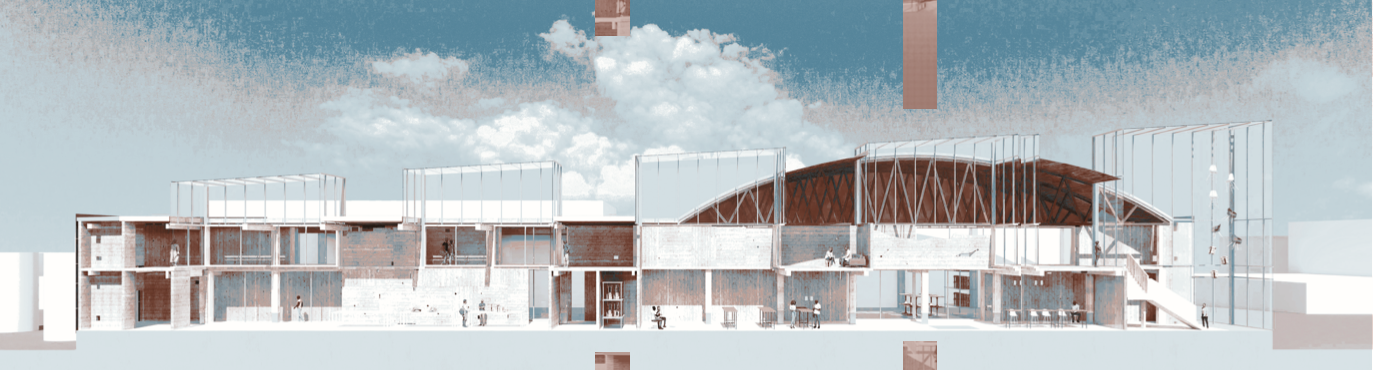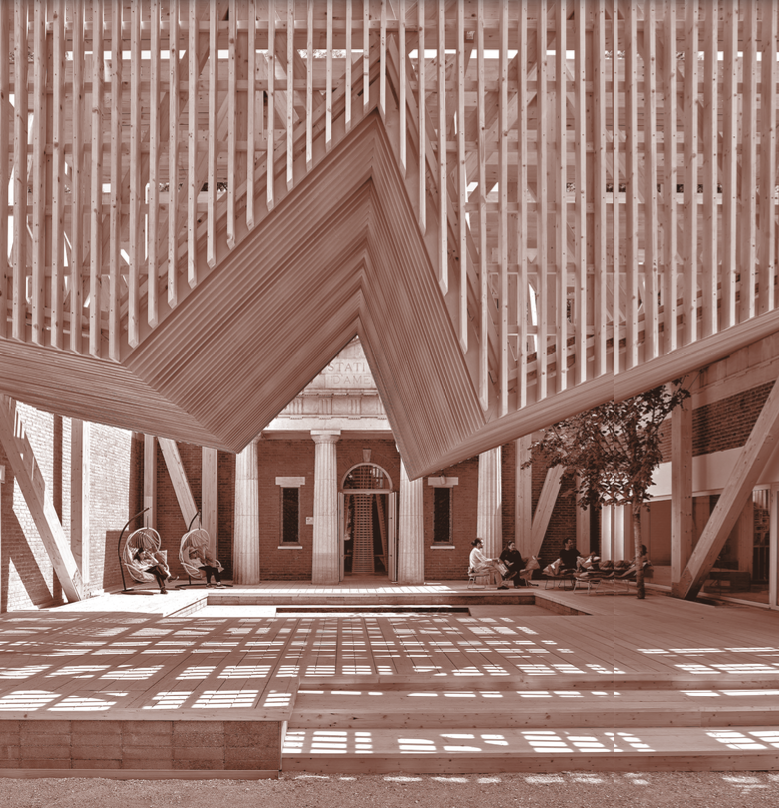
From hyper-realistic renderings to immersive 3D models, the digital tools we use today would blow the minds of architects from just a few decades ago. The integration of computational technology has not only redefined the design process but also unlocked new dimensions of innovation. Complex and intricate ideas can be brought to life more easily than ever before. These tools are not just influencing the spaces we create; they’re also reshaping the next generation of designers we’re teaching. At the University of Washington (UW), the architecture program is deeply shaped by digital tools that have redefined the ways students approach and execute design.
As machines become our creative collaborators, it raises the question: Where do we draw the line between hand and technology? Do the benefits of speed and efficiency come at the cost of emerging architects losing traditional design skills and authentic creativity?
In the city of Seattle, a hub of both design and tech, this shift is especially relevant. As the home to some of the world’s largest tech companies, Seattle continues to evolve through technological innovation. With the use of rapidly advancing technology, architects can meet the city’s progressive goals such as sustainable design and social equity with greater ease. However, in a place with a deep-rooted history of craft, this digital shift may further distance us from the traditional design practices that have shaped the field. As society evolves, a discipline once grounded in tradition is now propelled by technology.
The practice of architecture has changed significantly over the last century. Prior to the 1960s, when computer-aided design (CAD) software emerged, the time-consuming and labor-intensive process of hand drafting was extensive. A combination of precision, skill, and patience was required to navigate the profession. Every line was measured manually, every model was built by hand, and a single mistake could mean starting over completely. This process reflected a high level of artistry and technical skill that looks different in today’s architectural field.
During that era, students learned foundational skills that prepared them for the demanding profession. The UW Department of Architecture began in 1914 with just twelve students. At the time, students had a strong foundation in artistic drawing, allowing them to create detailed floor plans, sections, and elevations by hand. Classes such as still life drawing taught students how to portray objects realistically and accurately to scale. They produced beautiful, detailed drawings and paintings that demonstrated their design ideas. Students also learned technical drafting in preparation for entering a career in architecture.
In the 1960s, computers began to emerge as a powerful new technology. However, it wasn’t until the 1980s that they were commonly used in architecture. Architects started to use CAD software to create blueprints, which was a major shift from the time-consuming process of hand drafting. By the 1990s, digital design tools started making their way into the curriculum at UW. During these years, the Architecture studios supported a digital network for students. In 2005, the basement of Gould Hall was converted into the Digital Commons—a computer lab space for College of Built Environment (CBE) students that’s still in use today.
Today, this technology has advanced even further. Drawings are now entirely digital, allowing architects to draw accurately with greater speed and precision. Additionally, 3D modeling programs can bring ideas to life visually. By plugging in real-world conditions, realistic renderings can show what a building will look like after it’s built. These tools can even simulate environmental impacts, site complexities, and material efficiencies. And best of all, changes can be made easily with the press of an undo button. At the UW, knowledge of these digital tools, methods, and skills is an integral part of architecture students’ education.
Looking beyond computer modeling, digital fabrication machines can help designers transform their designs into physical objects. Using CAD software, designers can first create their models digitally and then export them to other programs that are compatible with fabrication machines. Everything from architectural models to furniture pieces and product prototypes can be produced directly from computer files.
Bryan Washko, a digital fabrication specialist and teacher at the CBE, teaches foundational skills in computational design software such as Rhinoceros, Grasshopper, Rhino CAM, and Autodesk Fusion 360. He also instructs students in digital fabrication machines such as Computer Numerical Control (CNC) plasma cutters, laser cutters, and 3D printers. According to Washko, proficiency in design software is not just beneficial—it’s “crucial.” For students entering the field, nearly every architecture job listing today includes software requirements.
UW Architecture student Sophia Brown agrees. She says that while her education required artistic drawing skills, they were emphasized far less than digital modeling and software proficiency. She says that software programs such as Rhino and Revit are “the most important thing in our age now.”
But despite this emphasis, the school still tries to balance the education. Particularly in their first two years of the undergraduate program, architecture students are taught to think, draw, and make by hand. Washko believes that UW Architecture offers a good variety of manual skill courses in addition to digital ones. He says that if an educational environment is not providing students with both areas of expertise, then “it’s largely a failure of the institution.”
While digital tools may seem to simplify the processes of drafting, modeling, and fabricating, they demand an entirely new skill set and level of patience. Becoming proficient in digital tools can require years of education, practice, and continued learning. Architectural design has become faster and more precise, but it has not necessarily become “easier.” Even though the role of the architect has evolved with technology, creative thinking and problem solving remain just as essential.
But despite the benefits technology can offer, designers across various creative fields remain skeptical of the rapid change. There is a growing concern that computers are performing in place of human creativity. For example, artificial intelligence can quickly generate design concepts and produce realistic renderings, but this takes away the authenticity and intention behind human design. However, you could also argue that all the information AI depends on originates from humans. Many believe that computers will never be able to compete with the creativity of the human mind, yet there is still the fear of becoming overly reliant on them. There is a fine line between using technology as a tool and letting it take over the creative process entirely.
So, is technology improving the field of architecture, or hurting it? In the next decade, new advancements will continue to shift the methods of design. Maybe the question isn’t about whether technology is good or bad, but how we can use it to preserve authentic creativity. The built environment of our future depends on the designers who are developing today. Architecture students should be taught to embrace technology while still applying traditional artistic and problem-solving skills. Washko believes that there should be room for both areas of expertise, and says, “In fact, they inform one another in a very effective way if done correctly.”
Perhaps the future of design isn’t about choosing between tradition and technology, but learning to embrace the blend.