Located in West Seattle, Providence Mount St. Vincent is home to 300 seniors. But five days a week, it also becomes a home for 125 children, who share the 300,000-square-foot facility with their older friends. “The Mount,” as the center is called, has operated as a senior care center since 1924. In 1991, it opened the Intergenerational Learning Center—an on-site child-care program designed to bring the joy and energy of children into the heart of its senior community.
Here, in the Mount, elderly residents and preschool kids share activities five days a week under one roof. The activities range from art, music, games, and group activities such as sandwich-making for a local non-profit serving the homeless. During the brief one to five years of overlapping life stages—often the final years for the elderly residents—children and elders share a mutual ability to live in the moment.
America is aging, and faster than ever before. According to the Population Reference Bureau, by 2030, all baby boomers will be 65 or older.1 By 2050, the population over 65 is projected to reach 82 million, almost double that of 2022.2 But aging is not the only challenge; loneliness is on the rise. In a recent study by the University of Michigan Institute for Healthcare Policy and Innovation, more than one-third of adults aged 50 to 80 reported feeling lonely. Nearly as many feel isolated.3
Where do these lonely seniors go? While some older adults can remain at home, many with health issues eventually require assisted living or nursing care—often for the sake of their families’ peace of mind as much as their own safety. However, these senior housing models are often designed in ways that deepen isolation. Residents are typically cared for in a closed-loop system, where staff provide physical support, but opportunities for meaningful interaction with the outside world are rare. Seniors are cast in the passive role—recipients of care, “entertained” with scheduled games or singalongs. The Mount is an example of another path.
“Going to a nursing home as a child was a traumatic experience,” recalls Evan Briggs, director of The Growing Season, a documentary about Providence Mount St. Vincent. “It was clear to me that these people were being warehoused, cut off from society—they were just sitting around waiting to die.” Briggs’ experience, which dates back to her own childhood in the 1980s, still resonates today. Despite decades of change, many care facilities continue to isolate older adults in ways that infantilize them, stripping away their opportunities to give, to teach, or to be needed. These are people with the richest life experiences and perspectives in our communities—insight that doesn’t vanish with dementia or mobility issues. But is living this way something any of us would truly look forward to at the end of our lives?
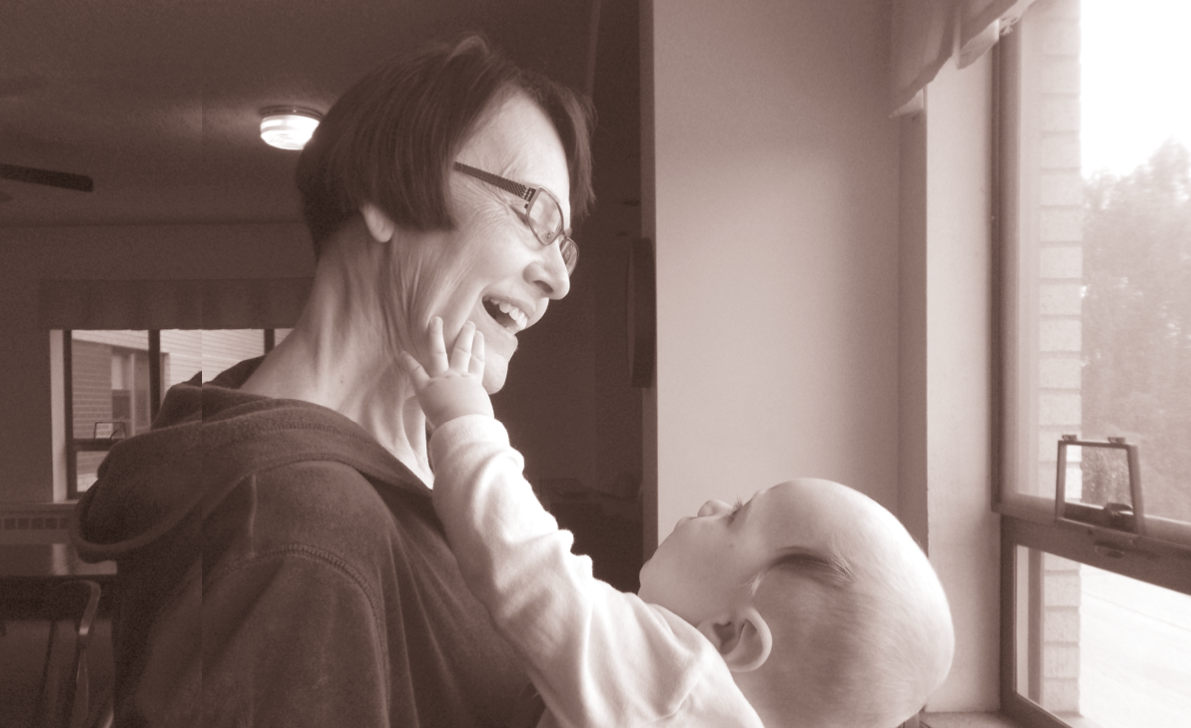
At the Mount, things are different. Seniors aren’t just taken care of; they also take care. Each weekday, children from the Intergenerational Learning Center, aged six weeks to five years, visit the seniors’ floors. They ask to be read to, or beg their older friends to play. In these moments, the residents become the children’s playmates—adults who have time and presence, who can fully engage. The seniors are no longer treated like children, because the real children are right there in the room, asking them for guidance.
Even for those with limited physical or mental capacity, these small interactions matter. “Everyone—not just my dad—lit up when a group of toddlers walked in,” says Sonia Niaufre, whose father John lived at the Mount from 2011 to 2013. “Just hearing children in the hallway made my dad feel so alive and curious.”
This proximity of having childcare and eldercare under one roof creates a type of low-pressure, every-day magic. “In addition to the planned activities, just because they were in the same building meant that there were opportunities for them to pass each other in the hallway,” Briggs explains. The spontaneous hallway “hellos” and shared mealtimes turn the ordinary into moments to cherish.
Even the so-called shortcomings of the very young and the very old become shared strengths. Because young children speak simply, residents with memory loss or Alzheimer’s can enjoy and participate in the conversation. When a senior forgets how to make a sandwich, a four-year-old can teach them—learning empathy and confidence in the process. There’s no judgment. Just two people figuring something out together.
Kids here grow up seeing walkers and wheelchairs, hearing slower speech, and learning to be patient with people who don’t always respond right away. Disability and death simply become a part of life, not something to fear. Meanwhile, they gain adult role models who are fully present, adults who have the time and emotional space to play, listen, and engage without distraction. In an increasingly hurried world, this is no small gift.
Given all this, the intergenerational model seems like an obvious solution. And the public agrees: a recent Harris poll commissioned by Generations United and the Eisner Foundation found that 85% of Americans would prefer a shared site that fosters intergenerational connection over an age-segregated facility if they or a loved one needed care.4 Yet across the U.S., there are still fewer than 150 such intergenerational programs, compared to tens of thousands of traditional senior care facilities. Why?
The barriers are real—and multi-layered. The most significant is funding. “What makes it possible for our program to thrive is that our Intergenerational Learning Center relies significantly on philanthropy,” says Veronica Couto, communications specialist at the Mount. “A standalone childcare center would find it highly challenging to fund this level of activity through tuition alone.” Over 60% of the Mount’s residents rely on Medicaid and charitable support. To sustain the intergenerational program, the Mount’s foundation provides more than $1 million annually. “It truly takes a village to do what we do,” Couto says.
Regulatory hurdles add another layer of complexity. Childcare and eldercare are governed by entirely different sets of codes and standards, including staffing ratios, evacuation plans, and safety protocols. Merging them under one roof requires careful coordination.
Despite all these challenges, the demand for intergenerational living is, and will be growing as our society ages rapidly. Identifying the most impactful elements of intergenerational design and codifying the typology holds real weight. In fact, design can be a powerful tool in making intergenerational interactions happen more frequently and meaningfully. “Simply putting both generations together won’t be sufficient for meaningful interactions, as the current norm of age segregation is so deeply rooted,” Briggs notes.
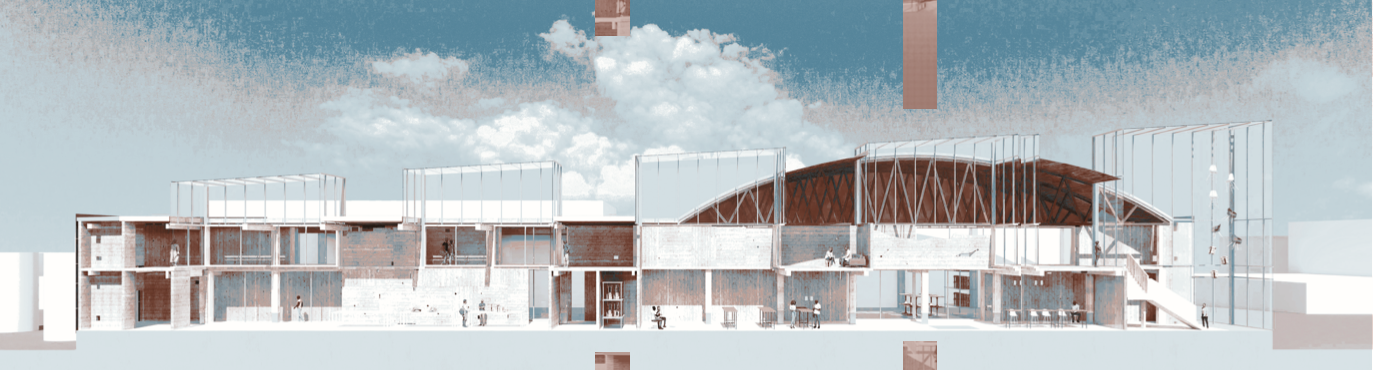
Even at the Mount, the design isn’t ideal; the childcare center was added much later to a 100-year-old building. Still, newer facilities that integrate eldercare and childcare from the start offer a glimpse of what’s possible. They show how intentional design can foster daily, natural interactions between seniors and children, just by placing a shared space like a hallway between the two, for example.5 “What the Mount pioneered is the concept,” Briggs says, “I’m really counting on the architects of today to be the ones to design these spaces to actually be conducive.”
To truly iterate on intergenerational design, we need to get more of these projects off the ground. How can we do that? Or more importantly, how can we, as architects, help make intergenerational care more common?
One approach is to start fresh—proposing and designing new facilities with both generations in mind from the beginning. This means working with urban planners, civic leaders, investors, and local communities to create spaces that invite connections across age. Growing awareness is paving the way for policies like the Care Across Generations Act, which could open up more funding opportunities for these programs.
New construction isn’t the only answer. We can also begin by linking existing senior housing and childcare centers within the same community. If we have liaison staff, like those at the Mount, who bridge the gap between generations and coordinate shared activities, we can foster similar connections without needing to build entirely new facilities. It’s not about creating perfect spaces. It’s about enabling meaningful encounters.
New models are emerging. The Nook at Northaven, a recent development in Seattle, offers a different but promising approach—combining senior housing with normal housing units and childcare onsite. While it may still require coordination and facilitation to truly support intergenerational bonds, inviting a broader range of people to live together is a good starting point
Of course, financial hurdles remain. But momentum is growing. “We support any kind of creative solutions that can help address the unique needs of the communities we serve,” says Nona Raybern, Communications Manager at the City of Seattle, Office of Housing.
Intergenerational living isn’t a radical new idea; it’s a return to something deeply human. Living with people at different stages of life, from infancy to old age, used to be the norm. It’s only relatively recently that we’ve broken those connections apart. As we reimagine how we care for our elders and raise our children, perhaps the path forward is not something entirely new, but something we’ve missed—and are now ready to rediscover.
FOOTNOTES
1. Intergeneration Programming at the Mount – Exploring the value and meaning of intergenerational relationships (PDF provided by the Providence St. Vincent).
2. Population Reference Bureau, Fact Sheet: Aging in the United States.
3. U.S. Census Bureau, 2023 National Population Projections Tables: Main Series.
4. Malani, P. N., Solway, E., Kirch, M., Singer, D. C., Roberts, J. S., & Kullgren, J. T. (2024). Loneliness and social isolation among US older adults. JAMA.
5. Donna M. Butts & Shannon E. Jarrott, Stanford Social Innovation Review, The Power of Proximity: Co-Locating Childcare and Eldercare Programs.